LONGEVITY AND BEAUTY
Nicholas Holmes in Furniture & Cabinetmaking, Issue 332
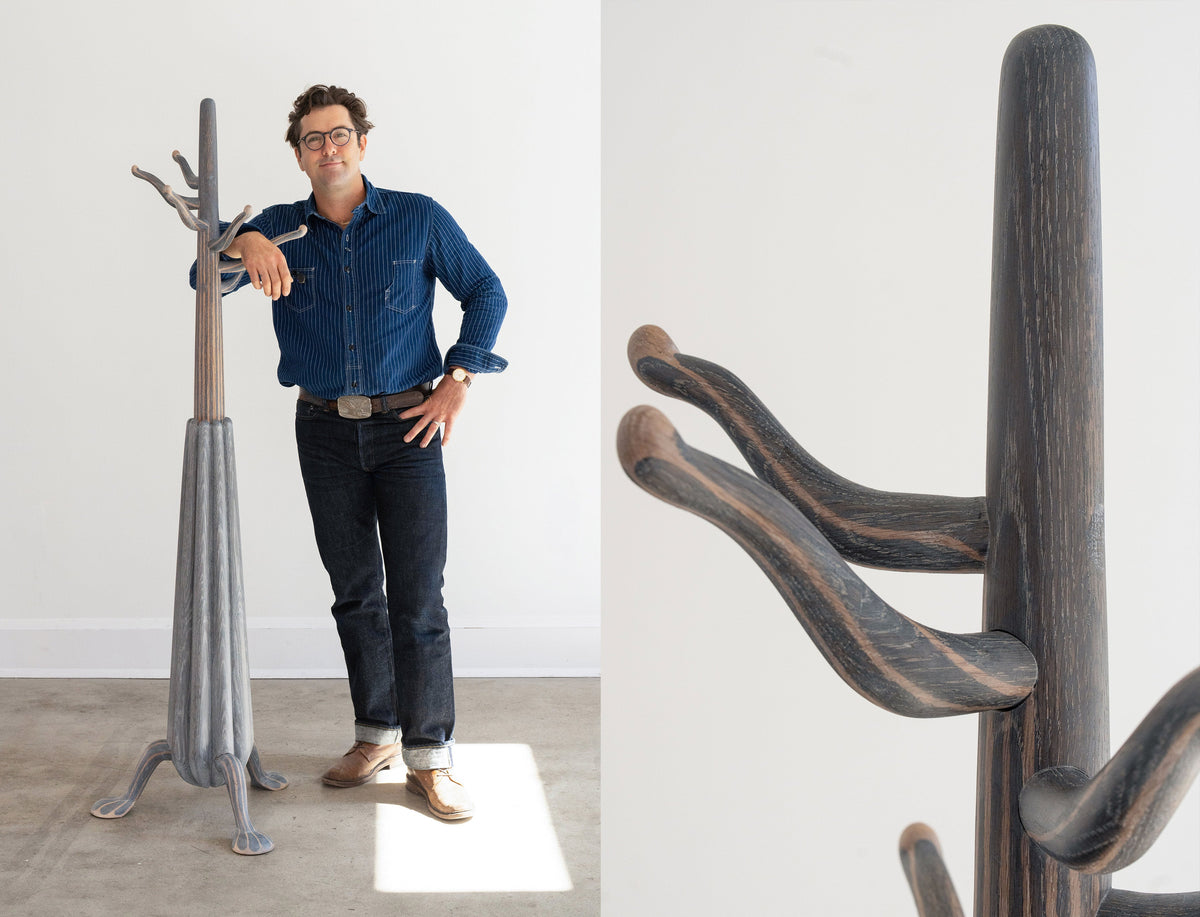
In issue 332 of Furniture & Cabinetmaking, Nicholas Holmes and Hamilton Holmes are featured in the eight-page profile Longevity and Beauty. The story traces Nicholas’s development as a furniture maker and designer, from an early interest in architecture, vernacular furniture and traditional cabinetmaking to the evolution of a studio working across original furniture, collectible design and highly resolved commissions.
The feature explores the ideas that continue to shape the work today: longevity, proportion, material, joinery, experimentation and the belief that good furniture should be both useful and emotionally enduring. It also looks inside the Hamilton workshop, where hand tools and traditional techniques sit alongside contemporary machinery, 3D modelling and an ongoing process of testing, problem-solving and refinement.
“There’s something very special about investing hours into an object and then watching someone live with it.”
Nicholas Holmes
Founder, Owner, Principal Designer Hamilton Holmes
FURNITURE & CABINETMAKING
ISSUE 332
“The objects we live with every day shape how we feel, what we touch in the morning, and what we gather around at night.”
Nicholas Holmes
Founder, Owner, Principal Designer Hamilton Holmes
FURNITURE & CABINETMAKING
ISSUE 332
“For me, longevity and beauty are inseparable. One doesn't exist without the other.”
Nicholas Holmes
Founder, Owner, Principal Designer Hamilton Holmes
FURNITURE & CABINETMAKING
ISSUE 332
“The objects we live with every day shape how we feel, what we touch in the morning, and what we gather around at night.”
Nicholas Holmes
Founder, Owner, Principal Designer Hamilton Holmes
FURNITURE & CABINETMAKING
ISSUE 332
“I'm not interested in style as a surface language; I'm interested in building objects that can survive time, both physically and emotionally.”
Nicholas Holmes
Founder, Owner, Principal Designer Hamilton Holmes
FURNITURE & CABINETMAKING
ISSUE 332
LONGEVITY AND BEAUTY
A FEATURE BY FURNITURE & CABINETMAKING MAGAZINE – ISSUE 332
WRITTEN BY
Furniture & Cabinetmaking
PHOTOGRAPHY BY
Ryan Fung
Natalie Hays
Riley Snelling
Lauren Miller
Patrick Biller
Alejandro Collados-Nüñez
PUBLISHED BY
The Guild of Master Craftsman Publications Ltd
www.gmcpublications.com
Furniture & Cabinetmaking is published by The Guild of Master
Craftsmen Publications Ltd.
Featured Product


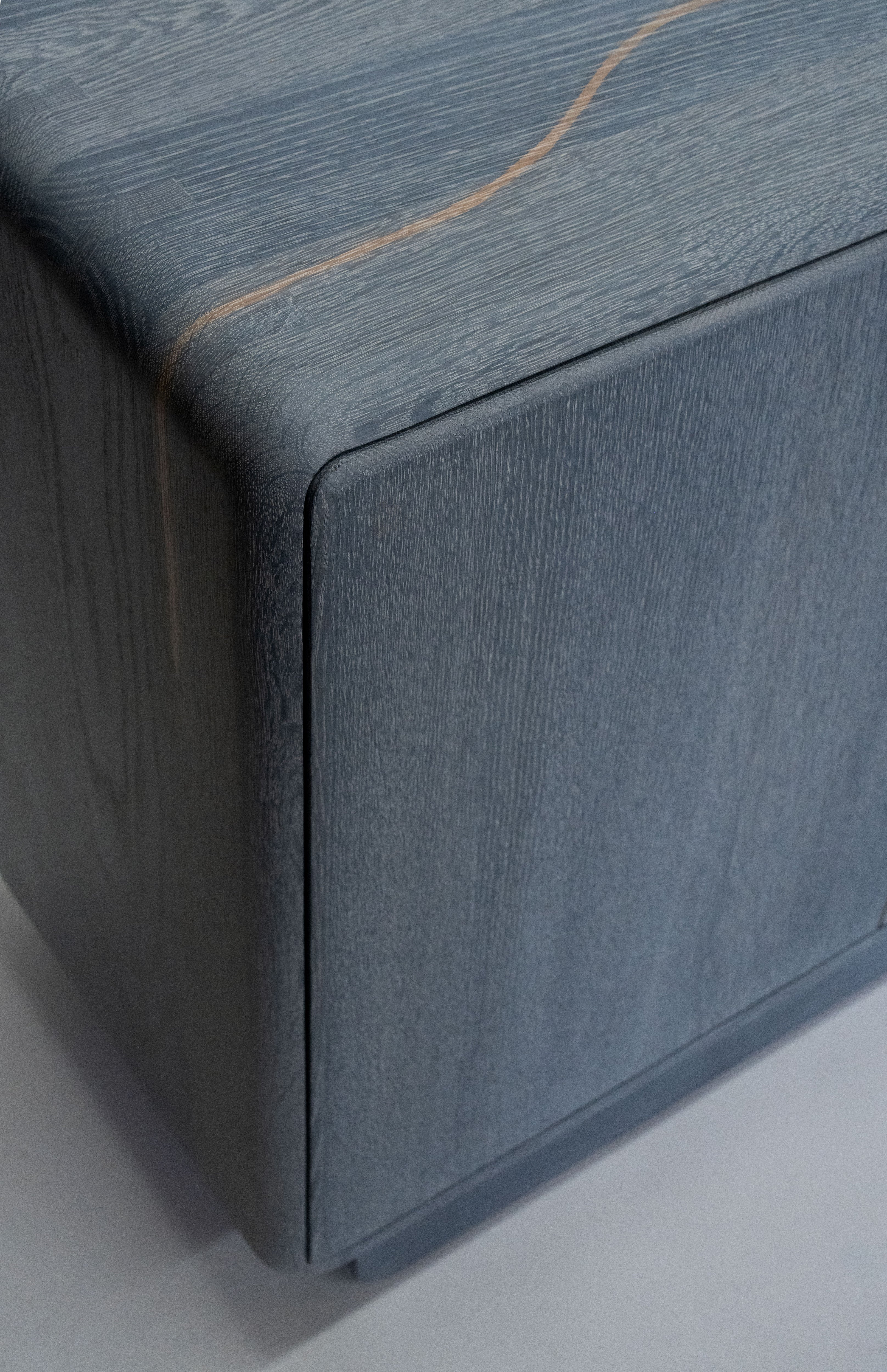
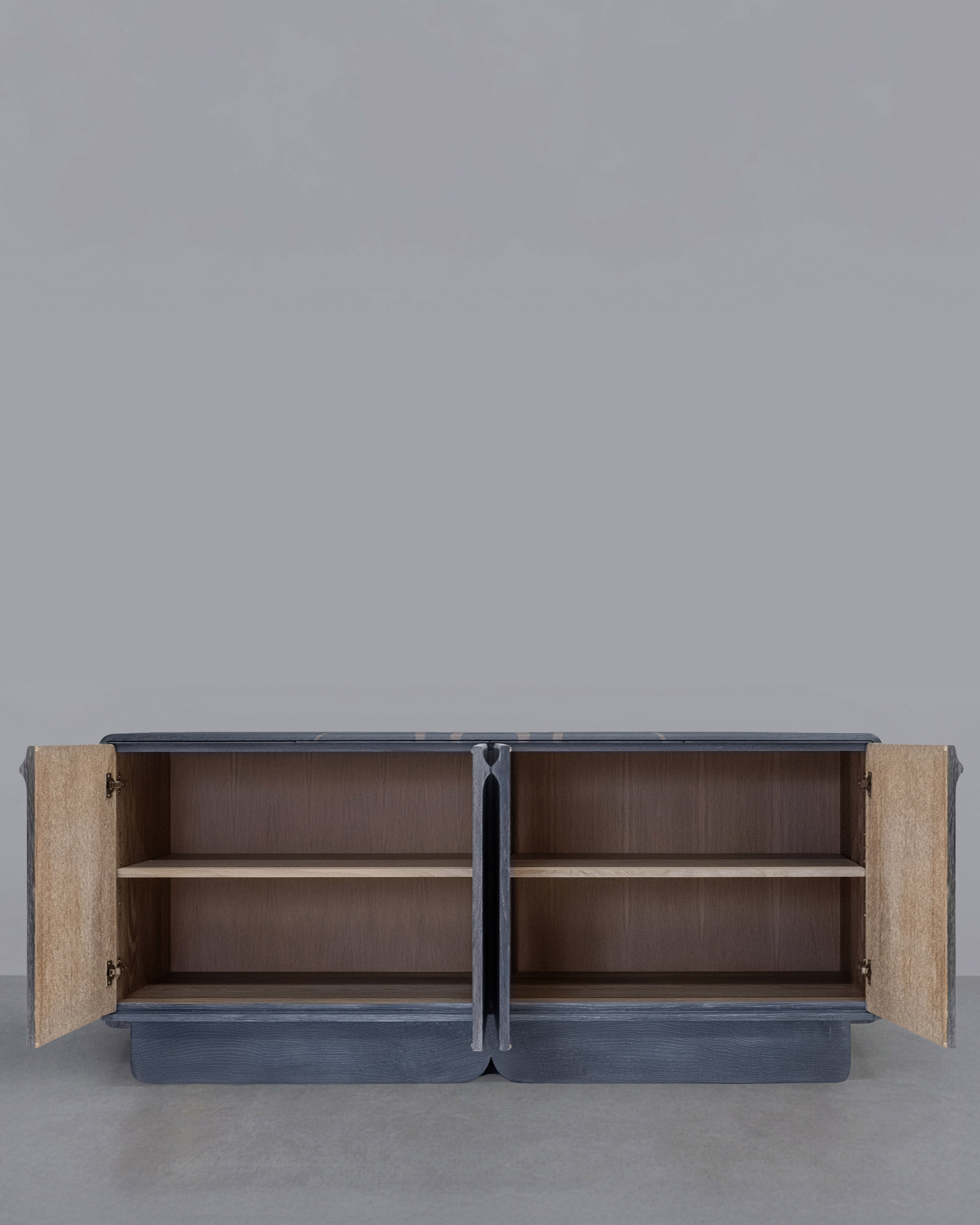
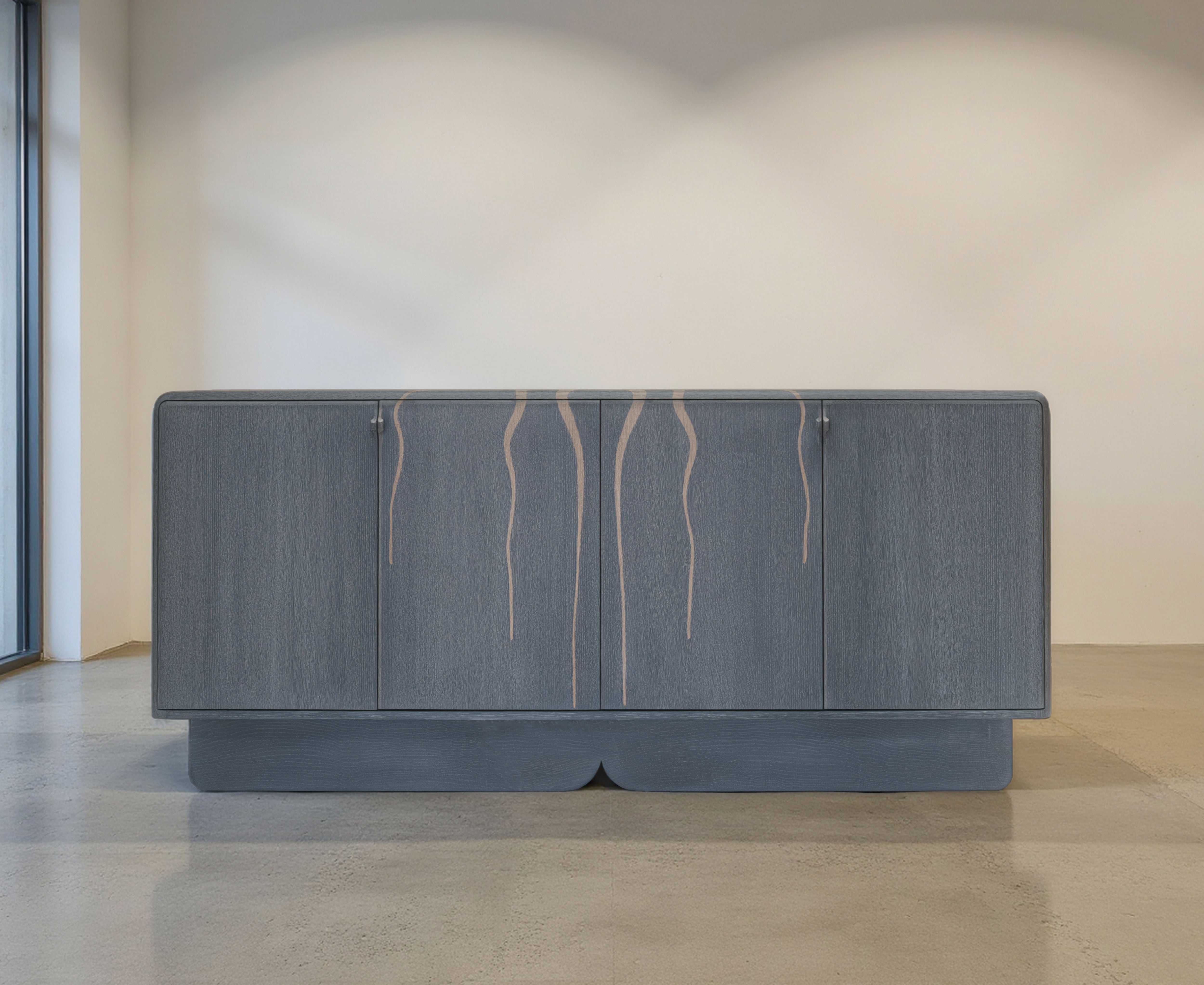
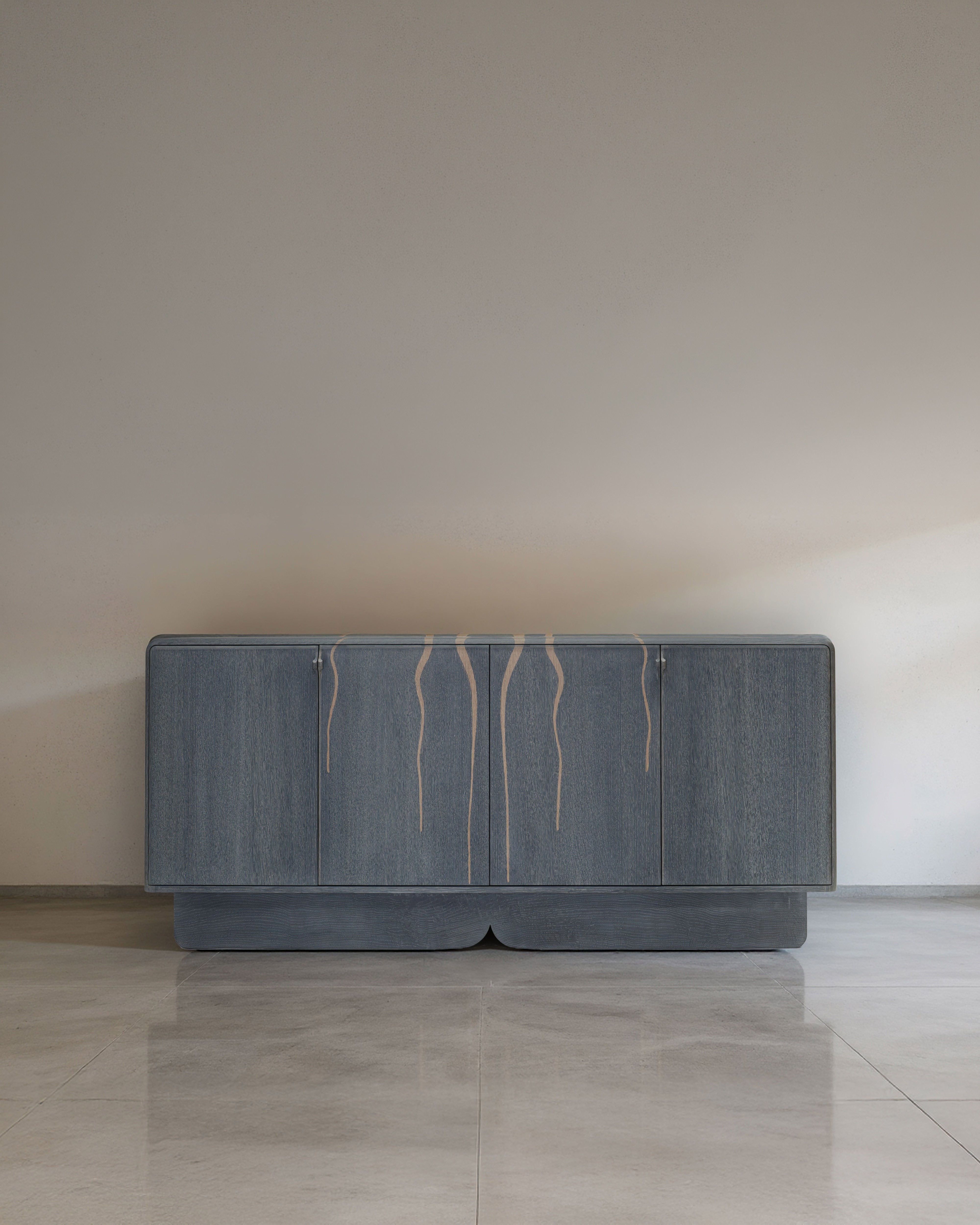
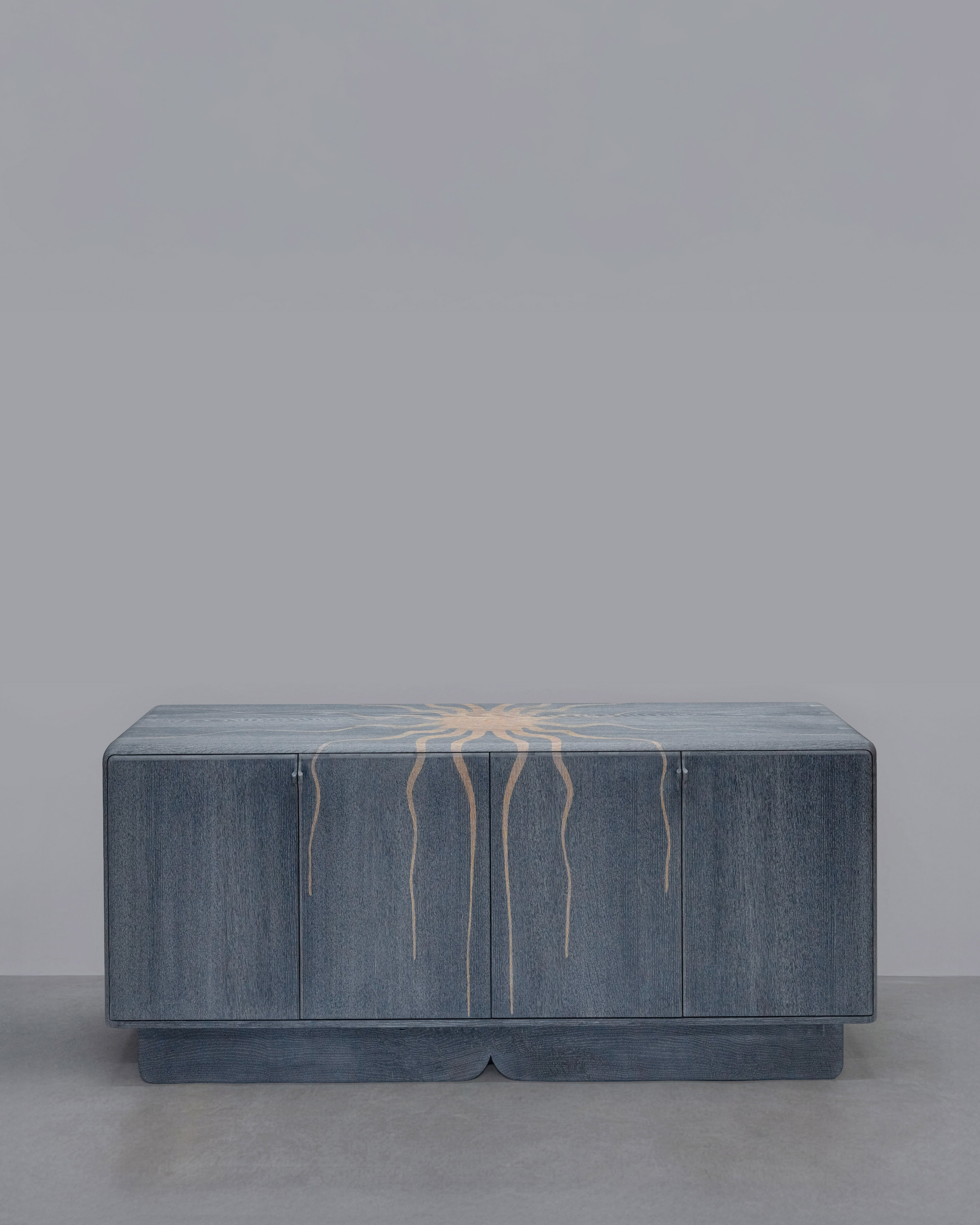
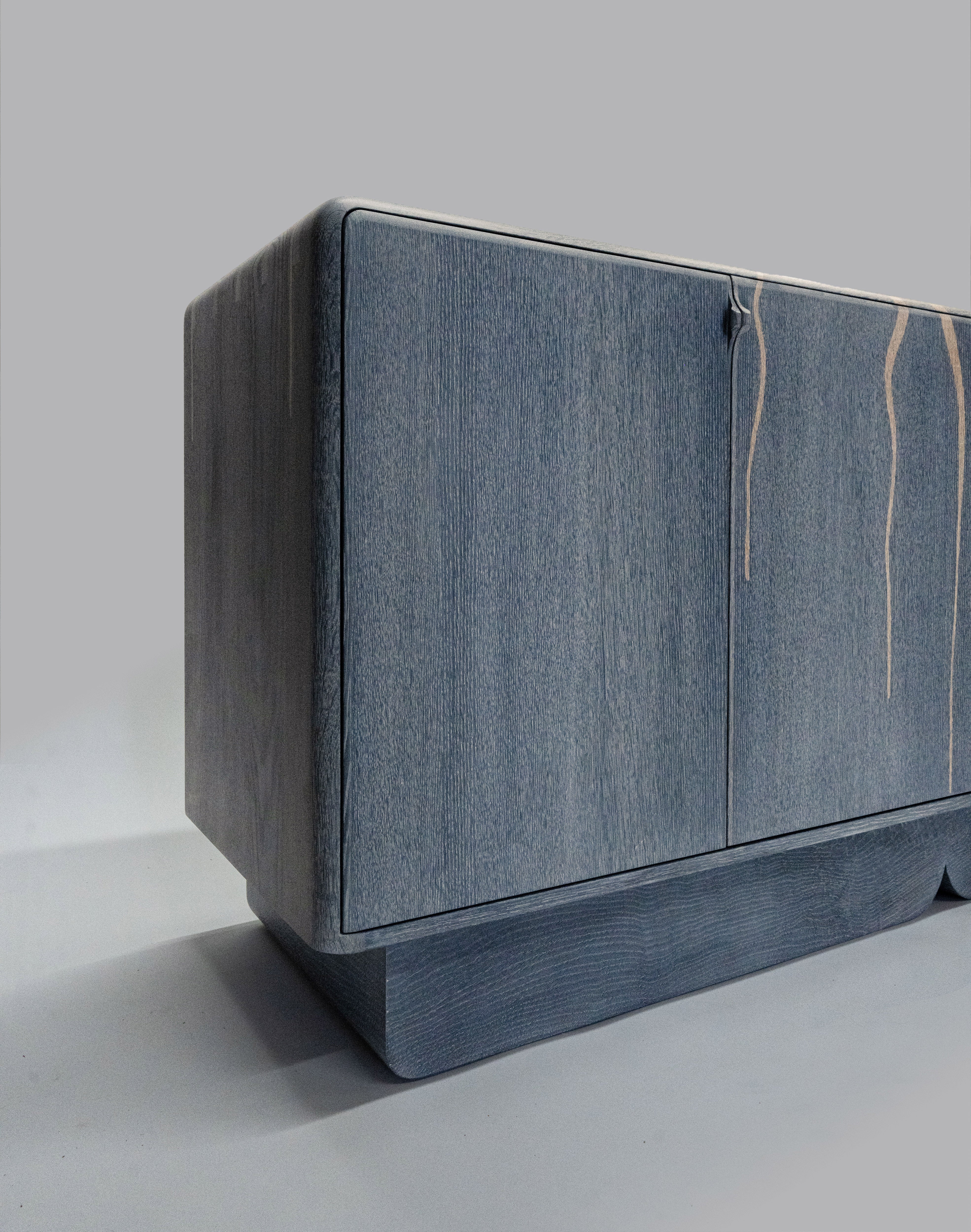
Dimensions
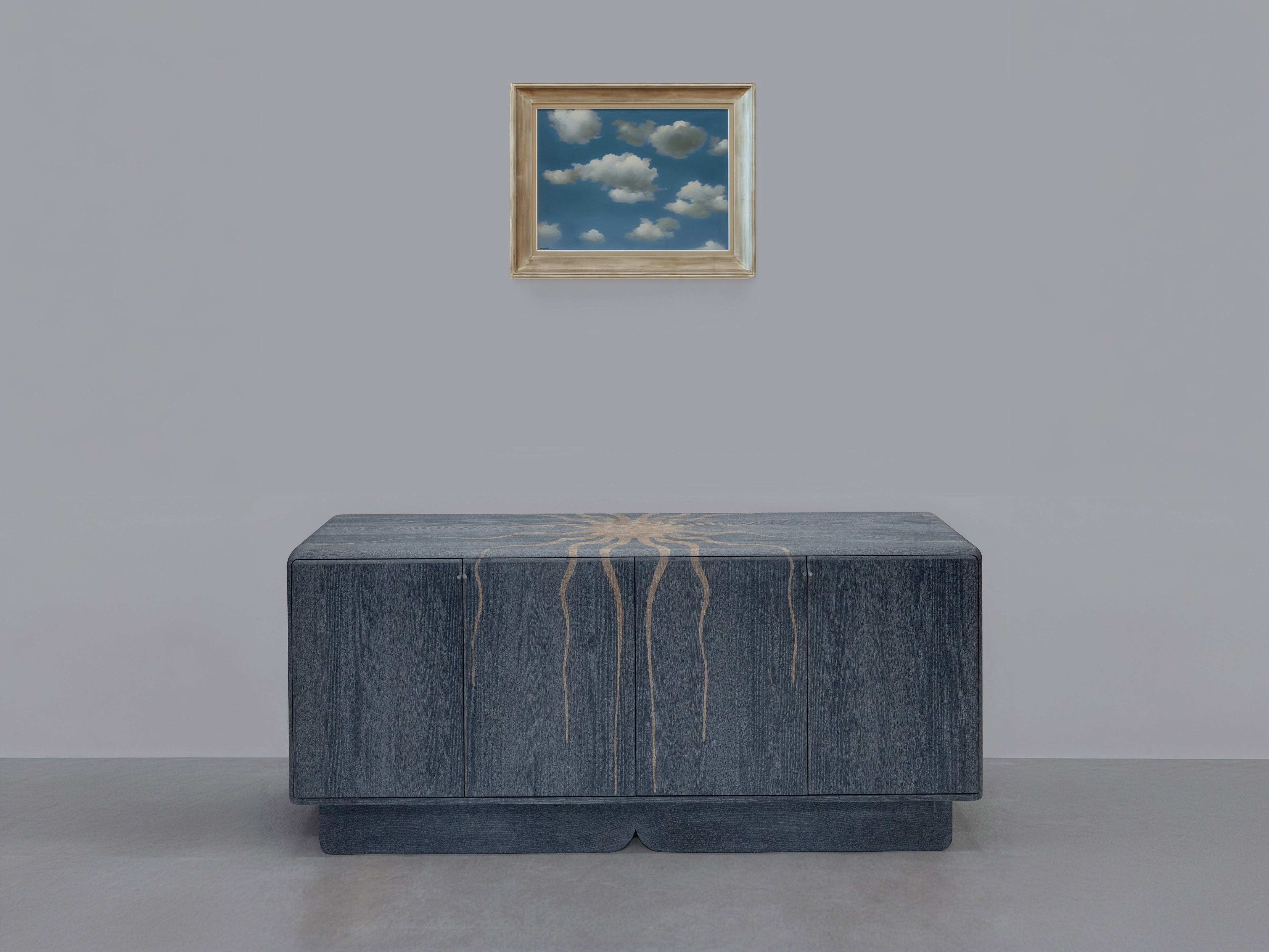
72" Length x 34" Height x 20" Depth
Materials
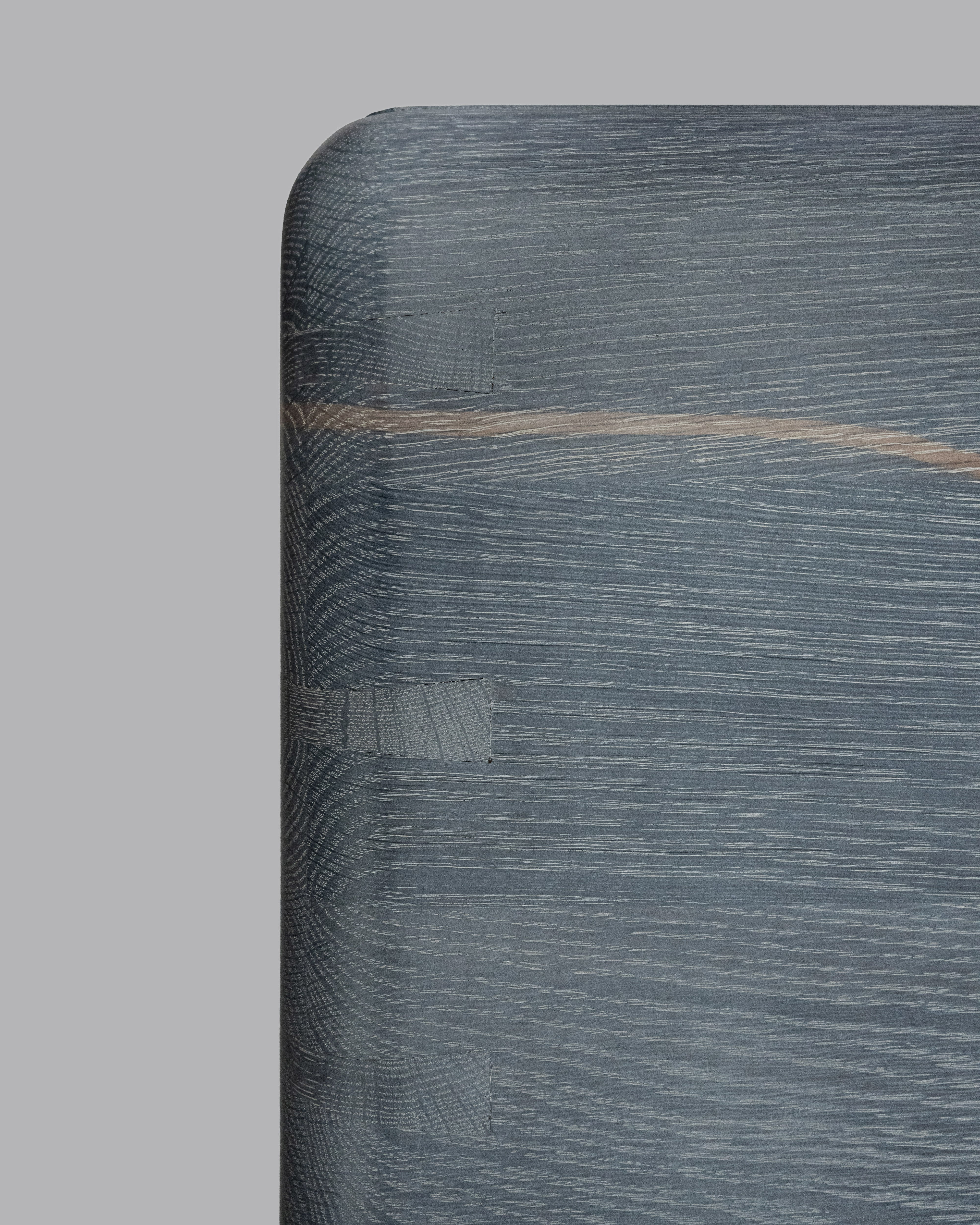
Solid White Oak
Hand-Painted OXALINO™
About
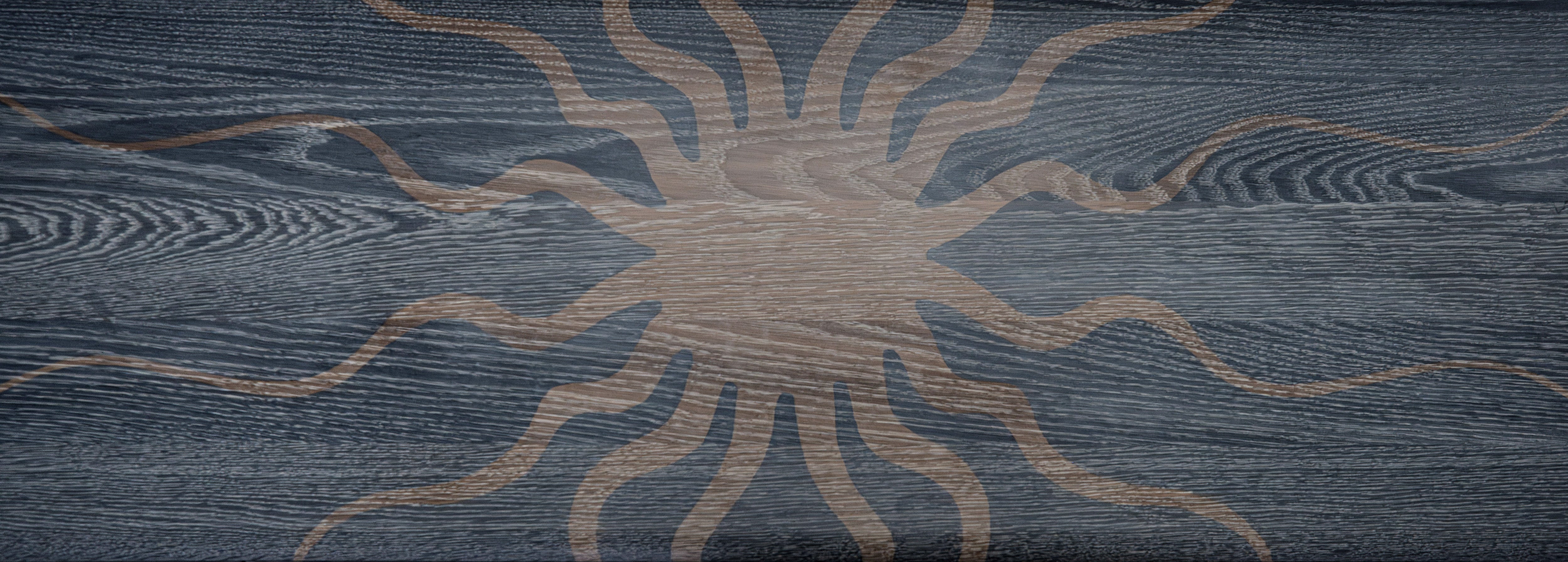
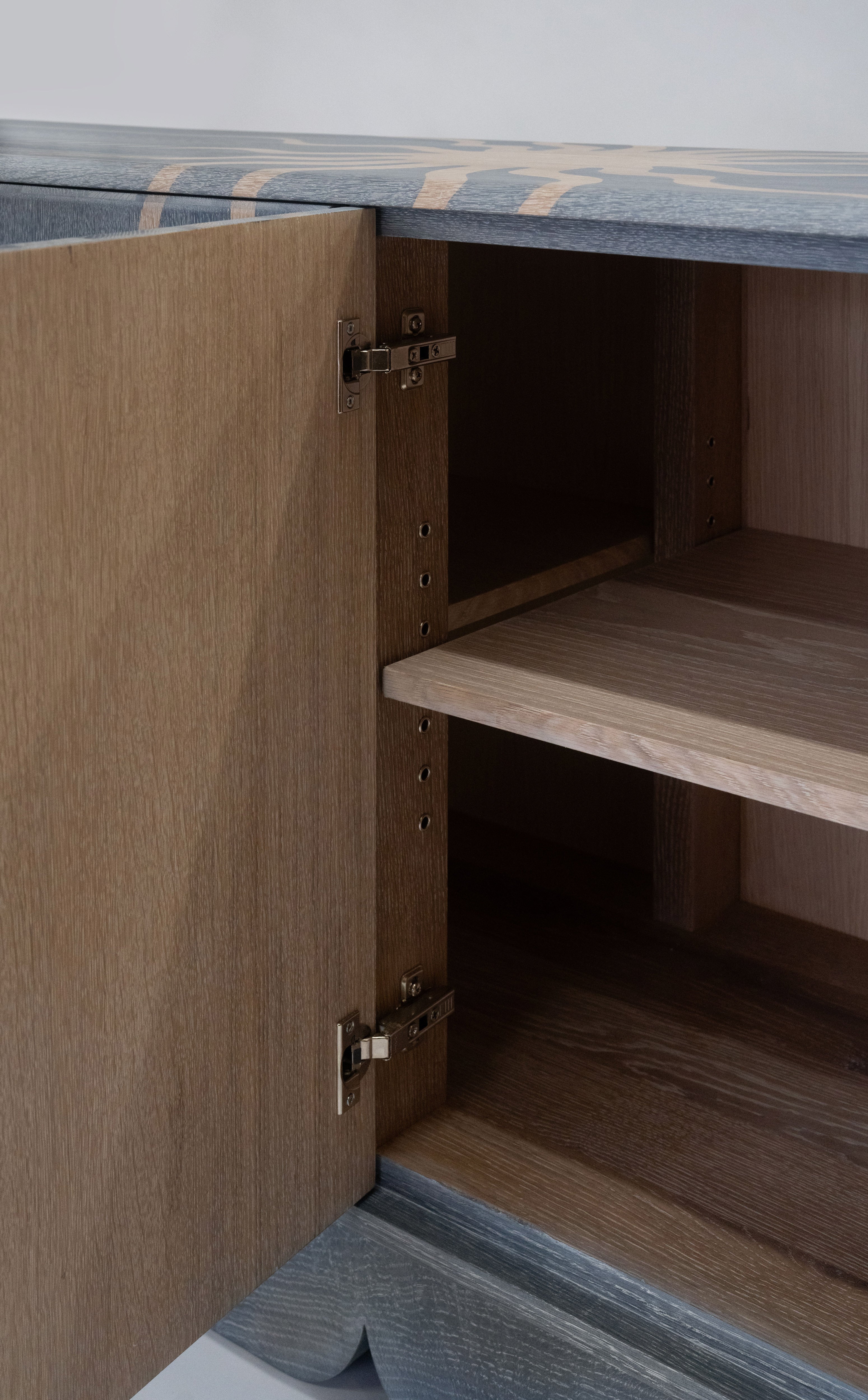
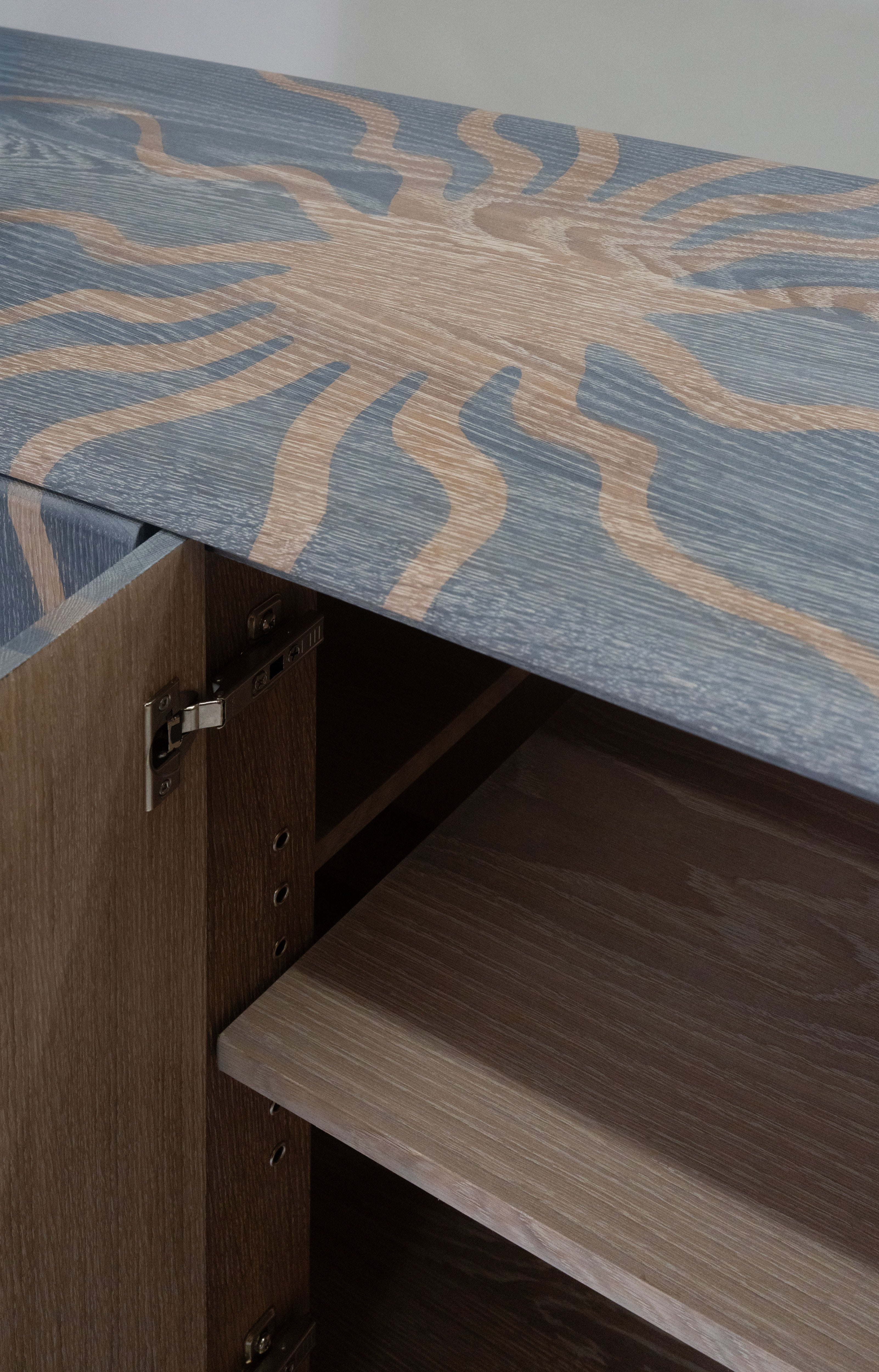
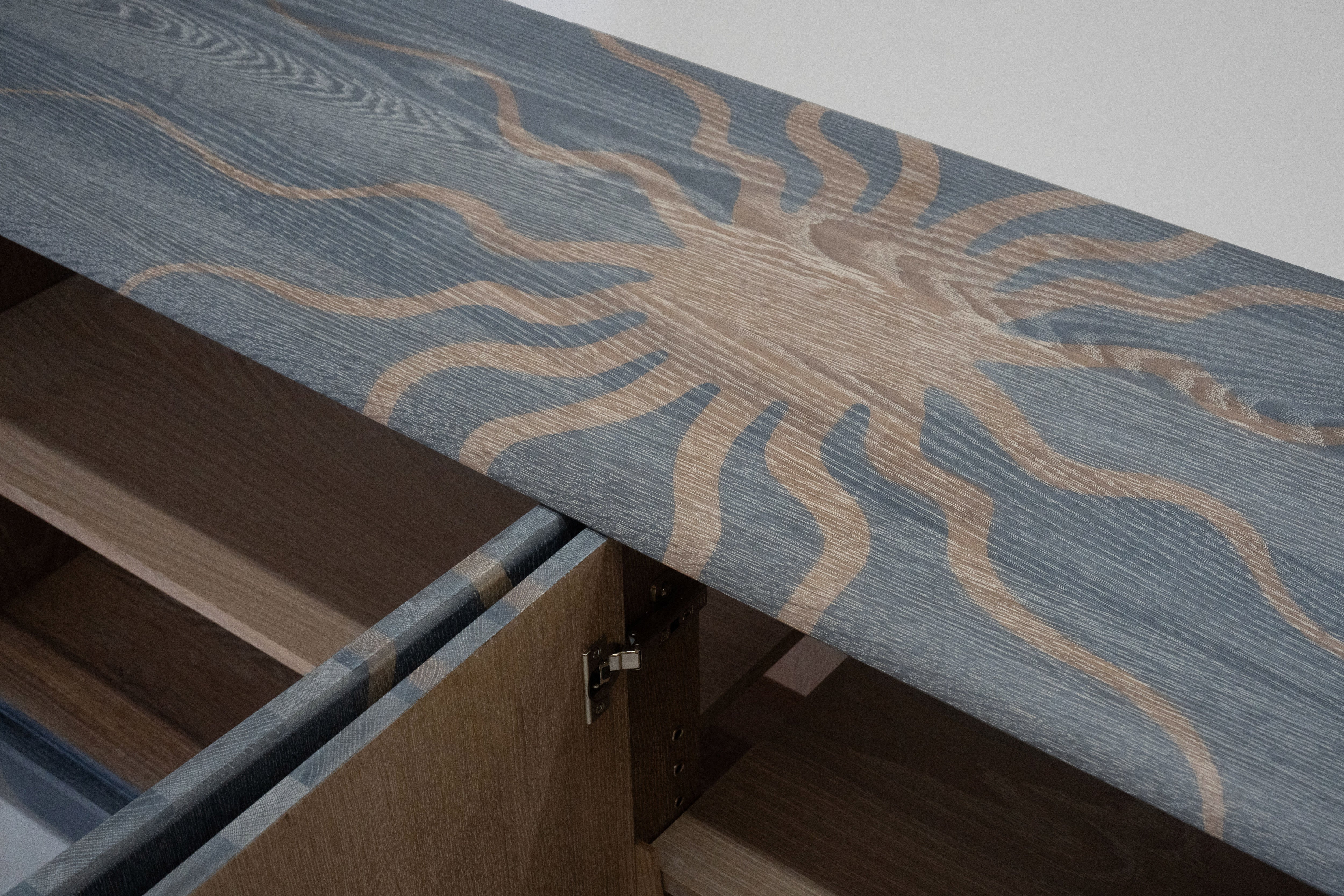
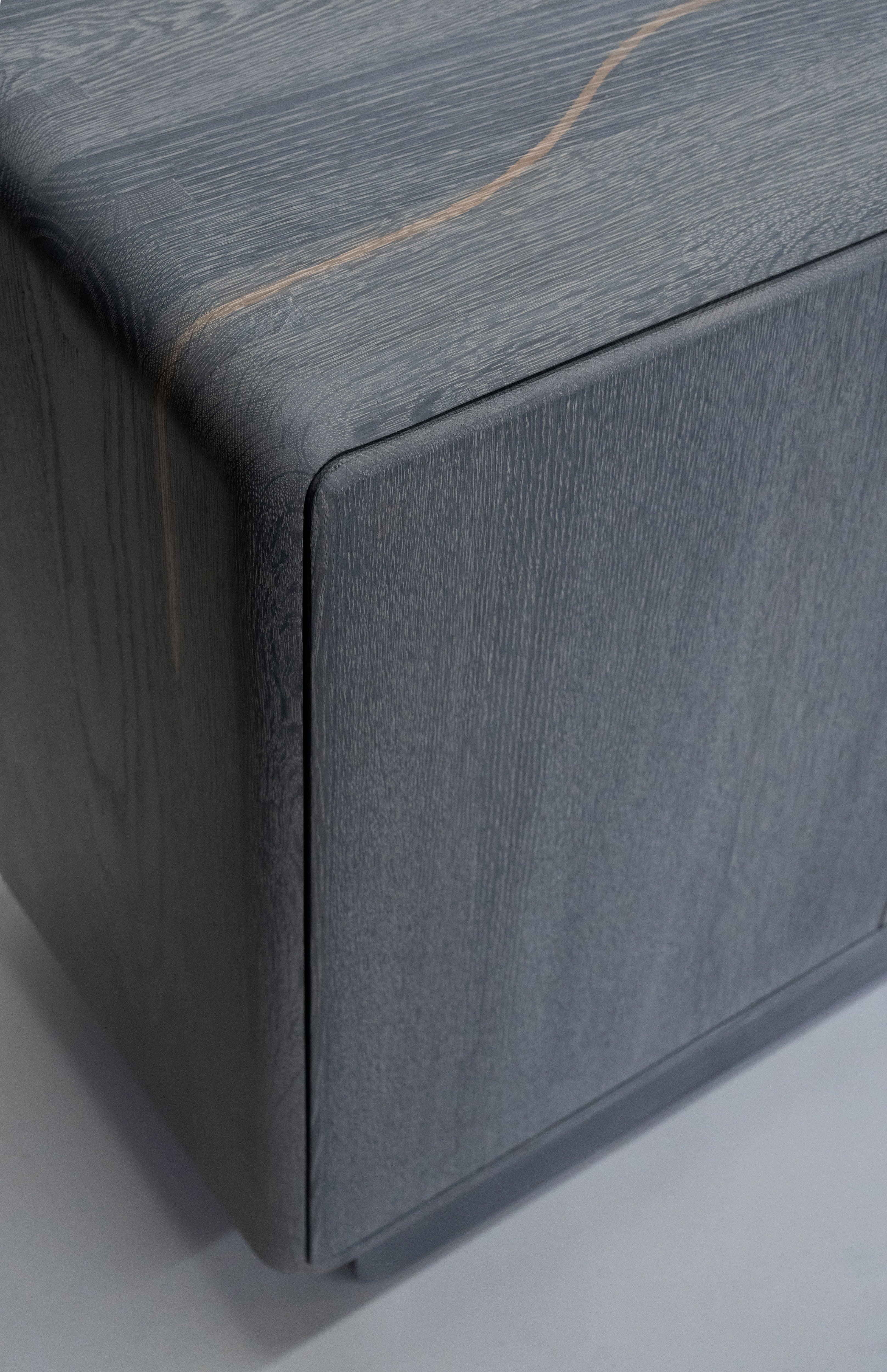
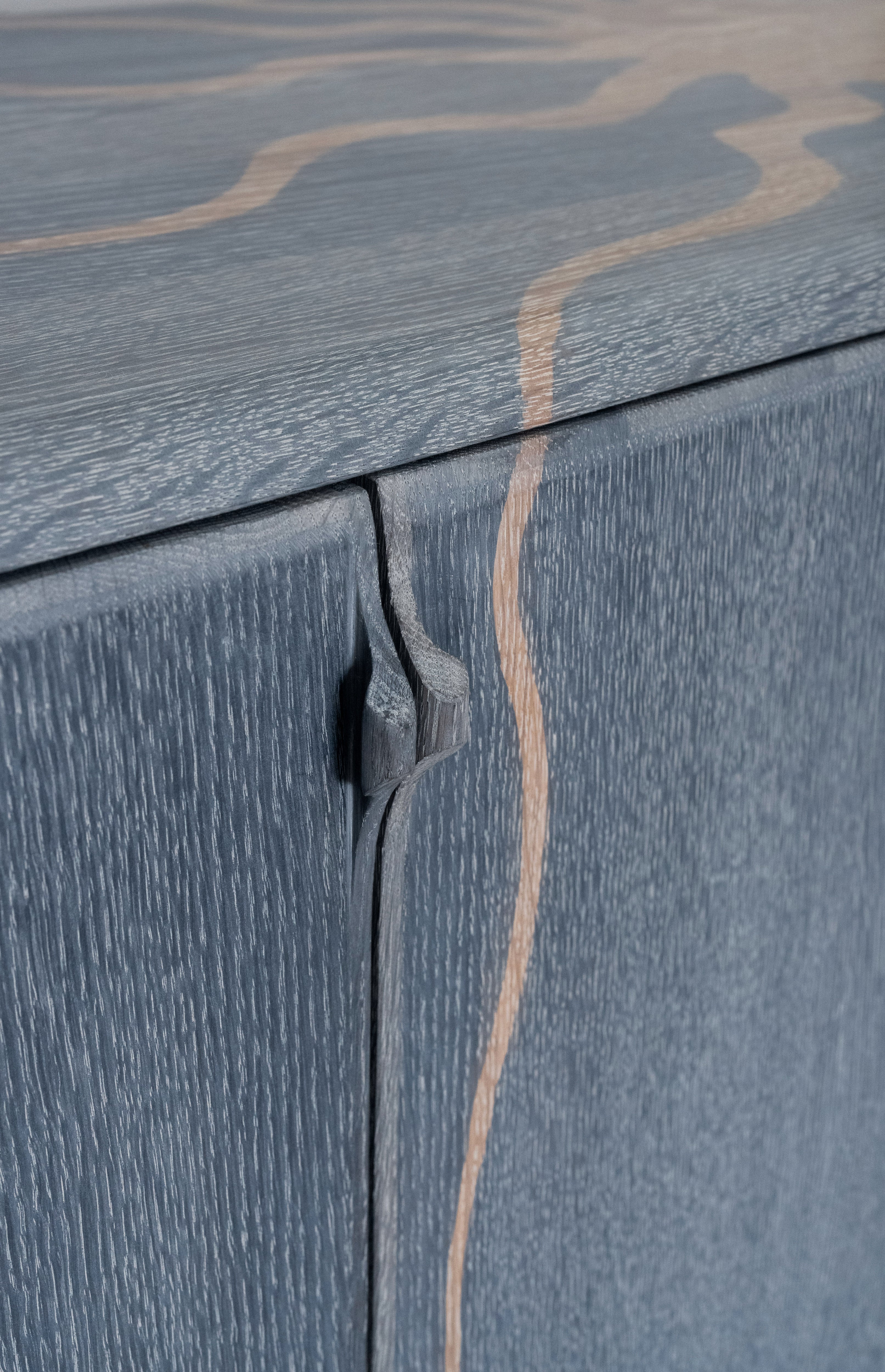
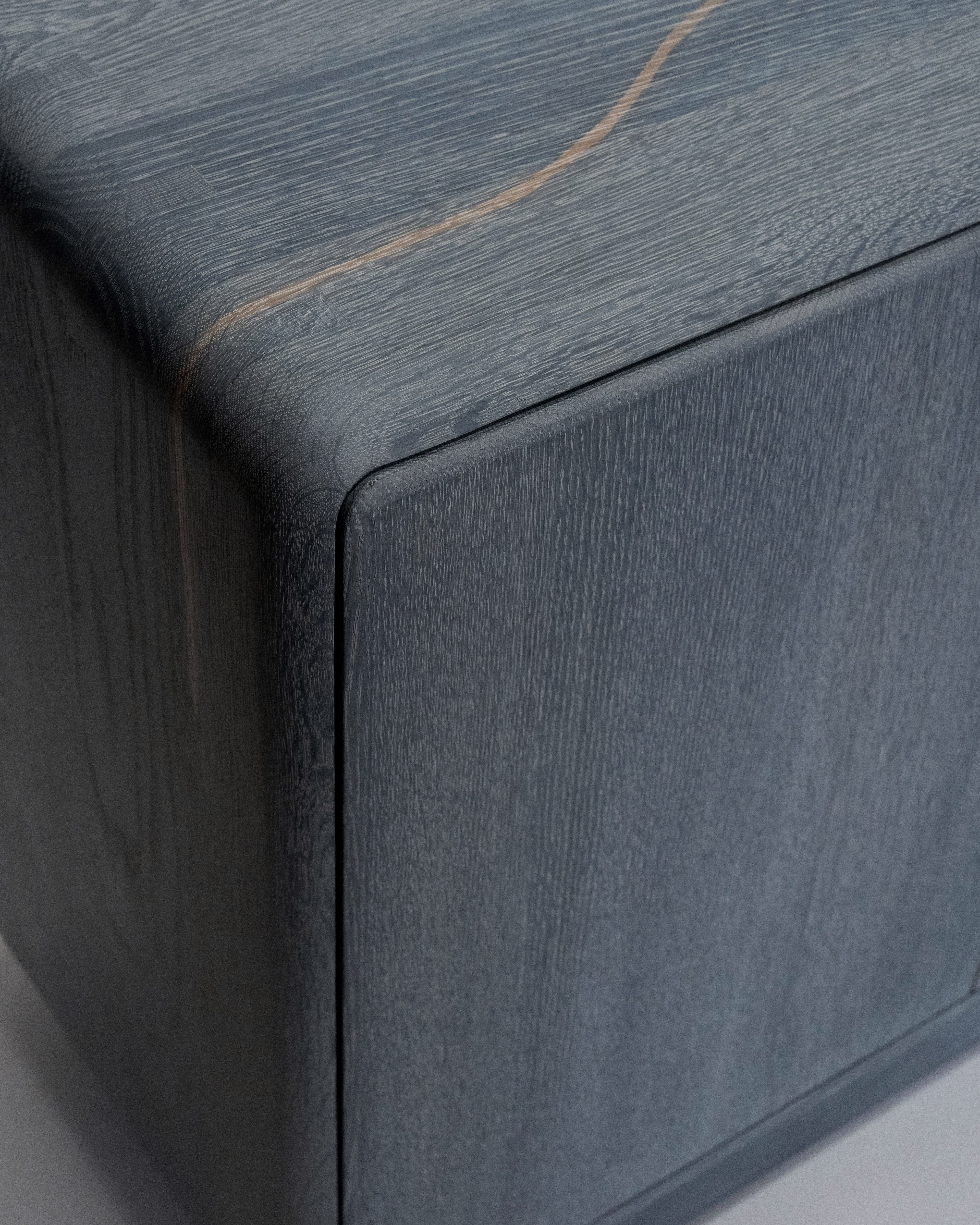
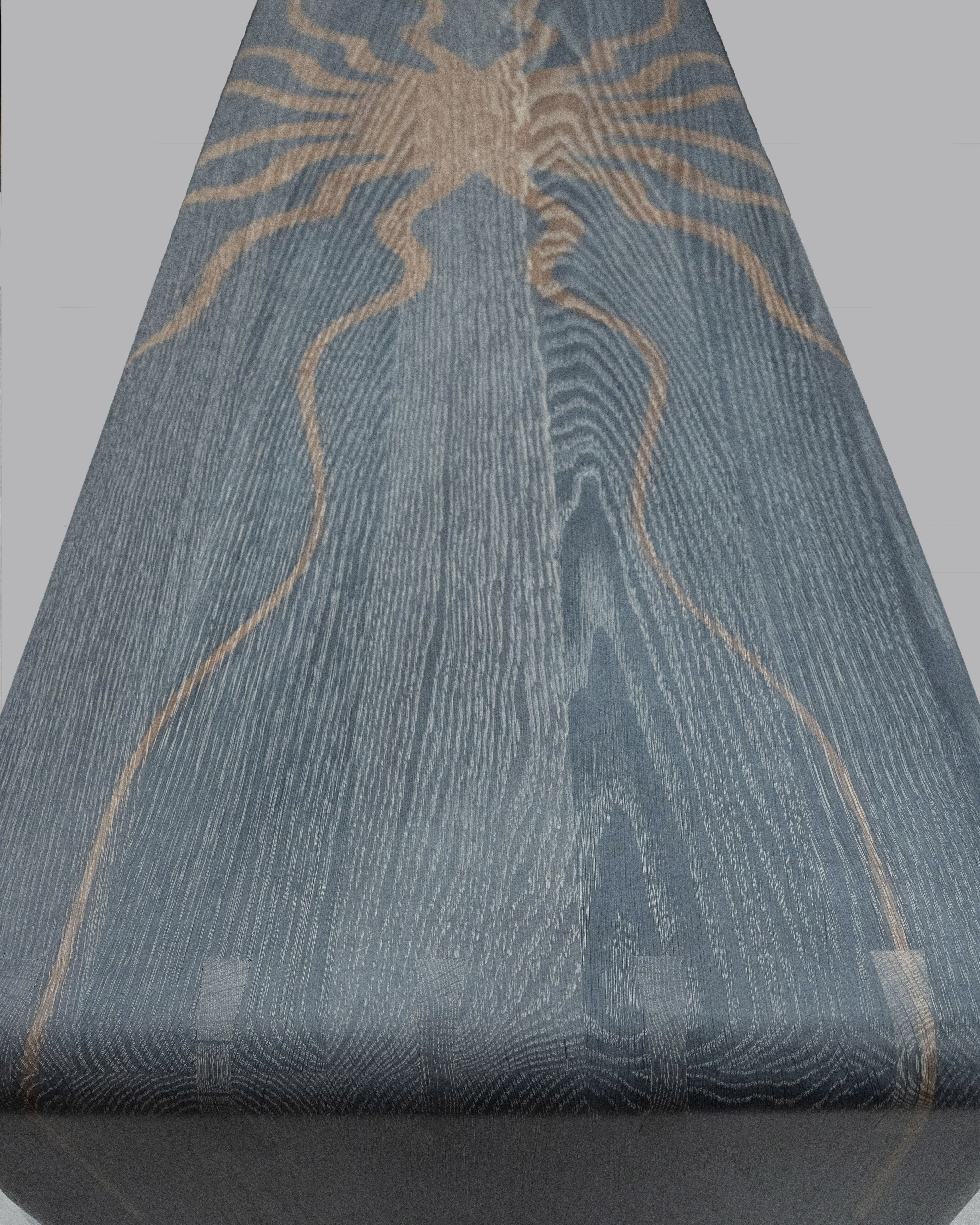
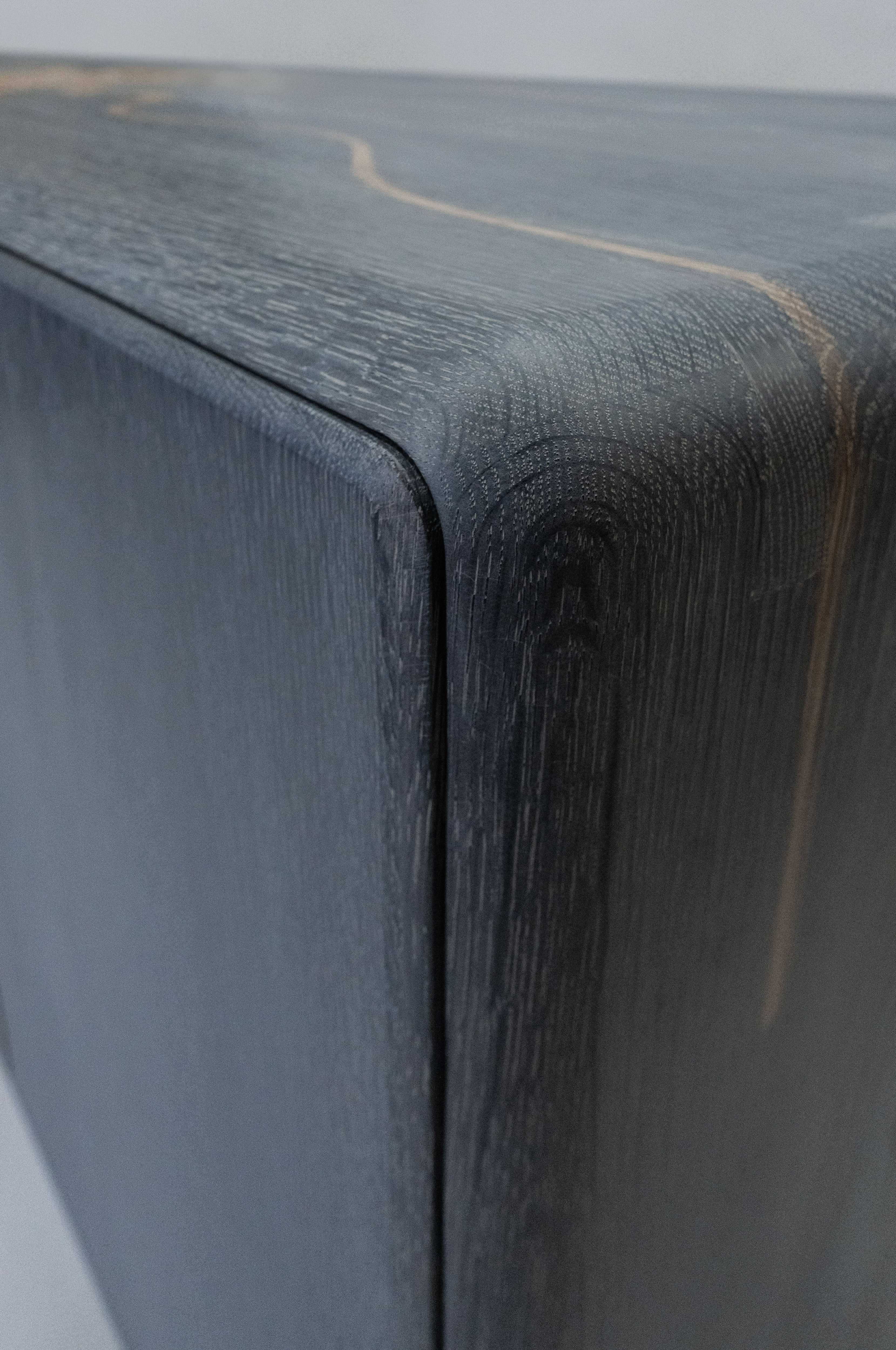
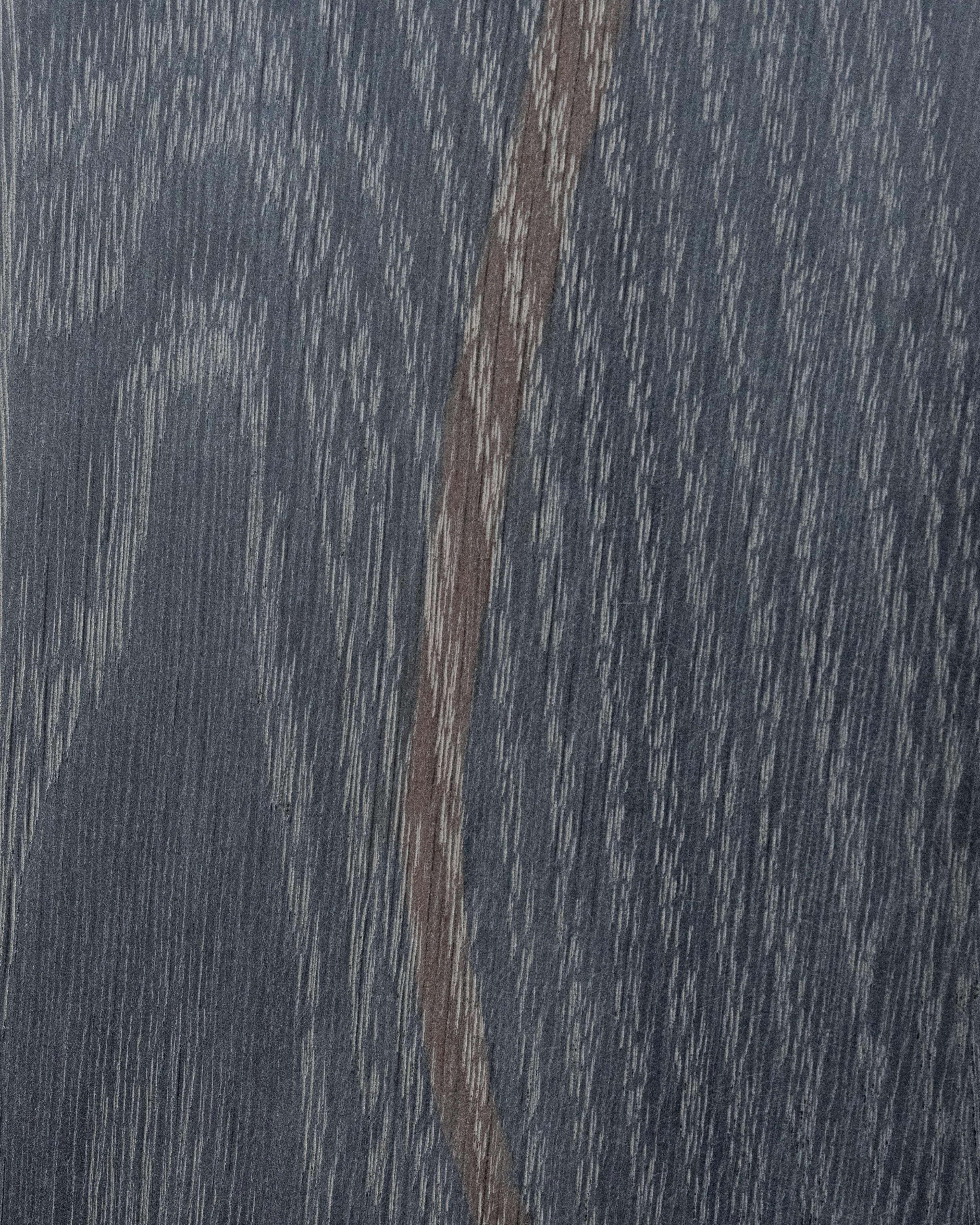
The OXALINO™ Cloud Drip Cabinet is a piece of Collectible Design featuring the maximally decorative OXALINO™ technique that is applied to all surfaces of the furniture, enhancing its physical forms and creating a mesmerizing visual experience.
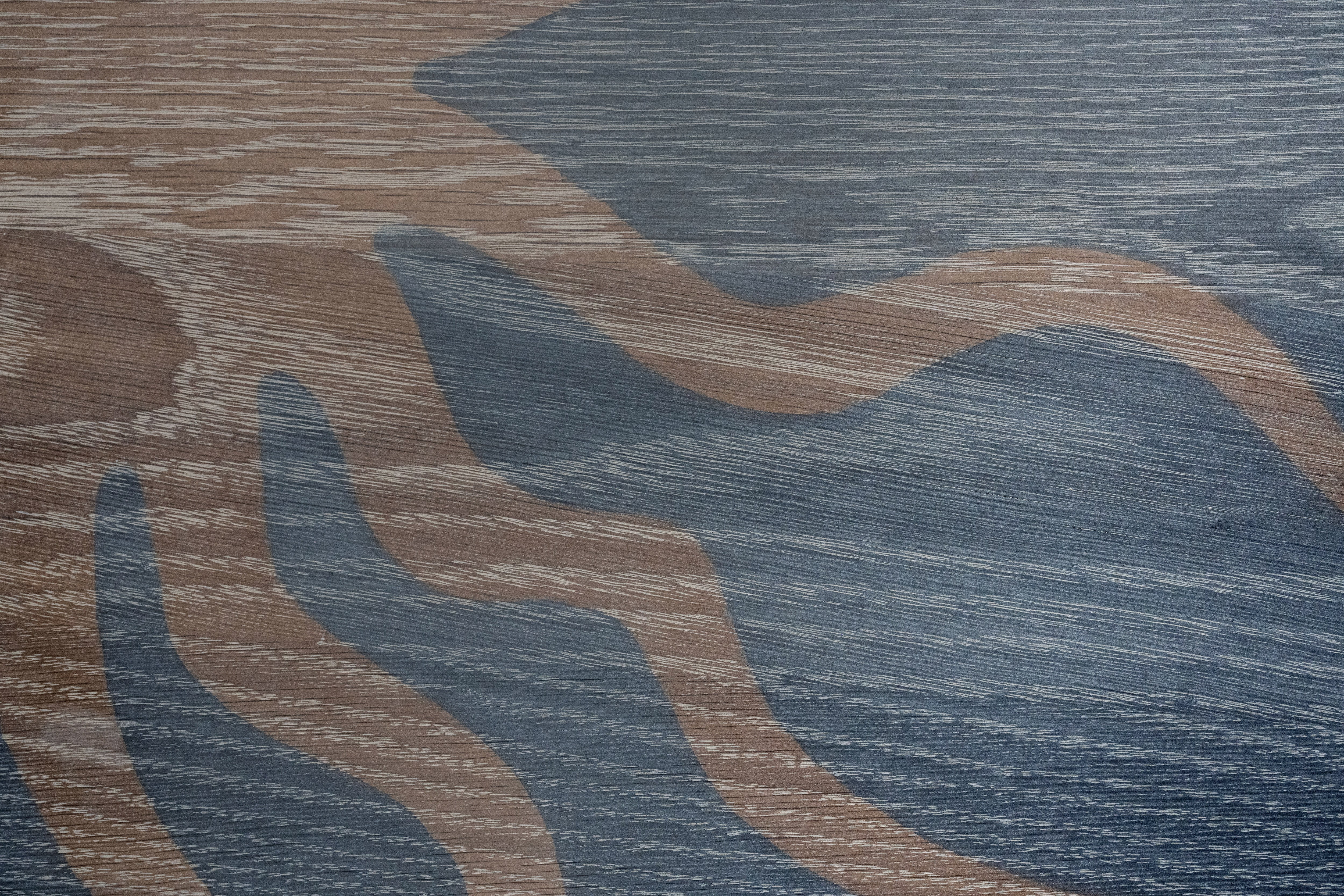
Every piece of OXALINO™ furniture has unique decoration. The line-work is a combination of classical forms and rhythms, mixed with Hamilton Holmes’ own expressive designs.
The pattern is meticulously hand-painted with an oxidizing solution onto tannin-rich wood, causing a chemical reaction. Every line is drawn with a brush. The wood is then finished with a whitened oil that highlights the natural wood grain of the wood creating a moiré effect.
Read the Full Article
Originally published in Furniture & Cabinetmaking, Issue 332, pp. 40–47.
Download the PDF
LONGEVITY AND BEAUTY
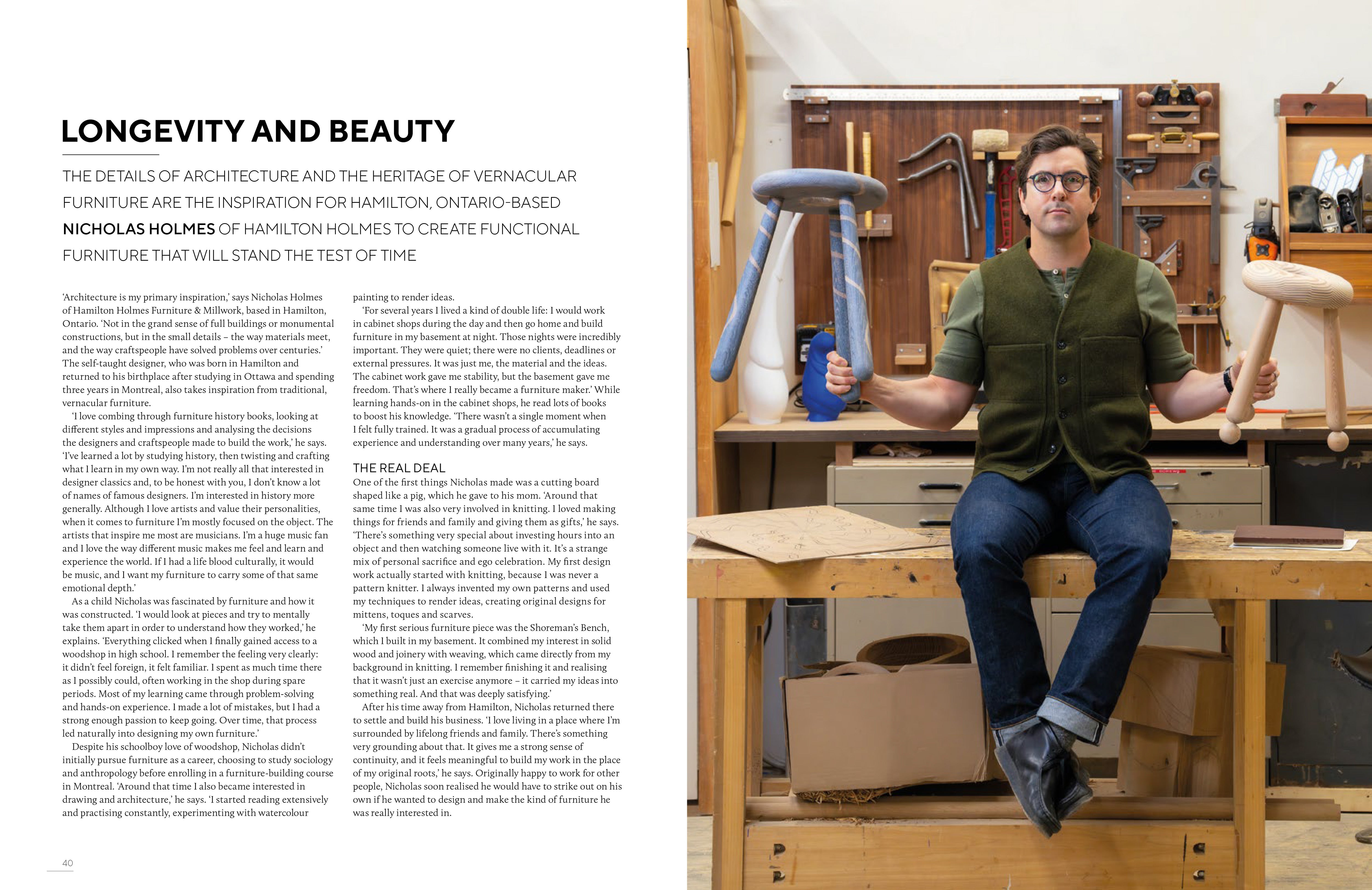
THE DETAILS OF ARCHITECTURE AND THE HERITAGE OF VERNACULAR FURNITURE ARE THE INSPIRATION FOR HAMILTON, ONTARIO-BASED NICHOLAS HOLMES OF HAMILTON HOLMES TO CREATE FUNCTIONAL FURNITURE THAT WILL STAND THE TEST OF TIME
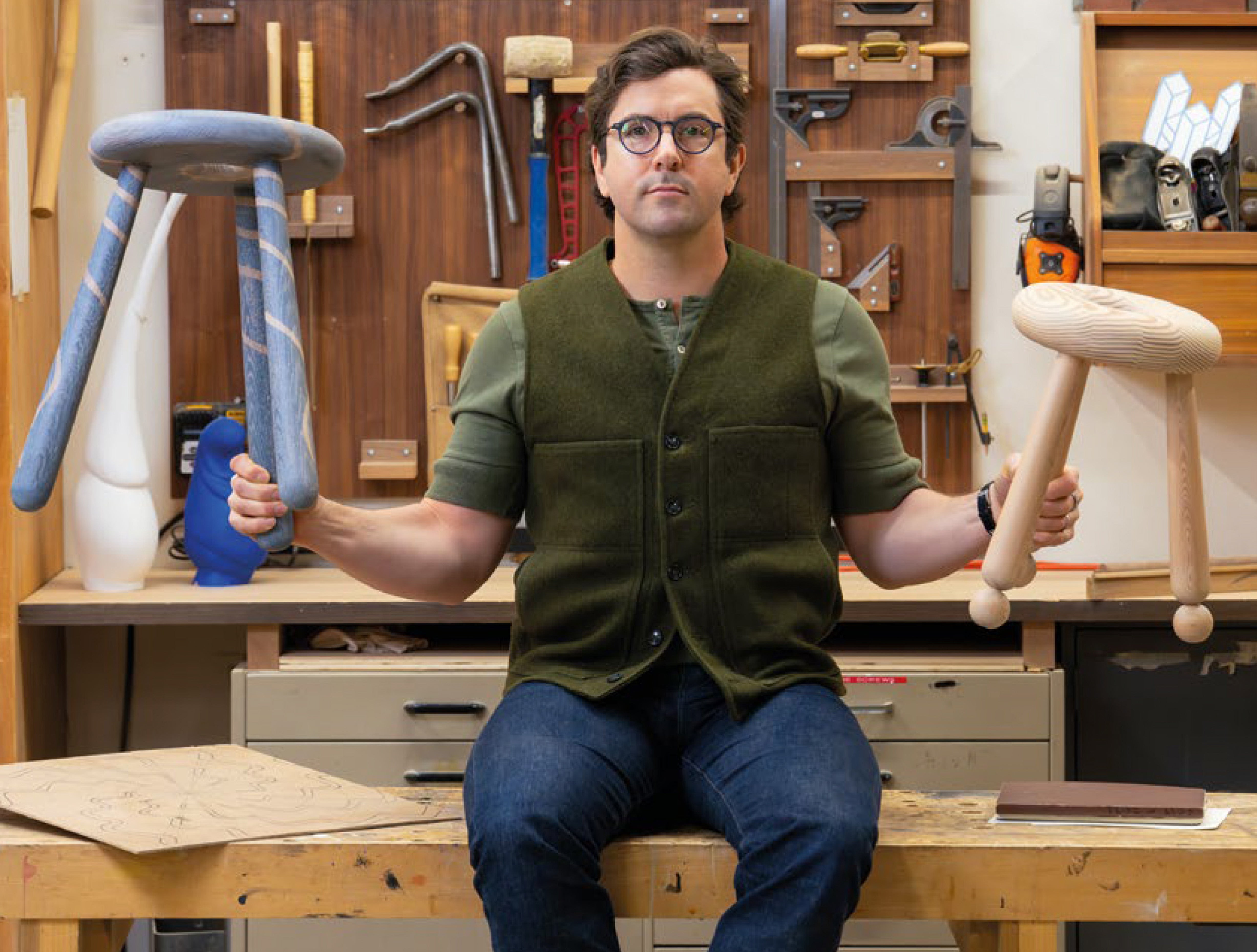
‘Architecture is my primary inspiration,’ says Nicholas Holmes of Hamilton Holmes Furniture & Millwork, based in Hamilton, Ontario. ‘Not in the grand sense of full buildings or monumental constructions, but in the small details – the way materials meet, and the way craftspeople have solved problems over centuries.’
The self-taught designer, who was born in Hamilton and returned to his birthplace after studying in Ottawa and spending three years in Montreal, also takes inspiration from traditional, vernacular furniture.
‘I love combing through furniture history books, looking at different styles and impressions and analysing the decisions the designers and craftspeople made to build the work,’ he says. ‘I’ve learned a lot by studying history, then twisting and crafting what I learn in my own way. I’m not really all that interested in designer classics and, to be honest with you, I don’t know a lot of names of famous designers. I’m interested in history more generally. Although I love artists and value their personalities, when it comes to furniture I’m mostly focused on the object. The artists that inspire me most are musicians. I’m a huge music fan and I love the way different music makes me feel and learn and experience the world. If I had a life blood culturally, it would be music, and I want my furniture to carry some of that same emotional depth.’
As a child Nicholas was fascinated by furniture and how it was constructed. ‘I would look at pieces and try to mentally take them apart in order to understand how they worked,’ he explains. ‘Everything clicked when I finally gained access to a woodshop in high school. I remember the feeling very clearly: it didn’t feel foreign, it felt familiar. I spent as much time there as I possibly could, often working in the shop during spare periods. Most of my learning came through problem-solving and hands-on experience. I made a lot of mistakes, but I had a strong enough passion to keep going. Over time, that process led naturally into designing my own furniture.’
Despite his schoolboy love of woodshop, Nicholas didn’t initially pursue furniture as a career, choosing to study sociology and anthropology before enrolling in a furniture-building course in Montreal. ‘Around that time I also became interested in drawing and architecture,’ he says. ‘I started reading extensively and practising constantly, experimenting with watercolour painting to render ideas.
‘For several years I lived a kind of double life: I would work in cabinet shops during the day and then go home and build furniture in my basement at night. Those nights were incredibly important. They were quiet; there were no clients, deadlines or external pressures. It was just me, the material and the ideas. The cabinet work gave me stability, but the basement gave me freedom. That’s where I really became a furniture maker.’
While learning hands-on in the cabinet shops, he read lots of books to boost his knowledge. ‘There wasn’t a single moment when I felt fully trained. It was a gradual process of accumulating experience and understanding over many years,’ he says.
THE REAL DEAL
One of the first things Nicholas made was a cutting board shaped like a pig, which he gave to his mom. ‘Around that same time I was also very involved in knitting. I loved making things for friends and family and giving them as gifts,’ he says. ‘There’s something very special about investing hours into an object and then watching someone live with it. It’s a strange mix of personal sacrifice and ego celebration. My first design work actually started with knitting, because I was never a pattern knitter. I always invented my own patterns and used my techniques to render ideas, creating original designs for mittens, toques and scarves.
‘My first serious furniture piece was the Shoreman’s Bench, which I built in my basement. It combined my interest in solid wood and joinery with weaving, which came directly from my background in knitting. I remember finishing it and realising that it wasn’t just an exercise anymore – it carried my ideas into something real. And that was deeply satisfying.’
After his time away from Hamilton, Nicholas returned there to settle and build his business. ‘I love living in a place where I’m surrounded by lifelong friends and family. There’s something very grounding about that. It gives me a strong sense of continuity, and it feels meaningful to build my work in the place of my original roots,’ he says.
Originally happy to work for other people, Nicholas soon realised he would have to strike out on his own if he wanted to design and make the kind of furniture he was really interested in.
‘The business grew very gradually,’ he recalls. ‘I began by designing and installing cabinetry projects, which allowed me to earn money and continue building furniture. When I met my wife Krista Salter, who is an interior designer, we began collaborating. She connected us with clients while I focused on execution. I often worked alone in the early days, installing projects myself and solving problems as they arose. Every project taught me something. There was never a master plan. It simply grew organically, in stages. Eventually my ideas and opportunities outgrew my ability and I began looking for help. My first employee Mack started with me at least eight years ago, and since then we’ve grown. The team is now eight people strong and we can accomplish huge projects.’
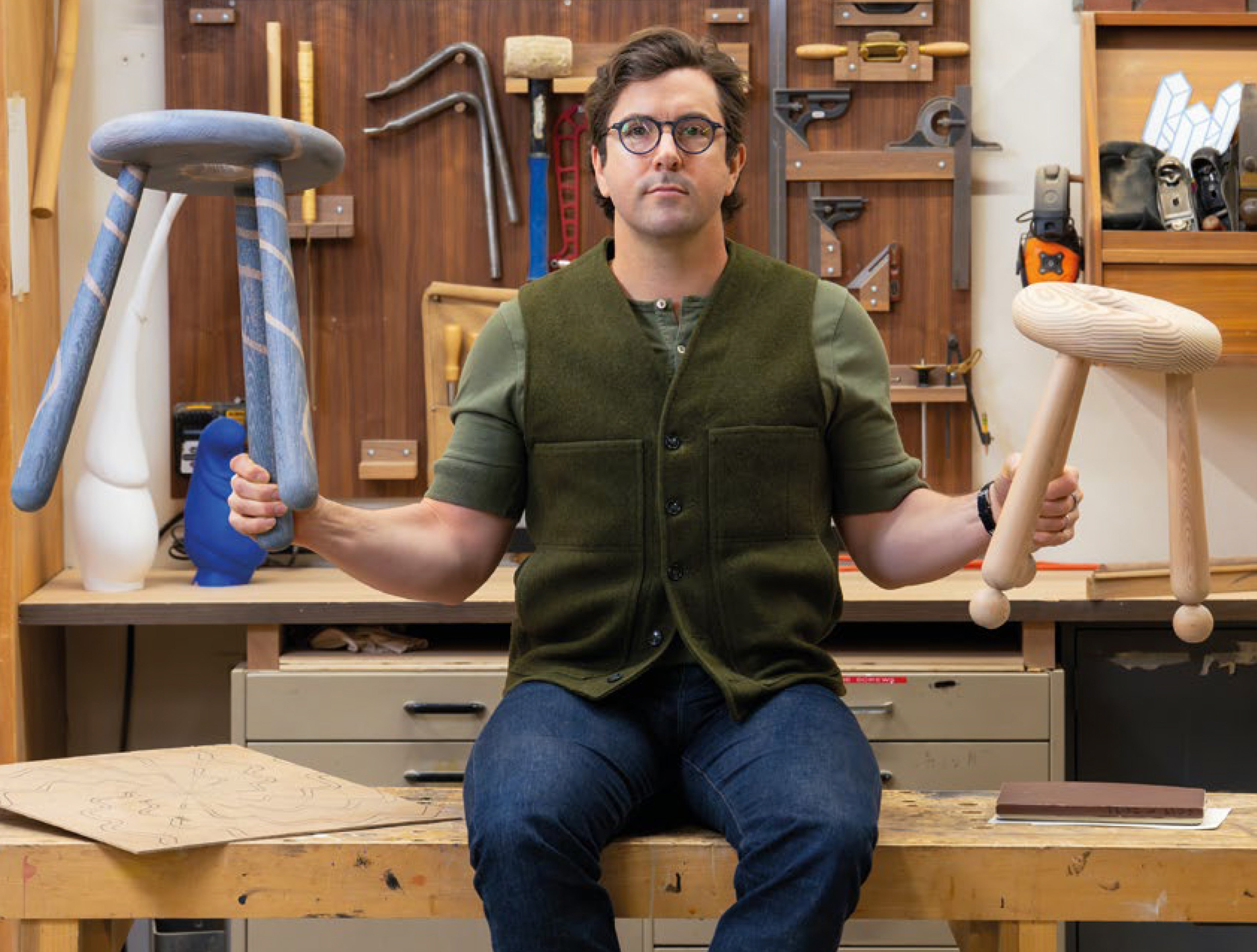
Hamilton Holmes has been in its current workshop for nearly a decade, and has slowly grown and developed the operation. ‘Our workshop is in the centre of our city, and that means all my team can ride their bikes, walk or bus to work,’ he says. ‘We have cafés and bars near to where we work, and it really leads to a higher quality of life. The workshop itself is fairly traditional: we have modern woodworking machines like jointers, planers, bandsaws and tablesaws, and all the hand tools, electric and manual. Our woodshop always has music blaring and people thinking. We try to be safe, creative and happy as much as we can.’
THE TEST OF TIME
‘Traditional craftsmanship is my main stylistic influence,’ says Nicholas. ‘It’s more of a philosophy than a style. I love the durability of traditional techniques and the design details that come from those details. A dovetail, for example, is a beautiful thing, but it’s also a leverage device for joining materials. We all know dovetailed drawers, but dovetails can be used in many ways to hold things together. And when a dovetail holds parts together, the result is also beautiful.
‘Nothing makes me happier than seeing an object that has gone through hell and back over 200 or 300 years and is still functioning like the day it was first built. My work is also influenced by contemporary style, mainly through fashion and music, but those don’t directly translate to design; they influence it through the back-channels of my brain. I value the way fashion and music express themselves with such passion and creativity. I always want my work to be extremely expressive and influence the way people feel – the same way music and fashion influence people. I’m not interested in style as a surface language; I’m interested in building objects that can survive time, both physically and emotionally.’
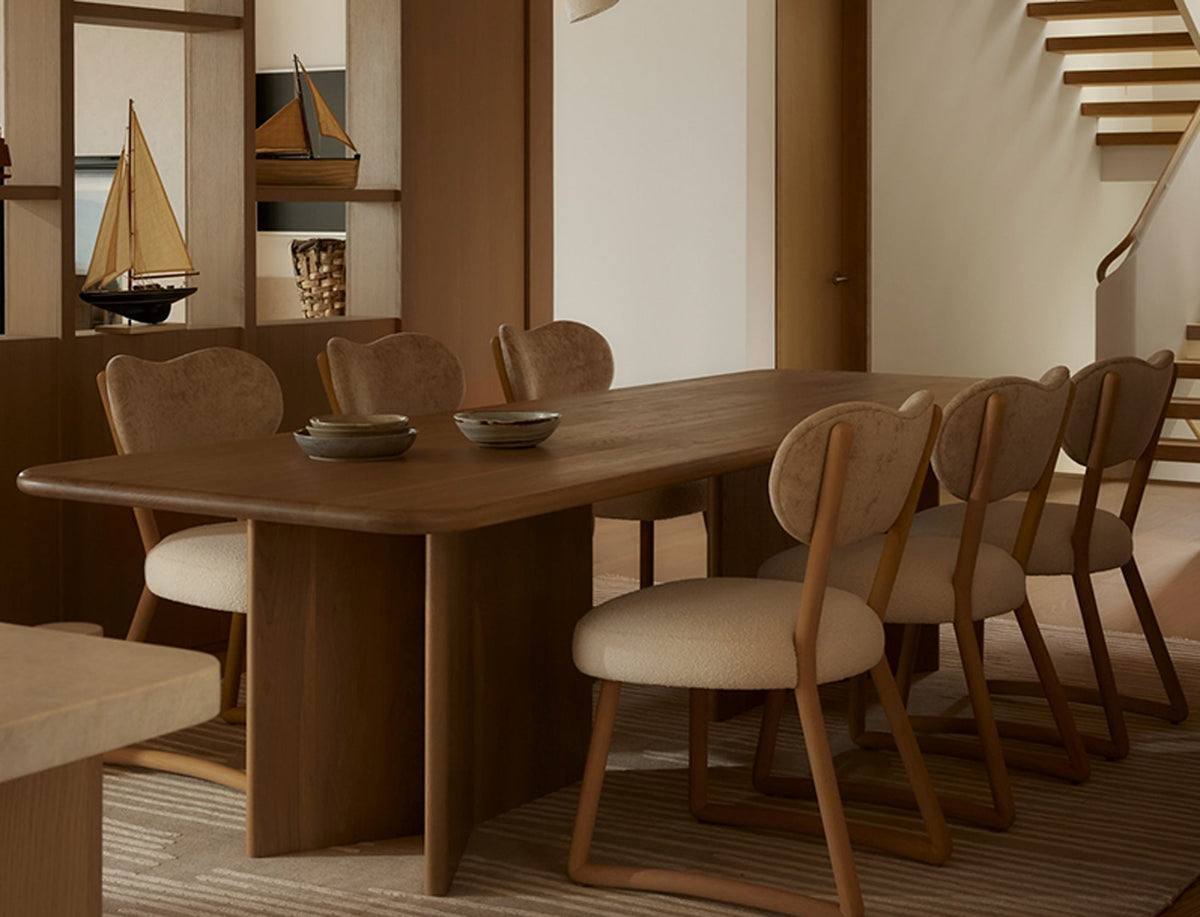
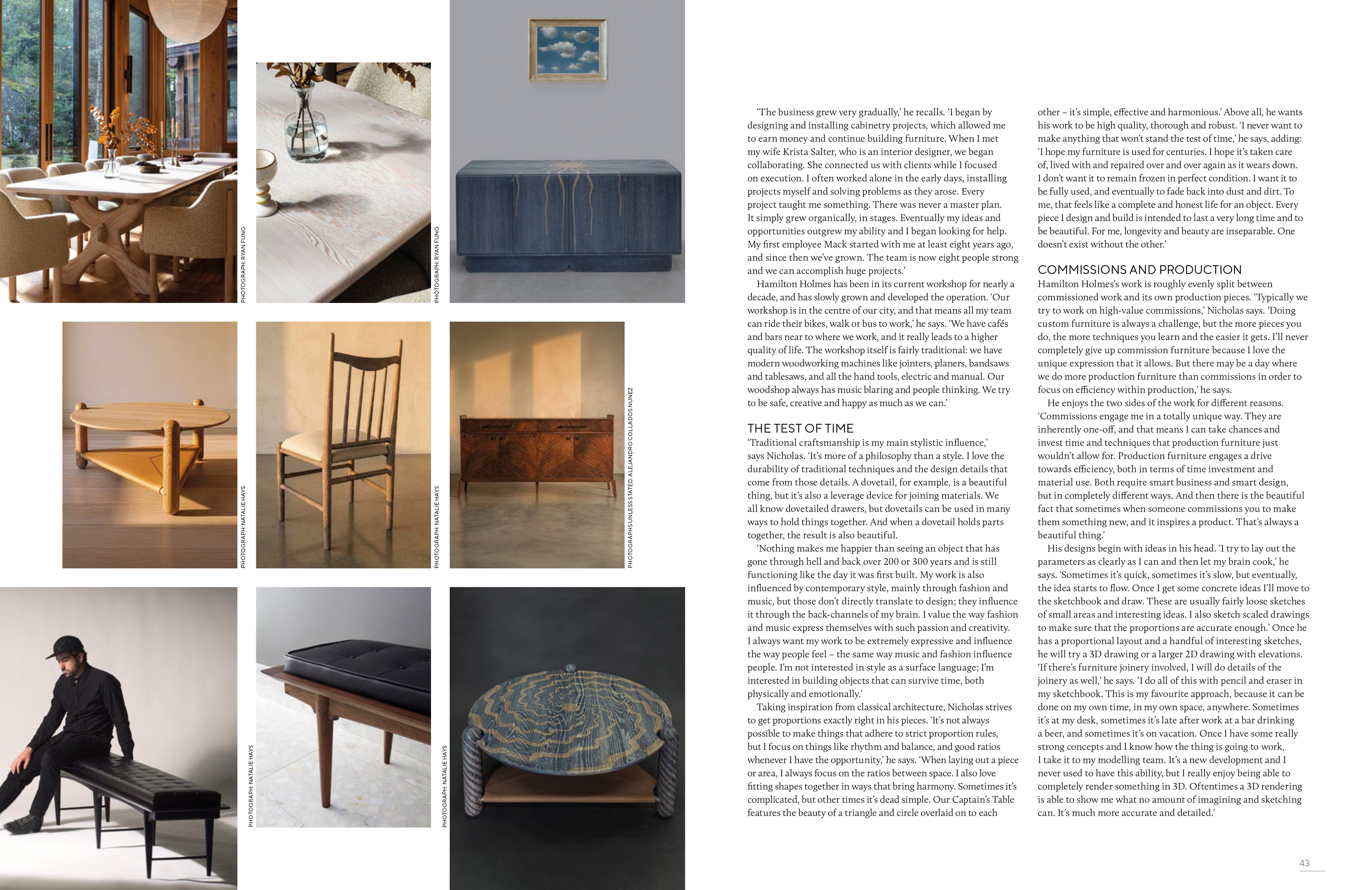
Taking inspiration from classical architecture, Nicholas strives to get proportions exactly right in his pieces. ‘It’s not always possible to make things that adhere to strict proportion rules, but I focus on things like rhythm and balance, and good ratios whenever I have the opportunity,’ he says. ‘When laying out a piece or area, I always focus on the ratios between space. I also love fitting shapes together in ways that bring harmony. Sometimes it’s complicated, but other times it’s dead simple. Our Captain’s Table features the beauty of a triangle and circle overlaid on to each other – it’s simple, effective and harmonious.’
Above all, he wants his work to be high quality, thorough and robust. ‘I never want to make anything that won’t stand the test of time,’ he says, adding: ‘I hope my furniture is used for centuries. I hope it’s taken care of, lived with and repaired over and over again as it wears down. I don’t want it to remain frozen in perfect condition. I want it to be fully used, and eventually to fade back into dust and dirt. To me, that feels like a complete and honest life for an object. Every piece I design and build is intended to last a very long time and to be beautiful. For me, longevity and beauty are inseparable. One doesn’t exist without the other.’
COMMISSIONS AND PRODUCTION
Hamilton Holmes’s work is roughly evenly split between commissioned work and its own production pieces. ‘Typically we try to work on high-value commissions,’ Nicholas says. ‘Doing custom furniture is always a challenge, but the more pieces you do, the more techniques you learn and the easier it gets. I’ll never completely give up commission furniture because I love the unique expression that it allows. But there may be a day where we do more production furniture than commissions in order to focus on efficiency within production,’ he says.
He enjoys the two sides of the work for different reasons. ‘Commissions engage me in a totally unique way. They are inherently one-off, and that means I can take chances and invest time and techniques that production furniture just wouldn’t allow for. Production furniture engages a drive towards efficiency, both in terms of time investment and material use. Both require smart business and smart design, but in completely different ways. And then there is the beautiful fact that sometimes when someone commissions you to make them something new, and it inspires a product. That’s always a beautiful thing.’
His designs begin with ideas in his head. ‘I try to lay out the parameters as clearly as I can and then let my brain cook,’ he says. ‘Sometimes it’s quick, sometimes it’s slow, but eventually, the idea starts to flow. Once I get some concrete ideas I’ll move to the sketchbook and draw. These are usually fairly loose sketches of small areas and interesting ideas. I also sketch scaled drawings to make sure that the proportions are accurate enough.’
Once he has a proportional layout and a handful of interesting sketches, he will try a 3D drawing or a larger 2D drawing with elevations. ‘If there’s furniture joinery involved, I will do details of the joinery as well,’ he says. ‘I do all of this with pencil and eraser in my sketchbook. This is my favourite approach, because it can be done on my own time, in my own space, anywhere. Sometimes it’s at my desk, sometimes it’s late after work at a bar drinking a beer, and sometimes it’s on vacation. Once I have some really strong concepts and I know how the thing is going to work, I take it to my modelling team. It’s a new development and I never used to have this ability, but I really enjoy being able to completely render something in 3D. Oftentimes a 3D rendering is able to show me what no amount of imagining and sketching can. It’s much more accurate and detailed.’
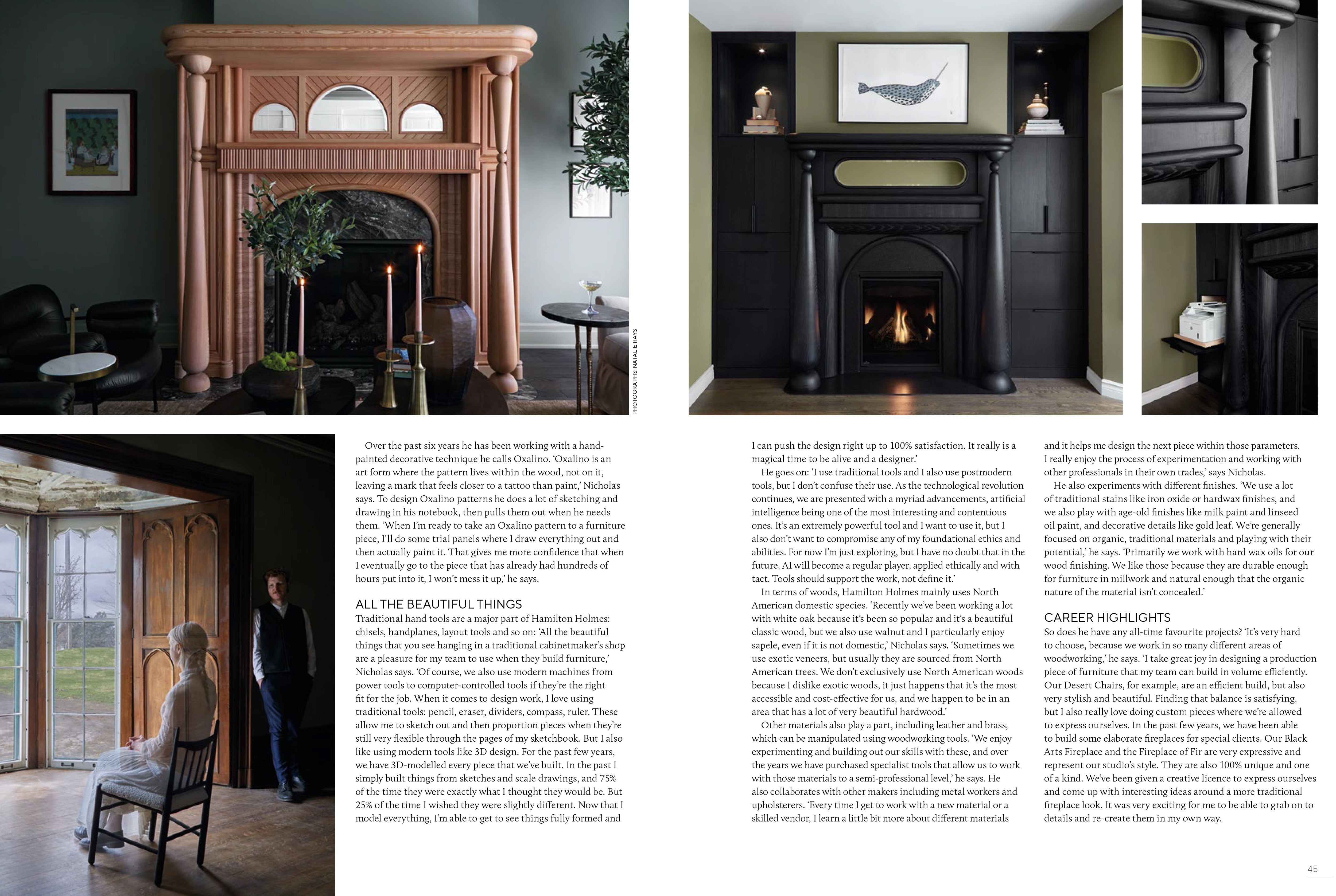
Over the past six years he has been working with a hand-painted decorative technique he calls Oxalino. ‘Oxalino is an art form where the pattern lives within the wood, not on it, leaving a mark that feels closer to a tattoo than paint,’ Nicholas says. To design Oxalino patterns he does a lot of sketching and drawing in his notebook, then pulls them out when he needs them. ‘When I’m ready to take an Oxalino pattern to a furniture piece, I’ll do some trial panels where I draw everything out and then actually paint it. That gives me more confidence that when I eventually go to the piece that has already had hundreds of hours put into it, I won’t mess it up,’ he says.
ALL THE BEAUTIFUL THINGS
Traditional hand tools are a major part of Hamilton Holmes: chisels, handplanes, layout tools and so on: ‘All the beautiful things that you see hanging in a traditional cabinetmaker’s shop are a pleasure for my team to use when they build furniture,’ Nicholas says. ‘Of course, we also use modern machines from power tools to computer-controlled tools if they’re the right fit for the job. When it comes to design work, I love using traditional tools: pencil, eraser, dividers, compass, ruler. These allow me to sketch out and then proportion pieces when they’re still very flexible through the pages of my sketchbook. But I also like using modern tools like 3D design. For the past few years, we have 3D-modelled every piece that we’ve built. In the past I simply built things from sketches and scale drawings, and 75% of the time they were exactly what I thought they would be. But 25% of the time I wished they were slightly different. Now that I model everything, I’m able to get to see things fully formed and I can push the design right up to 100% satisfaction. It really is a magical time to be alive and a designer.’
He goes on: ‘I use traditional tools and I also use postmodern tools, but I don’t confuse their use. As the technological revolution continues, we are presented with a myriad advancements, artificial intelligence being one of the most interesting and contentious ones. It’s an extremely powerful tool and I want to use it, but I also don’t want to compromise any of my foundational ethics and abilities. For now I’m just exploring, but I have no doubt that in the future, AI will become a regular player, applied ethically and with tact. Tools should support the work, not define it.’
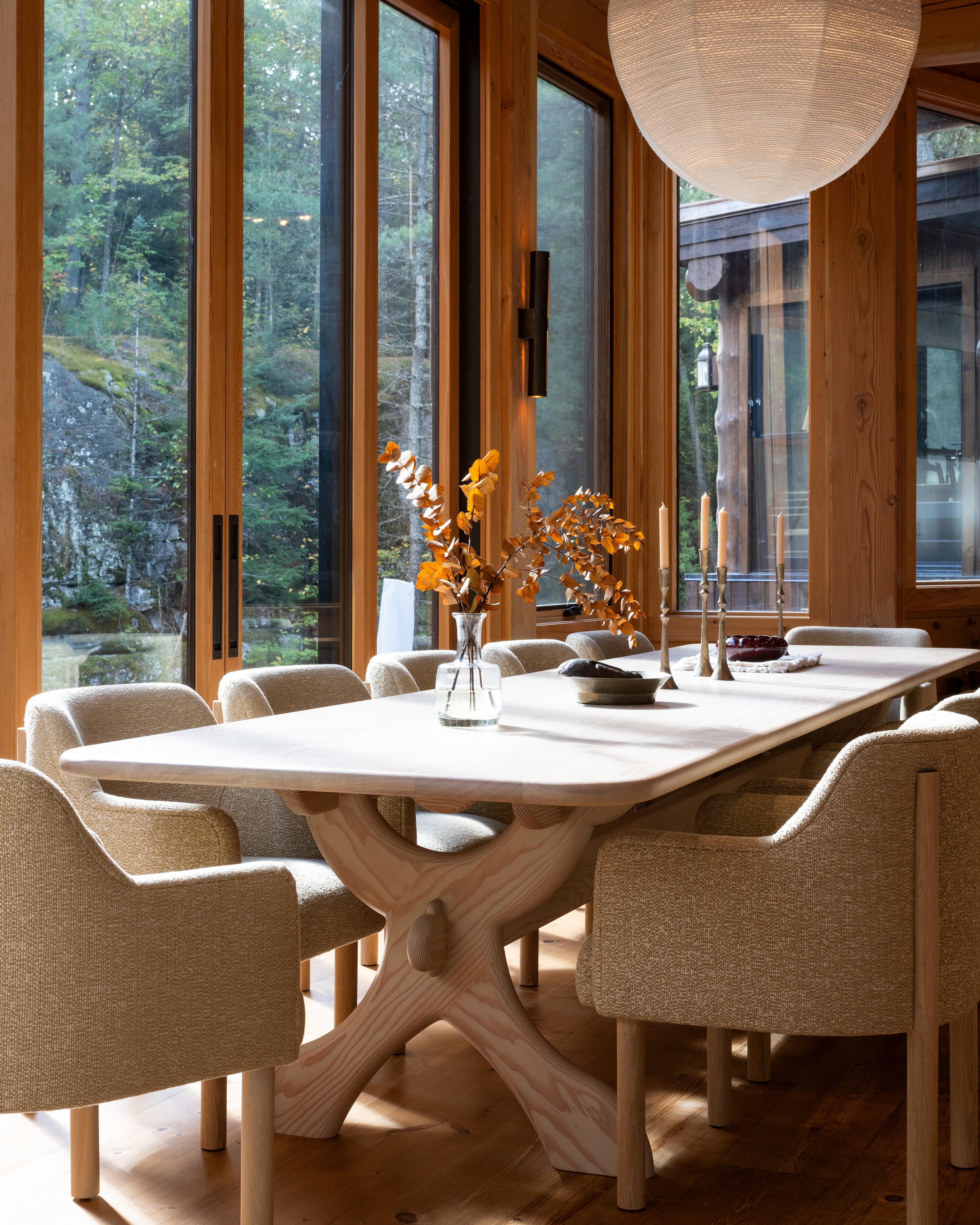
In terms of woods, Hamilton Holmes mainly uses North American domestic species. ‘Recently we’ve been working a lot with white oak because it’s been so popular and it’s a beautiful classic wood, but we also use walnut and I particularly enjoy sapele, even if it is not domestic,’ Nicholas says. ‘Sometimes we use exotic veneers, but usually they are sourced from North American trees. We don’t exclusively use North American woods because I dislike exotic woods, it just happens that it’s the most accessible and cost-effective for us, and we happen to be in an area that has a lot of very beautiful hardwood.’
Other materials also play a part, including leather and brass, which can be manipulated using woodworking tools. ‘We enjoy experimenting and building out our skills with these, and over the years we have purchased specialist tools that allow us to work with those materials to a semi-professional level,’ he says. He also collaborates with other makers including metal workers and upholsterers. ‘Every time I get to work with a new material or a skilled vendor, I learn a little bit more about different materials and it helps me design the next piece within those parameters. I really enjoy the process of experimentation and working with other professionals in their own trades,’ says Nicholas.
He also experiments with different finishes. ‘We use a lot of traditional stains like iron oxide or hardwax finishes, and we also play with age-old finishes like milk paint and linseed oil paint, and decorative details like gold leaf. We’re generally focused on organic, traditional materials and playing with their potential,’ he says. ‘Primarily we work with hard wax oils for our wood finishing. We like those because they are durable enough for furniture in millwork and natural enough that the organic nature of the material isn’t concealed.’
CAREER HIGHLIGHTS
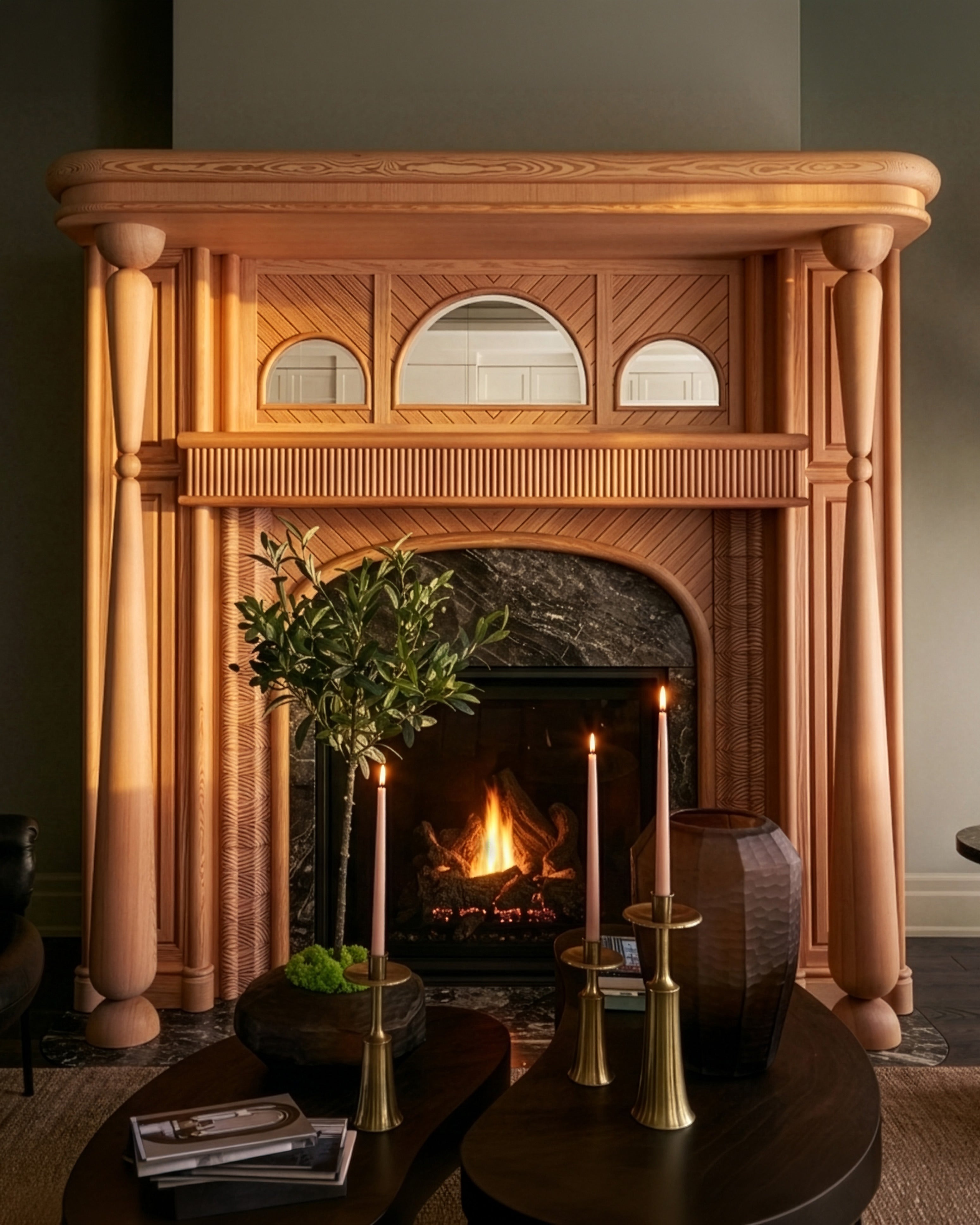
So does he have any all-time favourite projects? ‘It’s very hard to choose, because we work in so many different areas of woodworking,’ he says. ‘I take great joy in designing a production piece of furniture that my team can build in volume efficiently. Our Desert Chairs, for example, are an efficient build, but also very stylish and beautiful. Finding that balance is satisfying, but I also really love doing custom pieces where we’re allowed to express ourselves. In the past few years, we have been able to build some elaborate fireplaces for special clients. Our Black Arts Fireplace and the Fireplace of Fir are very expressive and represent our studio’s style. They are also 100% unique and one of a kind. We’ve been given a creative licence to express ourselves and come up with interesting ideas around a more traditional fireplace look. It was very exciting for me to be able to grab on to details and re-create them in my own way.
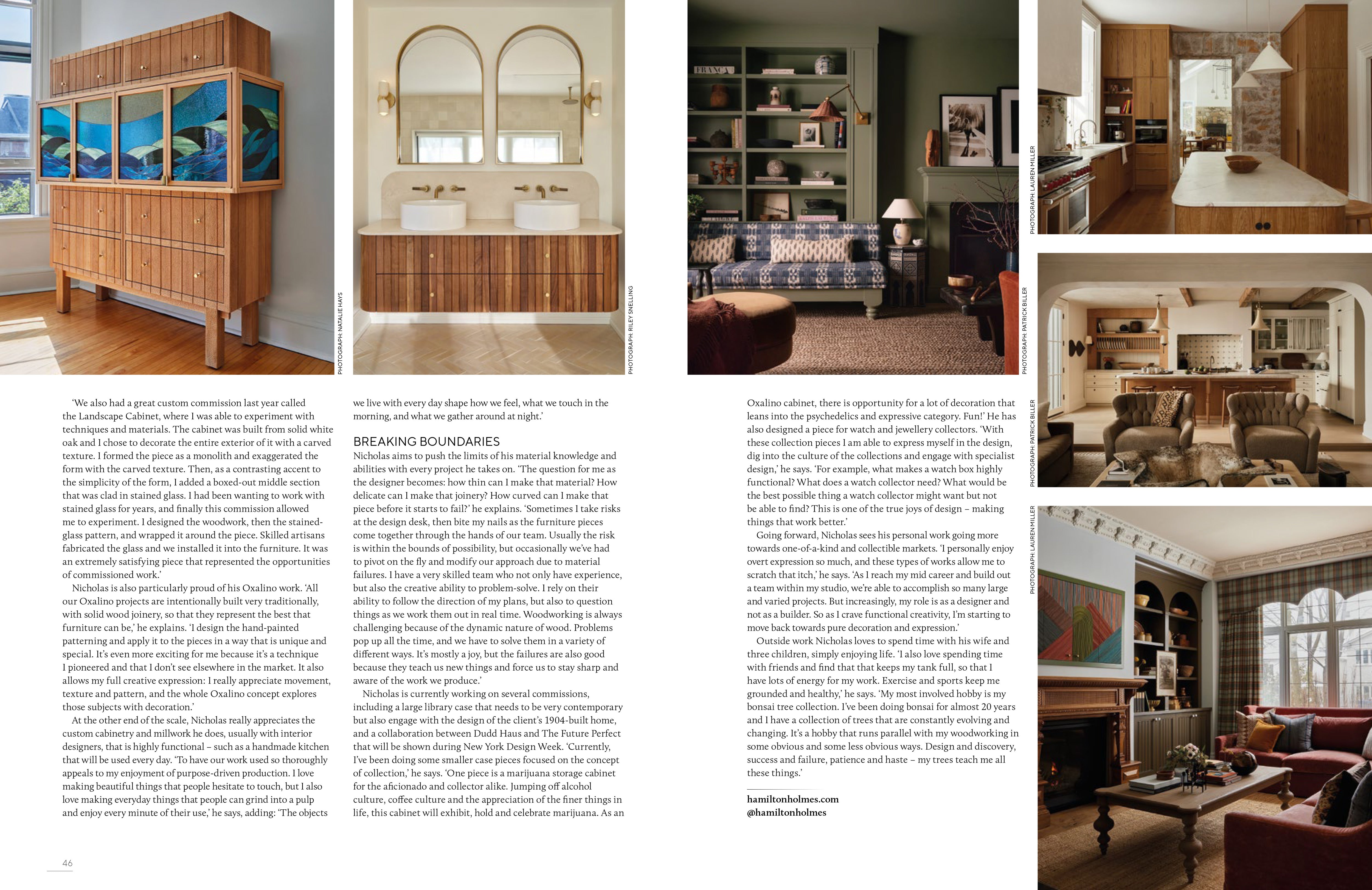
‘We also had a great custom commission last year called the Landscape Cabinet, where I was able to experiment with techniques and materials. The cabinet was built from solid white oak and I chose to decorate the entire exterior of it with a carved texture. I formed the piece as a monolith and exaggerated the form with the carved texture. Then, as a contrasting accent to the simplicity of the form, I added a boxed-out middle section that was clad in stained glass. I had been wanting to work with stained glass for years, and finally this commission allowed me to experiment. I designed the woodwork, then the stained-glass pattern, and wrapped it around the piece. Skilled artisans fabricated the glass and we installed it into the furniture. It was an extremely satisfying piece that represented the opportunities of commissioned work.’
Nicholas is also particularly proud of his Oxalino work. ‘All our Oxalino projects are intentionally built very traditionally, with solid wood joinery, so that they represent the best that furniture can be,’ he explains. ‘I design the hand-painted patterning and apply it to the pieces in a way that is unique and special. It’s even more exciting for me because it’s a technique I pioneered and that I don’t see elsewhere in the market. It also allows my full creative expression: I really appreciate movement, texture and pattern, and the whole Oxalino concept explores those subjects with decoration.’
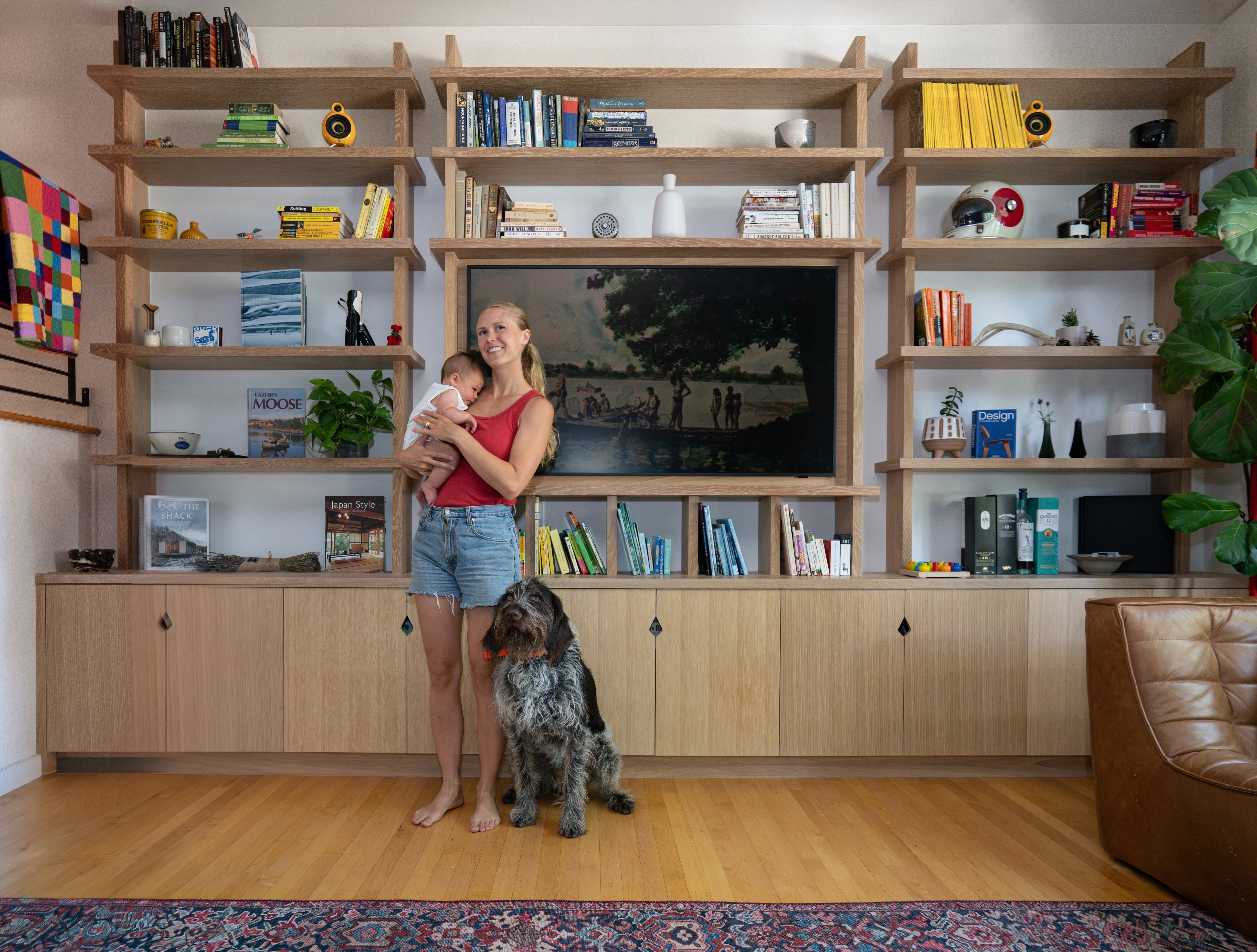
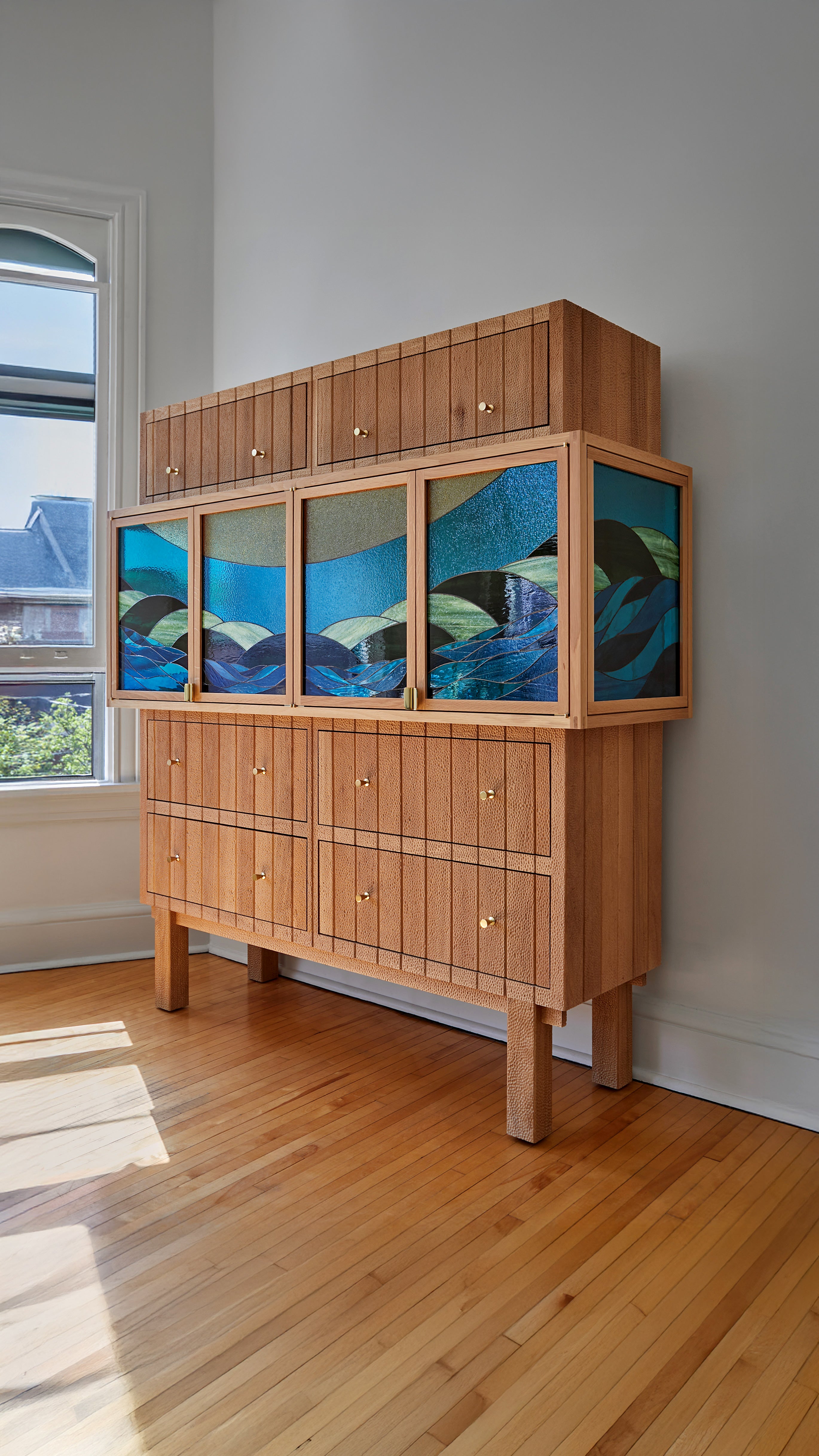
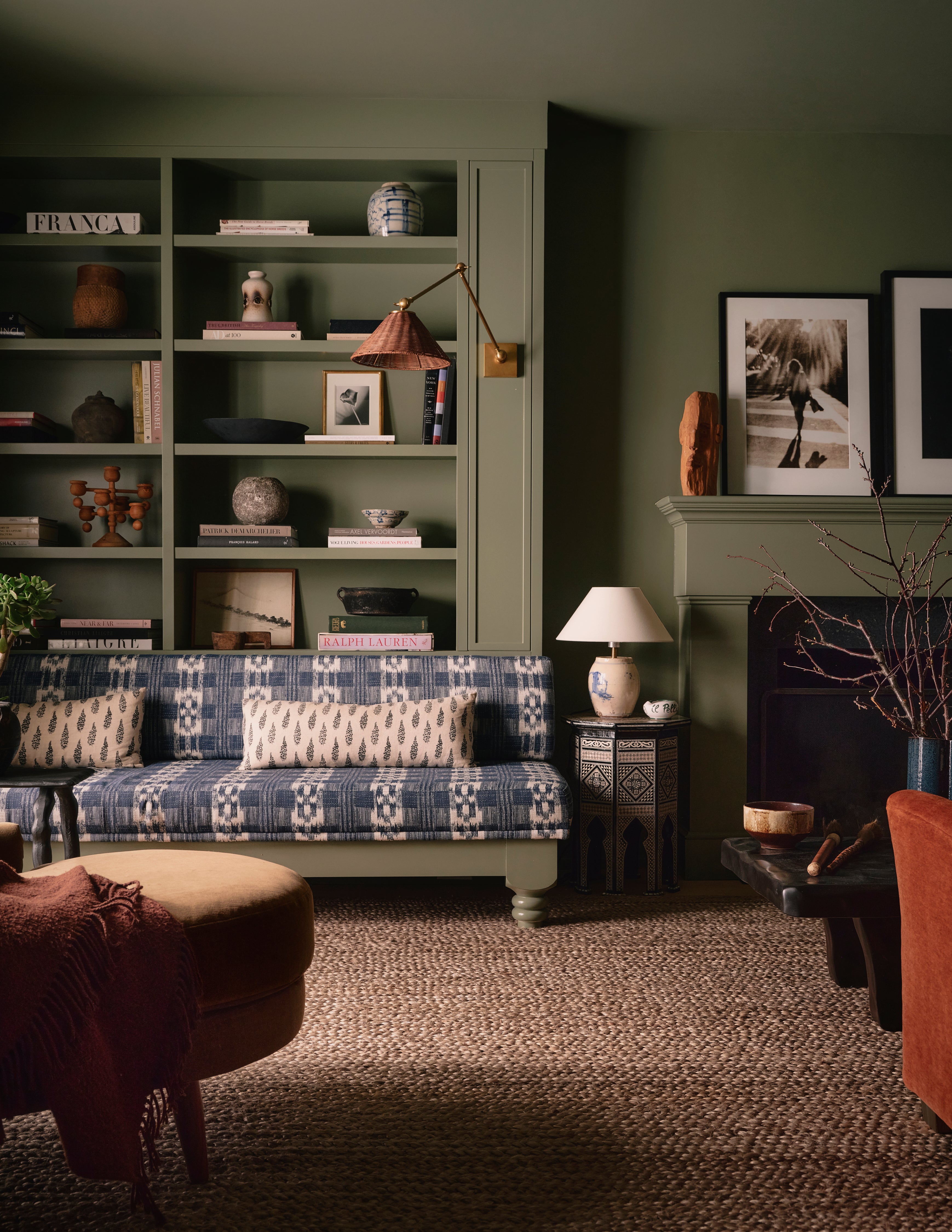
At the other end of the scale, Nicholas really appreciates the custom cabinetry and millwork he does, usually with interior designers, that is highly functional – such as a handmade kitchen that will be used every day. ‘To have our work used so thoroughly appeals to my enjoyment of purpose-driven production. I love making beautiful things that people hesitate to touch, but I also love making everyday things that people can grind into a pulp and enjoy every minute of their use,’ he says, adding: ‘The objects we live with every day shape how we feel, what we touch in the morning, and what we gather around at night.’
BREAKING BOUNDARIES
Nicholas aims to push the limits of his material knowledge and abilities with every project he takes on. ‘The question for me as the designer becomes: how thin can I make that material? How delicate can I make that joinery? How curved can I make that piece before it starts to fail?’ he explains. ‘Sometimes I take risks at the design desk, then bite my nails as the furniture pieces come together through the hands of our team. Usually the risk is within the bounds of possibility, but occasionally we’ve had to pivot on the fly and modify our approach due to material failures. I have a very skilled team who not only have experience, but also the creative ability to problem-solve. I rely on their ability to follow the direction of my plans, but also to question things as we work them out in real time. Woodworking is always challenging because of the dynamic nature of wood. Problems pop up all the time, and we have to solve them in a variety of different ways. It’s mostly a joy, but the failures are also good because they teach us new things and force us to stay sharp and aware of the work we produce.’
Nicholas is currently working on several commissions, including a large library case that needs to be very contemporary but also engage with the design of the client’s 1904-built home, and a collaboration between Dudd Haus and The Future Perfect that will be shown during New York Design Week.
‘Currently, I’ve been doing some smaller case pieces focused on the concept of collection,’ he says. ‘One piece is a marijuana storage cabinet for the aficionado and collector alike. Jumping off alcohol culture, coffee culture and the appreciation of the finer things in life, this cabinet will exhibit, hold and celebrate marijuana. As an Oxalino cabinet, there is opportunity for a lot of decoration that leans into the psychedelics and expressive category. Fun!’
He has also designed a piece for watch and jewellery collectors. ‘With these collection pieces I am able to express myself in the design, dig into the culture of the collections and engage with specialist design,’ he says. ‘For example, what makes a watch box highly functional? What does a watch collector need? What would be the best possible thing a watch collector might want but not be able to find? This is one of the true joys of design – making things that work better.’
Going forward, Nicholas sees his personal work going more towards one-of-a-kind and collectible markets. ‘I personally enjoy overt expression so much, and these types of works allow me to scratch that itch,’ he says. ‘As I reach my mid career and build out a team within my studio, we’re able to accomplish so many large and varied projects. But increasingly, my role is as a designer and not as a builder. So as I crave functional creativity, I’m starting to move back towards pure decoration and expression.’
Outside work Nicholas loves to spend time with his wife and three children, simply enjoying life. ‘I also love spending time with friends and find that that keeps my tank full, so that I have lots of energy for my work. Exercise and sports keep me grounded and healthy,’ he says. ‘My most involved hobby is my bonsai tree collection. I’ve been doing bonsai for almost 20 years and I have a collection of trees that are constantly evolving and changing. It’s a hobby that runs parallel with my woodworking in some obvious and some less obvious ways. Design and discovery, success and failure, patience and haste – my trees teach me all these things.’