Georgian Bay Beach House
Two custom tables for a family home overlooking Georgian Bay
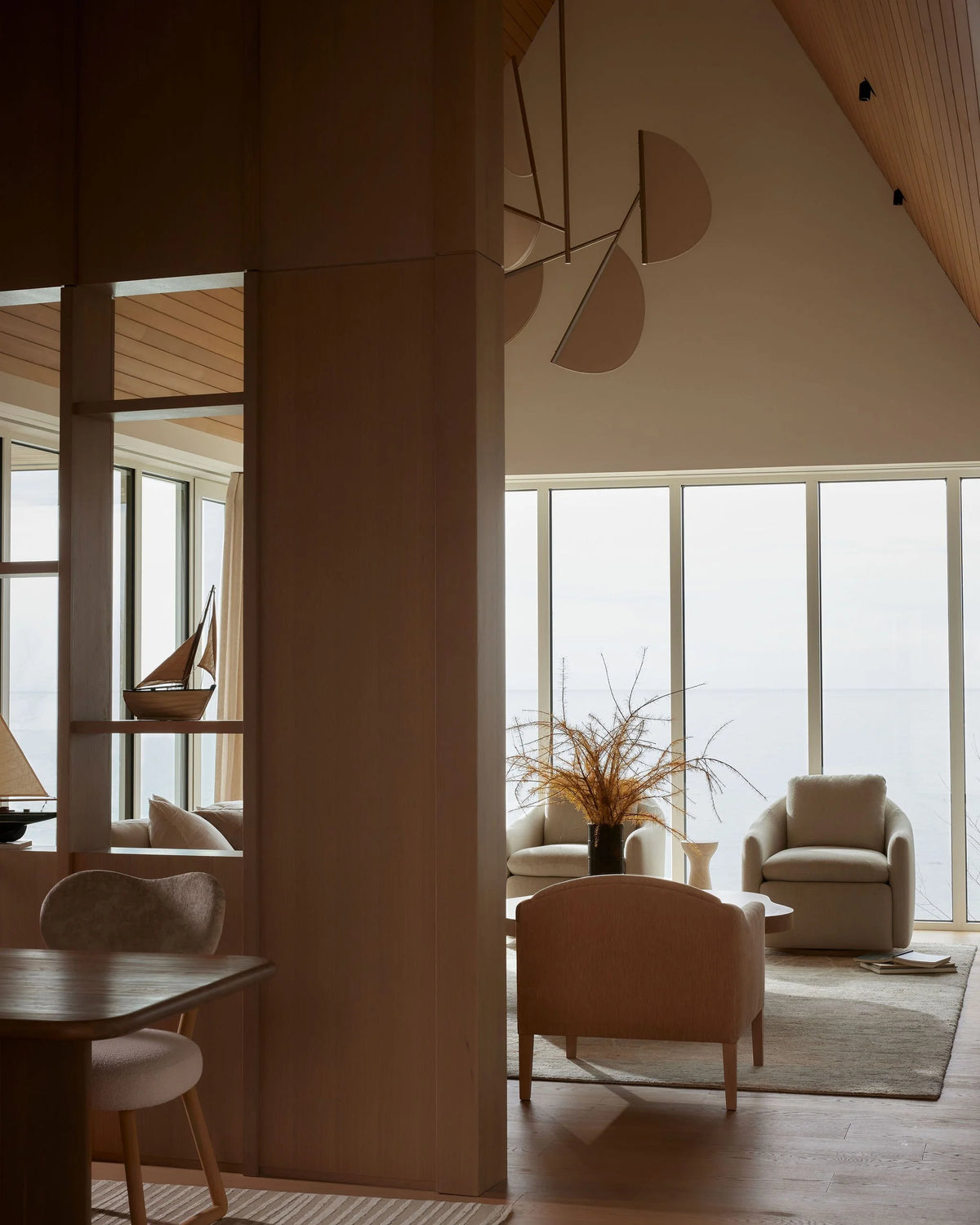
Set along the shoreline of Georgian Bay, this year-round home was designed around family, gathering, and a close relationship with the water.
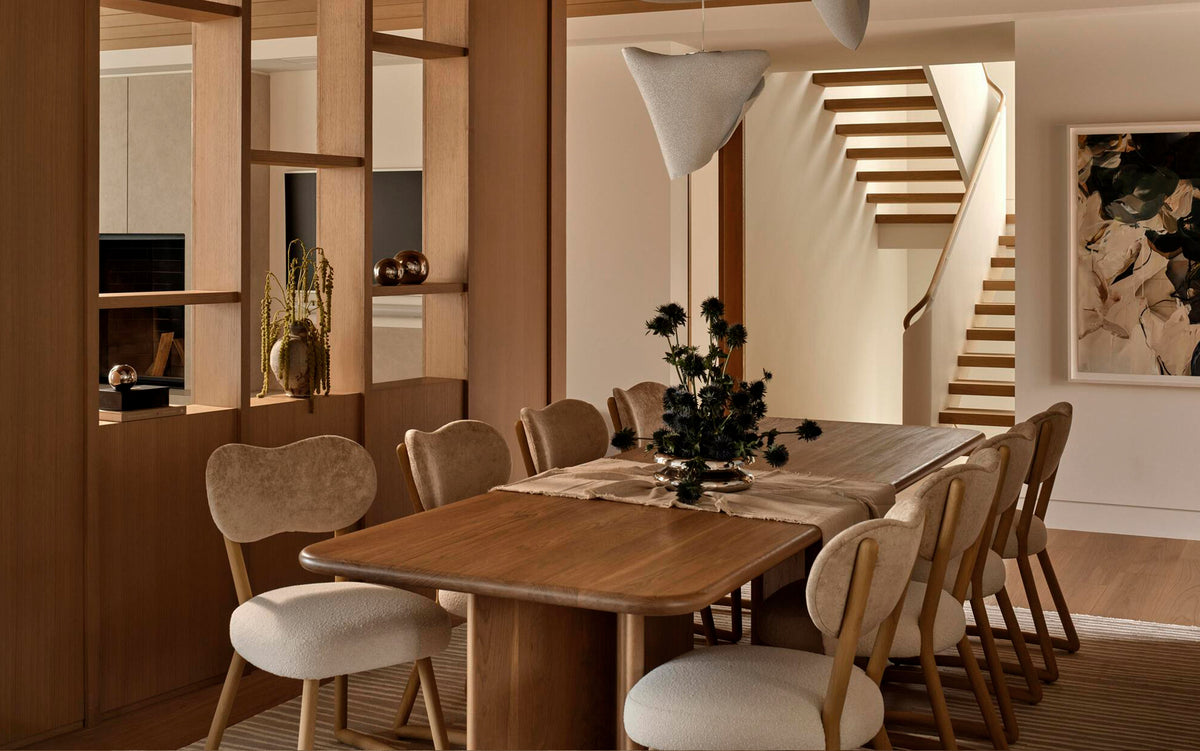
Working with the interior design team, Hamilton Holmes created two custom pieces for the main living spaces: a generous dining table at the centre of the open-plan interior and a low coffee table positioned directly before the lake.
The tables serve different purposes, but they speak the same language. Softened edges, substantial forms, and carefully considered proportions connect the dining and living areas while allowing the architecture and landscape to remain central.
Project Details
Location: Georgian Bay, Ontario
Scope: Custom dining table and coffee table
Interior Design: &Pierre and Westgrove
Architecture: Don Schmitt and Gio Tassone Architects
Builder: Valley View Construction
Custom Furniture: Hamilton Holmes
Photography: Lauren Miller
Styling: Kaela Shaw
Furniture shaped by the architecture and the view
The Georgian Bay Beach House replaces a longstanding family cottage with an enduring home designed for year-round living.
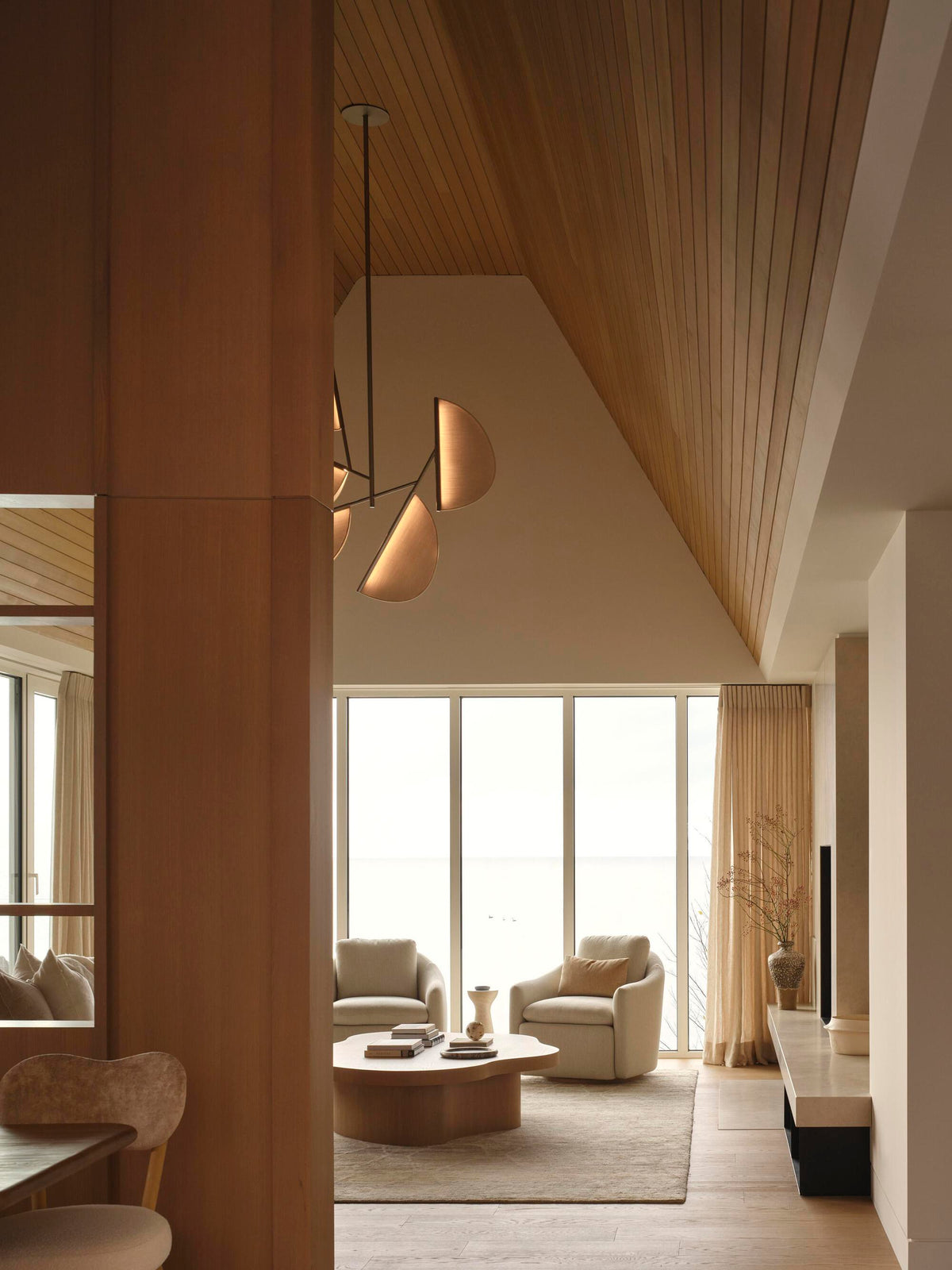
Inside, the architecture is defined by open sightlines, high wood-clad ceilings, warm architectural millwork, natural stone, and softly finished surfaces. The principal rooms flow into one another before opening toward a broad view of the lake.
Within an interior this open, furniture cannot be considered in isolation. Each piece becomes part of the larger architectural composition.
The challenge was to create two tables with enough presence to anchor their respective rooms without interrupting the calm of the interior or competing with the landscape beyond it.
Anchoring an open interior without making it feel heavy
The dining table needed to accommodate large family gatherings and establish a clear centre within the open-plan living space. At the same time, it had to preserve circulation between the kitchen, dining area, and living room.
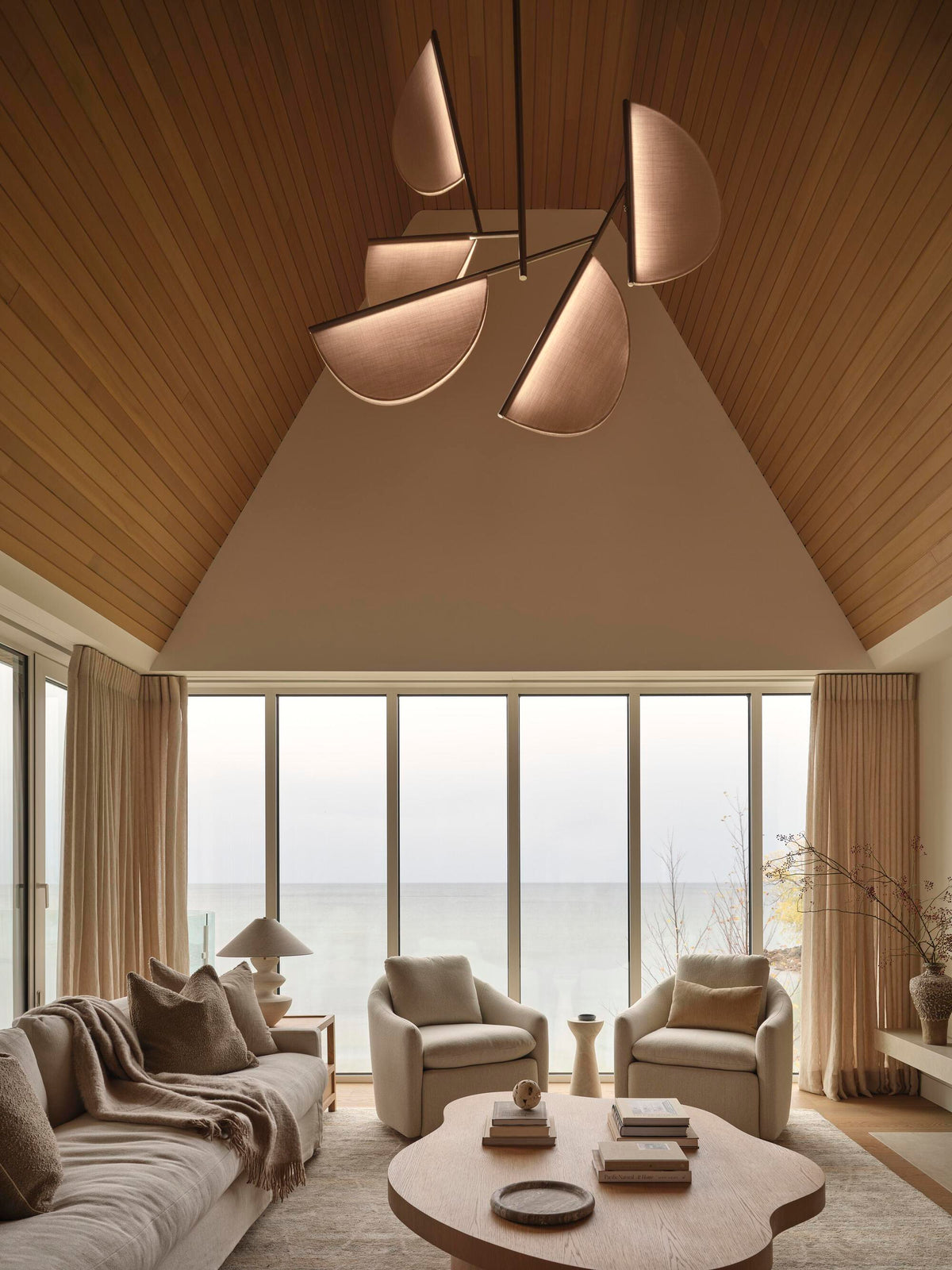
In the adjoining seating area, the coffee table needed to hold a generous arrangement of furniture while maintaining an uninterrupted visual connection with Georgian Bay.
Both pieces required substance, but not visual weight. They needed to feel permanent without becoming imposing and sculptural without drawing attention away from the rooms around them.
The solution came through proportion, material, and a shared vocabulary of softened geometry.
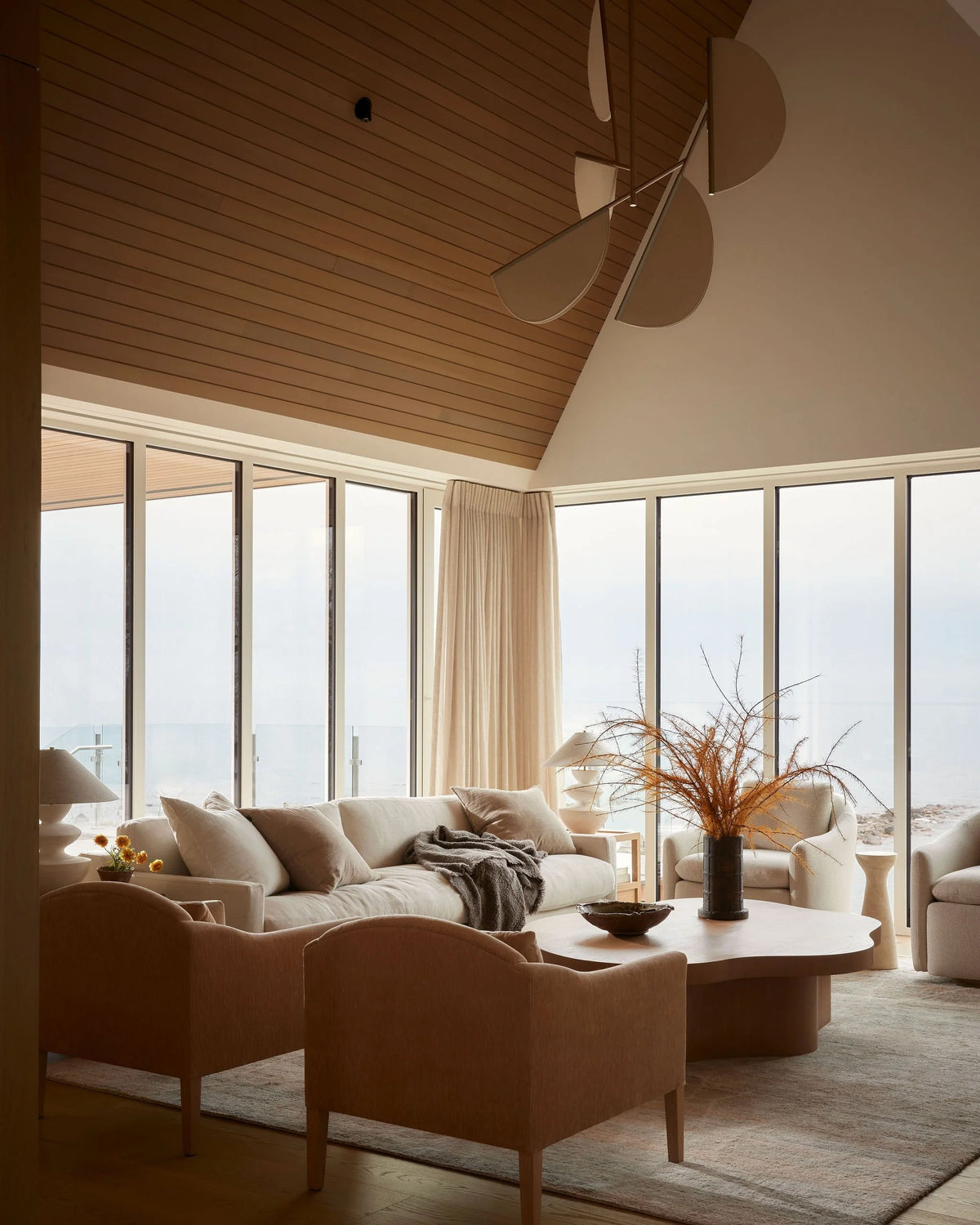
“The two rooms asked for very different pieces, but they needed to feel related. The dining table had to bring people together, while the coffee table needed to sit quietly against the lake and preserve that connection to the horizon.”
Nicholas Holmes
Founder, Owner, Principal Designer Hamilton Holmes
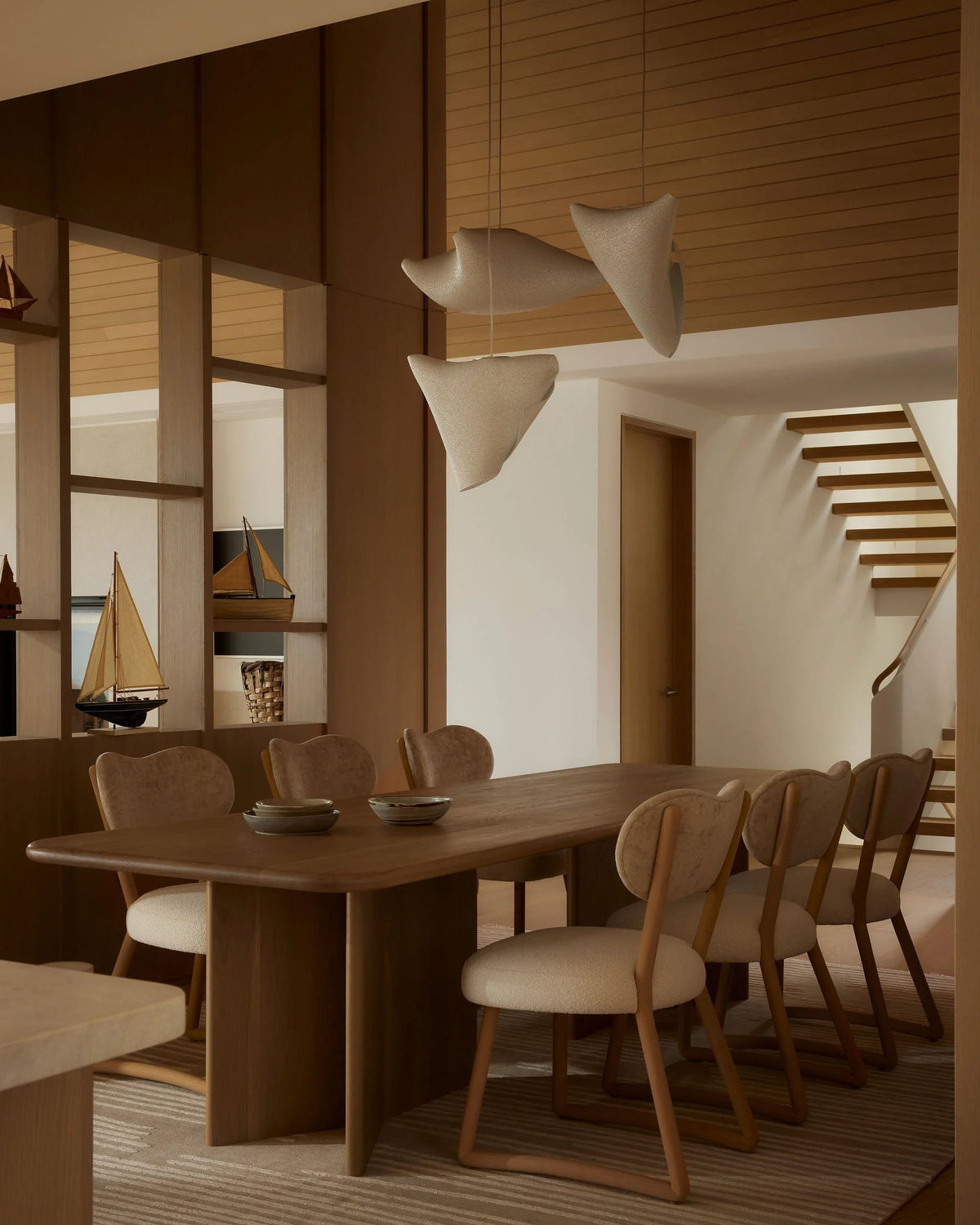
The dining table
A generous table designed around gathering
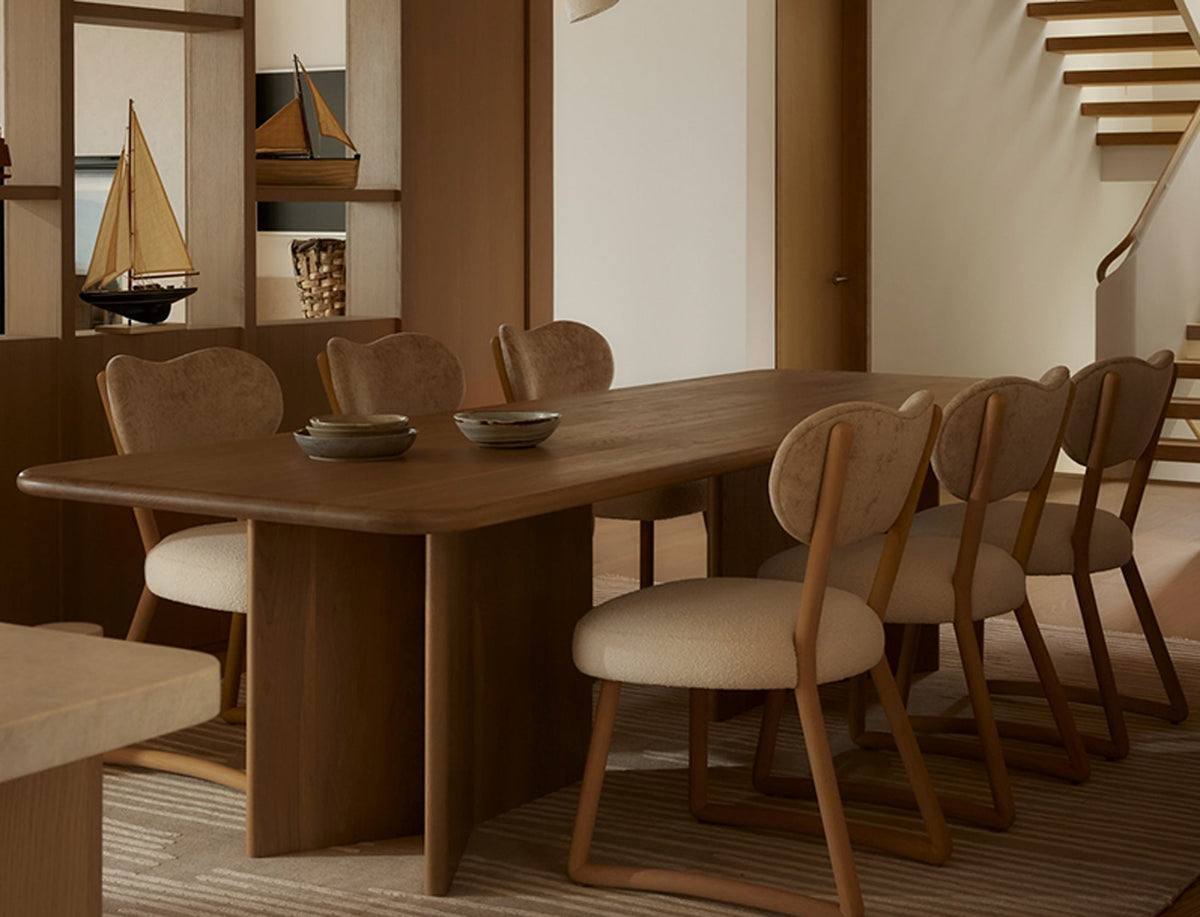
Positioned at the centre of the main floor, the dining table creates a natural gathering place between the kitchen and the lake-facing living room.
Its elongated top provides generous space for family and guests. Softly rounded corners ease movement around the table and temper the strong linear character of the surrounding architecture.
The substantial supports give the table a grounded, permanent quality. Their placement was carefully considered to provide stability and legroom while maintaining a clear rhythm beneath the long top.
From a distance, the table reads as a strong architectural form. At close range, the softened perimeter and tactile wood surface make it feel comfortable and inviting.
It is large enough to hold the room, but quiet enough to allow the people gathered around it—and the view beyond it—to remain the focus.
Designed for a house centred on generations of family life, the dining table becomes part of the architecture of gathering.
Supporting the designer’s vision
The interior direction established by &Pierre and Westgrove balances strong architectural lines with curved furniture, tactile materials, and a restrained natural palette.
Hamilton Holmes’ role was to help translate that direction into fully resolved, buildable pieces.
This is where much of the work in a custom furniture commission takes place. A concept may establish the desired feeling, but the finished object depends on a series of closely connected decisions:
- How large should the piece feel within the room?
- How will people move around it?
- Where should its supports be placed?
- How should its edges meet the hand?
- How will the material and finish respond to the surrounding interior?
- How can the piece feel substantial without becoming visually heavy?
- How will it perform through years of daily use?
Resolving those questions allowed the two tables to become a natural part of the house rather than objects added after the architecture was complete.
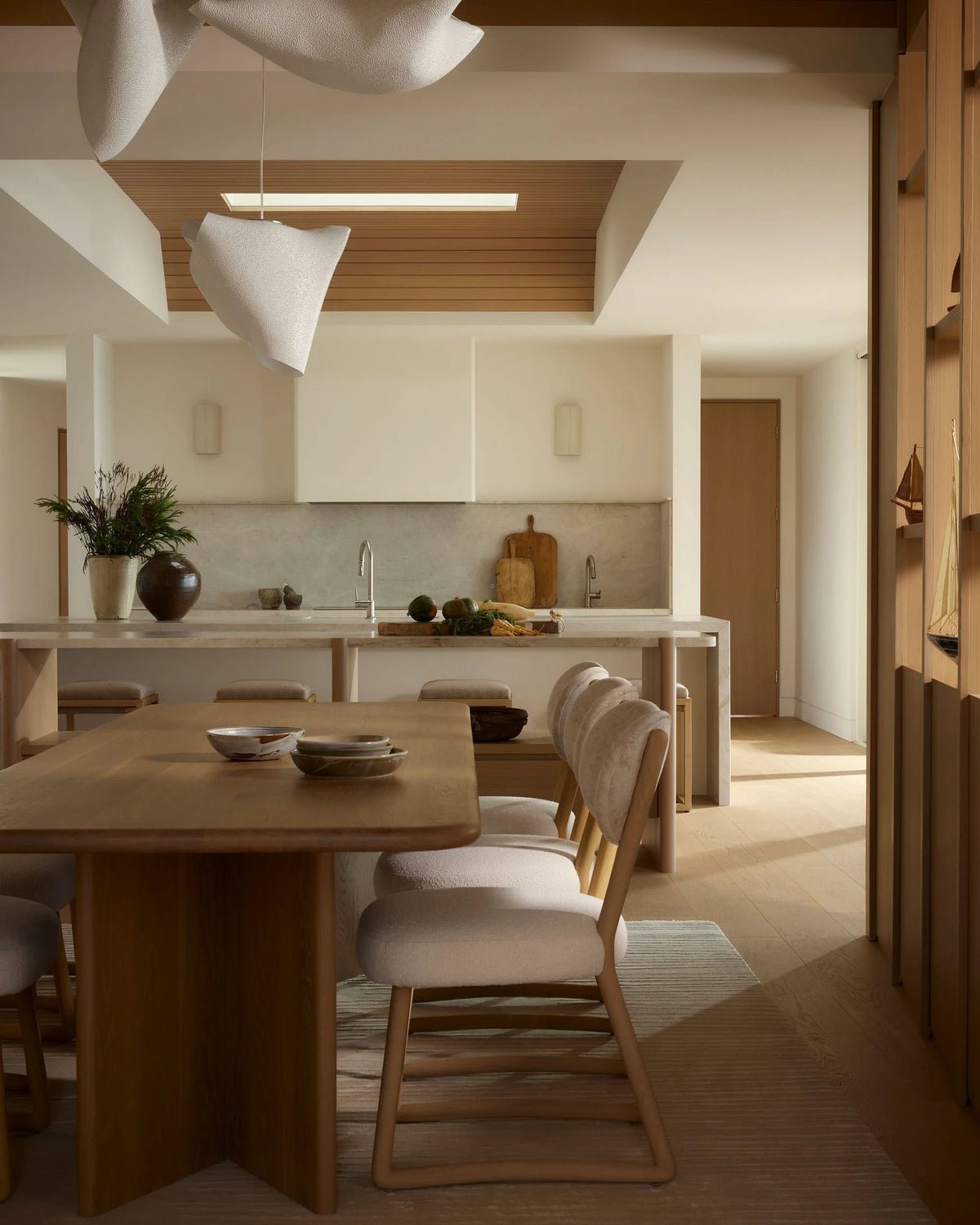
Proportion makes the difference
A large dining table can easily overwhelm an open residential interior. Making it longer or heavier does not necessarily give it greater presence. The relationship between the top, supports, edge profile, and surrounding negative space matters just as much as its overall dimensions.
Here, softened corners visually reduce the table’s scale, while the broad supports establish a sense of permanence. The controlled spacing beneath the top keeps the form open and prevents its mass from becoming monolithic.
These decisions allow the table to feel substantial from every viewpoint without closing off the room.
The Amoeba coffee table
A low sculptural form set against the horizon
The living room faces directly onto Georgian Bay. Its furniture is arranged around the view, with the horizon forming one of the room’s strongest visual lines.
The coffee table was designed to sit low within this composition. Its broad surface gives the seating area a clear centre, while its height preserves the view toward the water.
A grounded central base supports the expansive top and gives the table a quiet sculptural quality. Its curved outline responds to the softer forms of the surrounding chairs and upholstery, providing a counterpoint to the home’s strong architectural geometry.
Rather than pulling attention inward, the table allows the eye to continue through the room and toward the lake.
The dining table gathers people inward. The coffee table directs the eye outward.
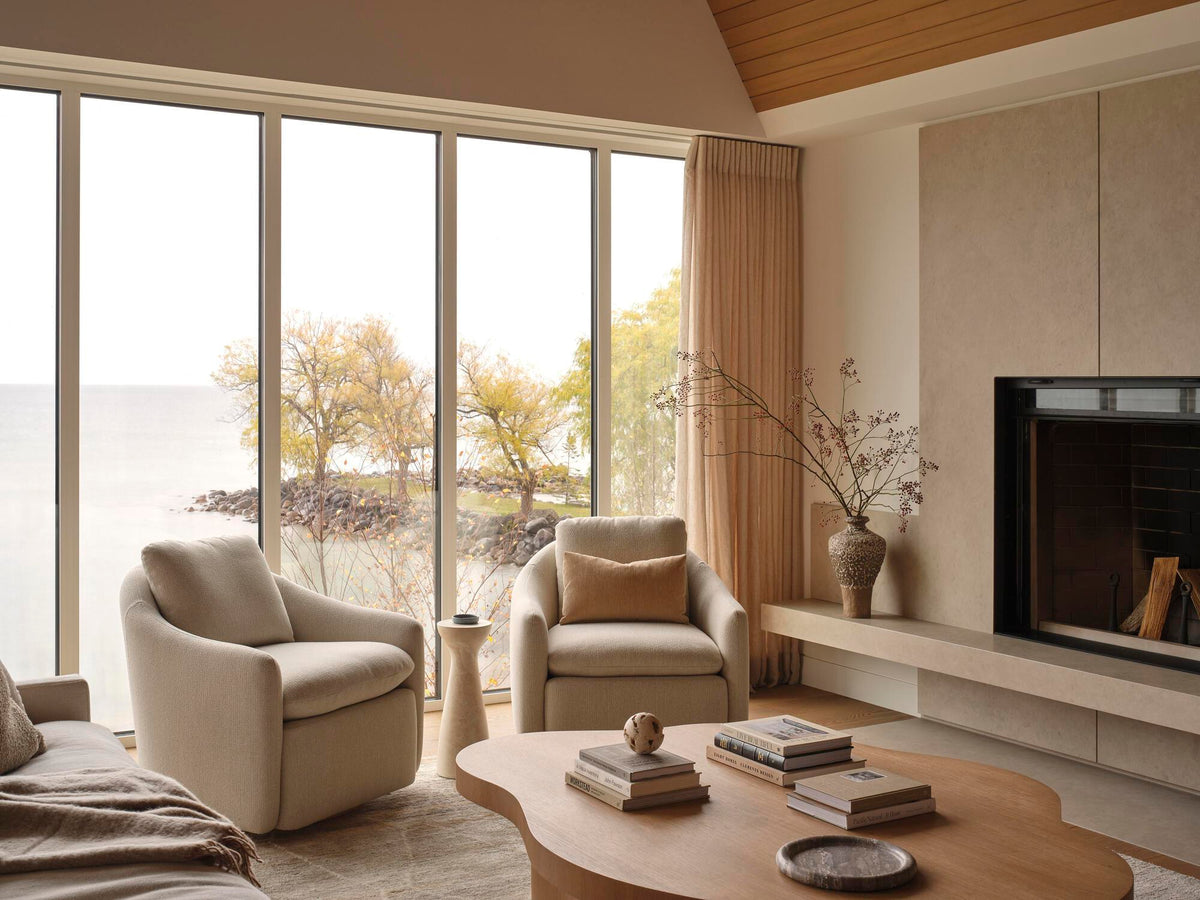
In the Workshop

Two tables, one material language
Although the pieces respond to different rooms, they were considered as part of one continuous interior.
Their shared wood palette and softened geometry establish a visual relationship across the main floor. Each has a substantial, grounded presence, but their proportions have been tuned to their specific setting.
The dining table is taller, linear, and social. It organizes movement and creates a place for meals, conversation, and large gatherings.
The coffee table is lower, broader, and more relaxed. It centres the living room while maintaining its openness to the water.
Together, the tables connect the two spaces without relying on identical forms. The relationship comes through material, proportion, edge treatment, and the way each piece meets the architecture around it.
Solving custom furniture for interior designers
Custom furniture provides the opportunity to address conditions that standard pieces cannot always resolve.
For interior designers, this can mean:
- Creating furniture at the right scale for an unusually large or open room.
- Maintaining important sightlines through an interior.
- Coordinating materials and finishes with architectural millwork.
- Developing forms that support an established design language.
- Resolving circulation, seating, and practical clearances.
- Balancing sculptural presence with everyday use.
- Turning a concept, drawing, or reference into a buildable object.
- Creating lasting pieces specific to the people and place for which they were made.
The Georgian Bay tables demonstrate how two carefully resolved pieces can establish continuity across an interior while responding to very different patterns of use.
Made to become part of the house
The tables were made by Hamilton Holmes in Hamilton, Ontario, with close attention to proportion, surface, construction, and finish.
They were created for a multigenerational family home—not as temporary accents, but as working pieces intended to be lived with over time.
The dining table is now a place for everyday meals, long conversations, and gatherings of family and friends. The coffee table holds the centre of a quieter room shaped by changing light, weather, and the view across Georgian Bay.
This is the point at which a custom piece moves beyond drawings, samples, and fabrication. It becomes part of the daily rhythm of a home.
Collectible furniture made for place
Furniture can do more than complete a room.
When a piece is developed specifically for its setting, it can clarify the architecture, support how people live, and create a lasting relationship between material, interior, and place.
Hamilton Holmes works with interior designers, architects, and private clients to develop custom furniture that is carefully resolved and built for lasting use.
Custom furniture available by commission.
Project Credits
Interior Design: &Pierre and Westgrove
Architecture: Don Schmitt and Gio Tassone Architects
Builder: Valley View Construction
Custom Dining Table and Coffee Table: Hamilton Holmes
Photography: Lauren Miller
Styling: Kaela Shaw
Location: Georgian Bay, Ontario
Featured Product
The Walnut Captain’s Table would feel completely at home at the Georgian Bay Beach House.
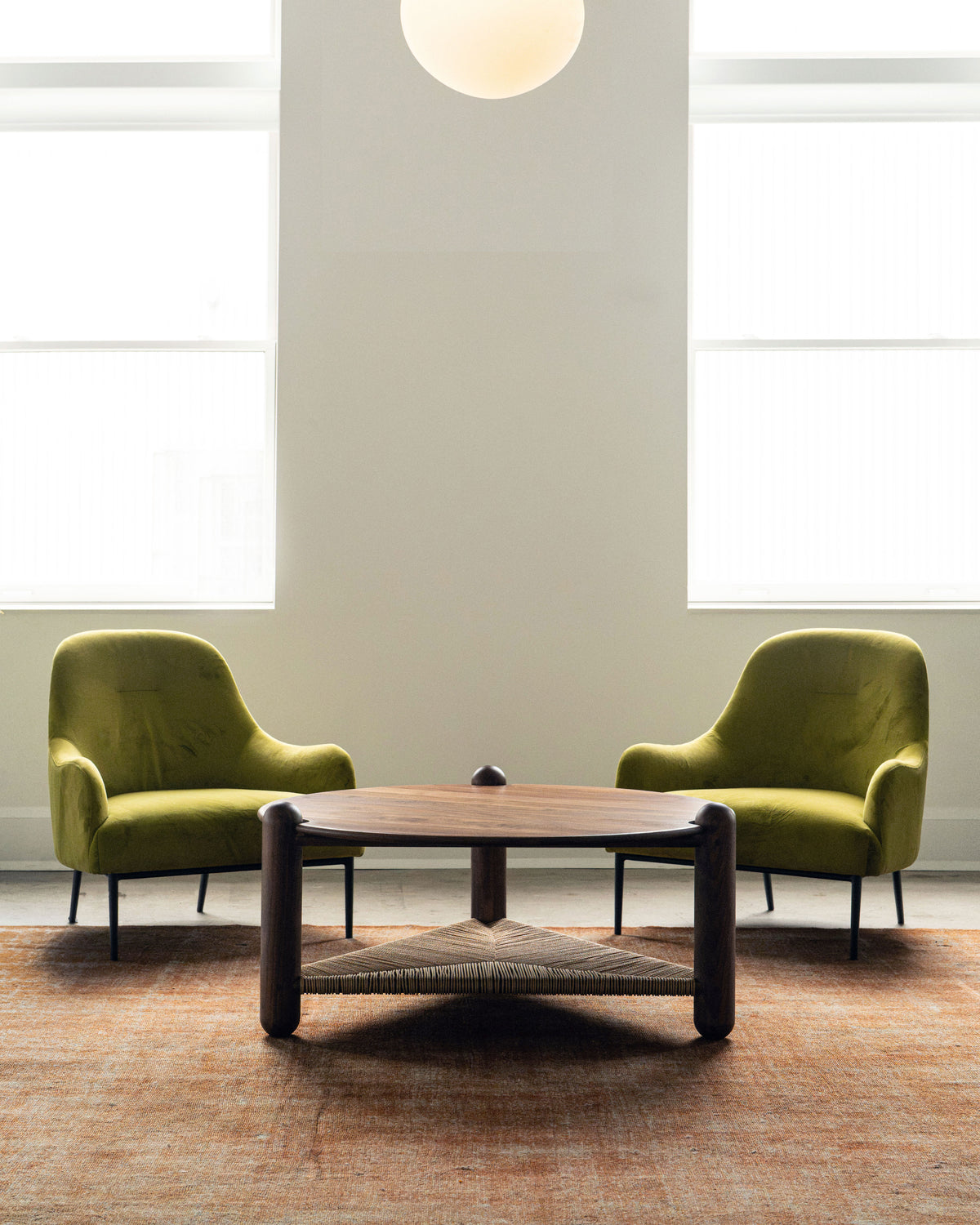
It shares the project’s language of softened geometry, natural materials, and substantial forms that maintain a sense of visual lightness. Positioned before a lake view, its round top and open three-legged frame would anchor a seating area without interrupting the room or the landscape beyond it.
Designed and made by Hamilton Holmes, this 42-inch Captain’s Table combines solid walnut with a hand-woven Danish cord shelf. Traditional mortise-and-tenon joinery is left visible as an expression of its construction.
It brings together practical function, tactile craftsmanship, and sculptural presence in a table designed to be appreciated from every angle.
Finished in clear oil and currently in stock.
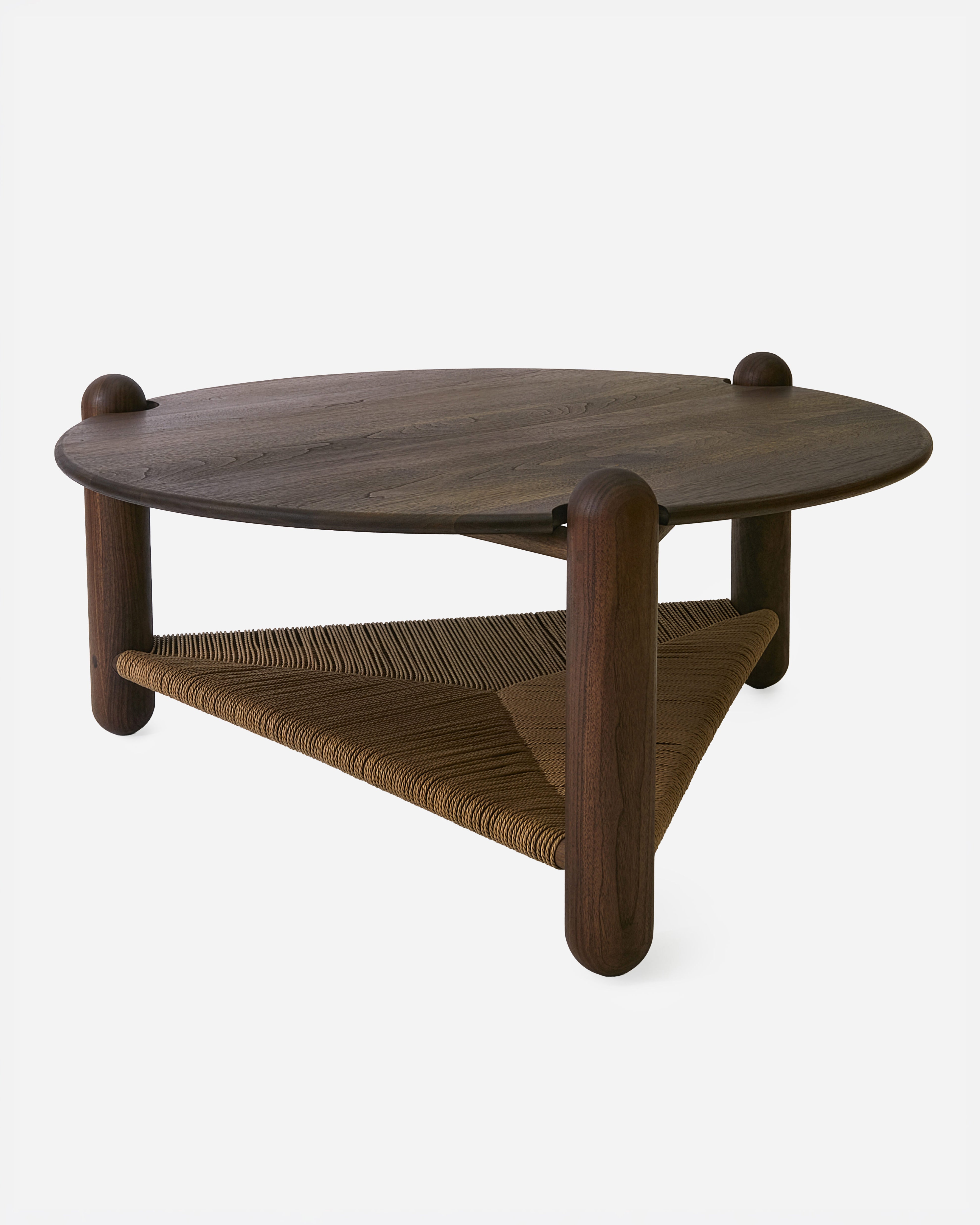

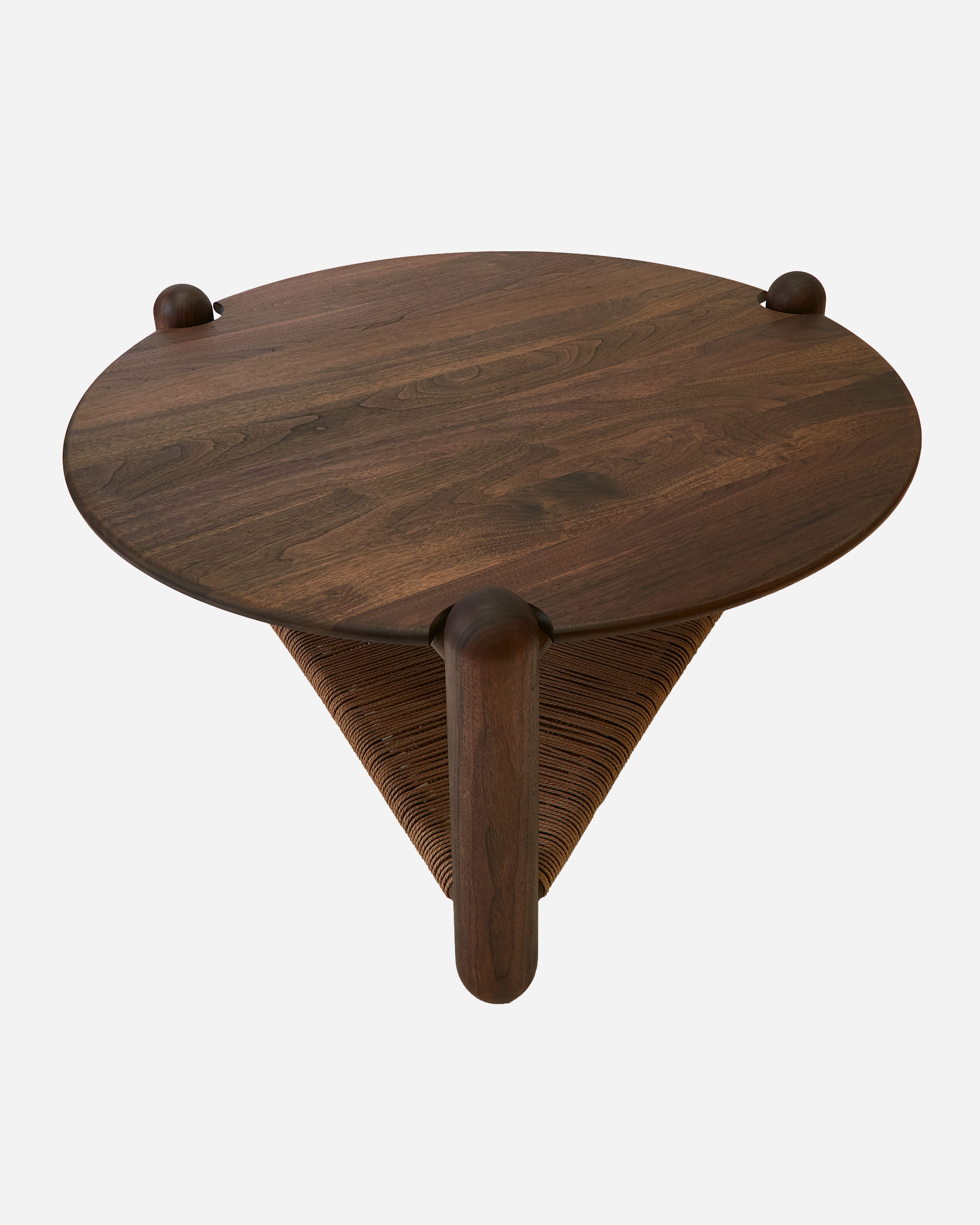
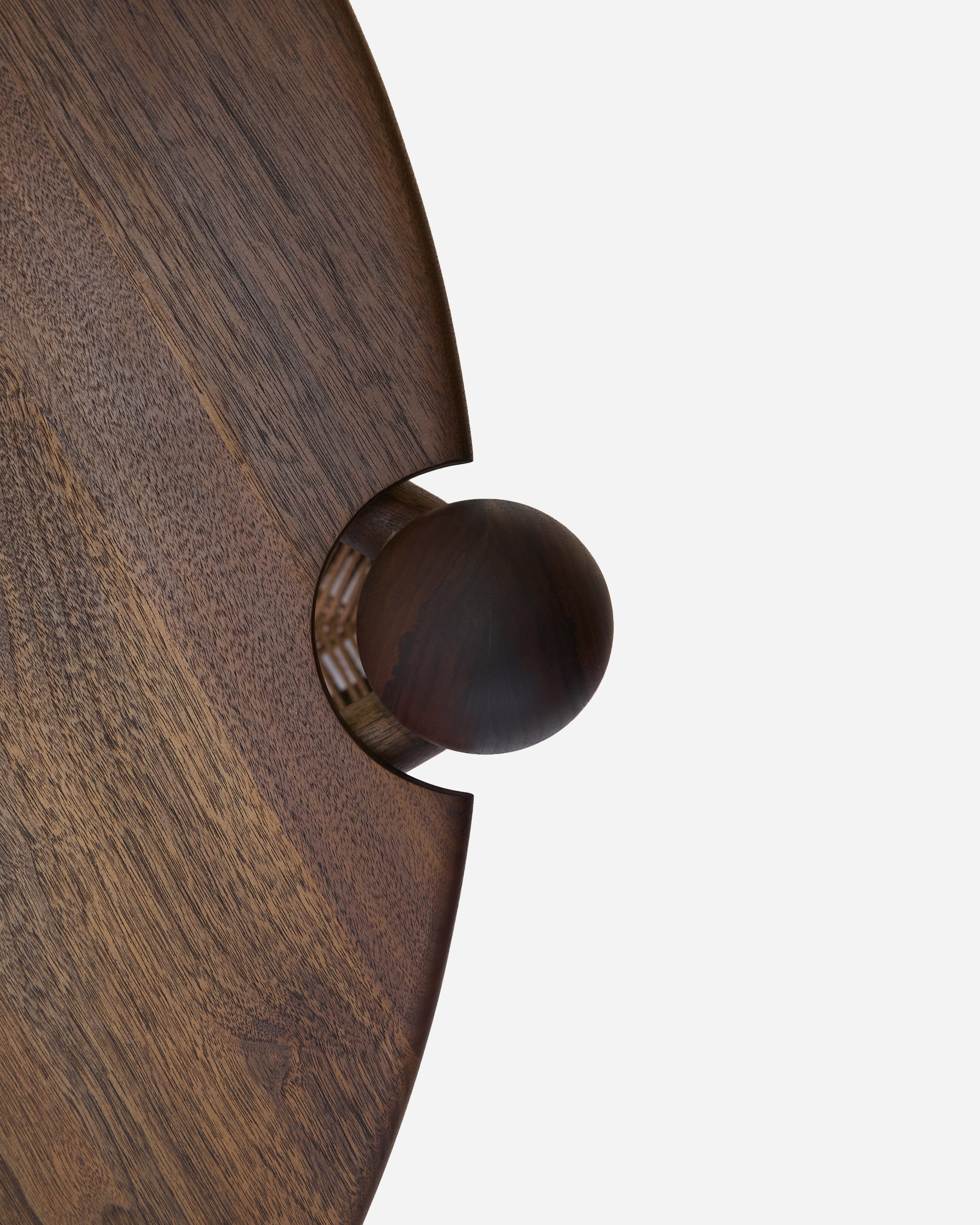
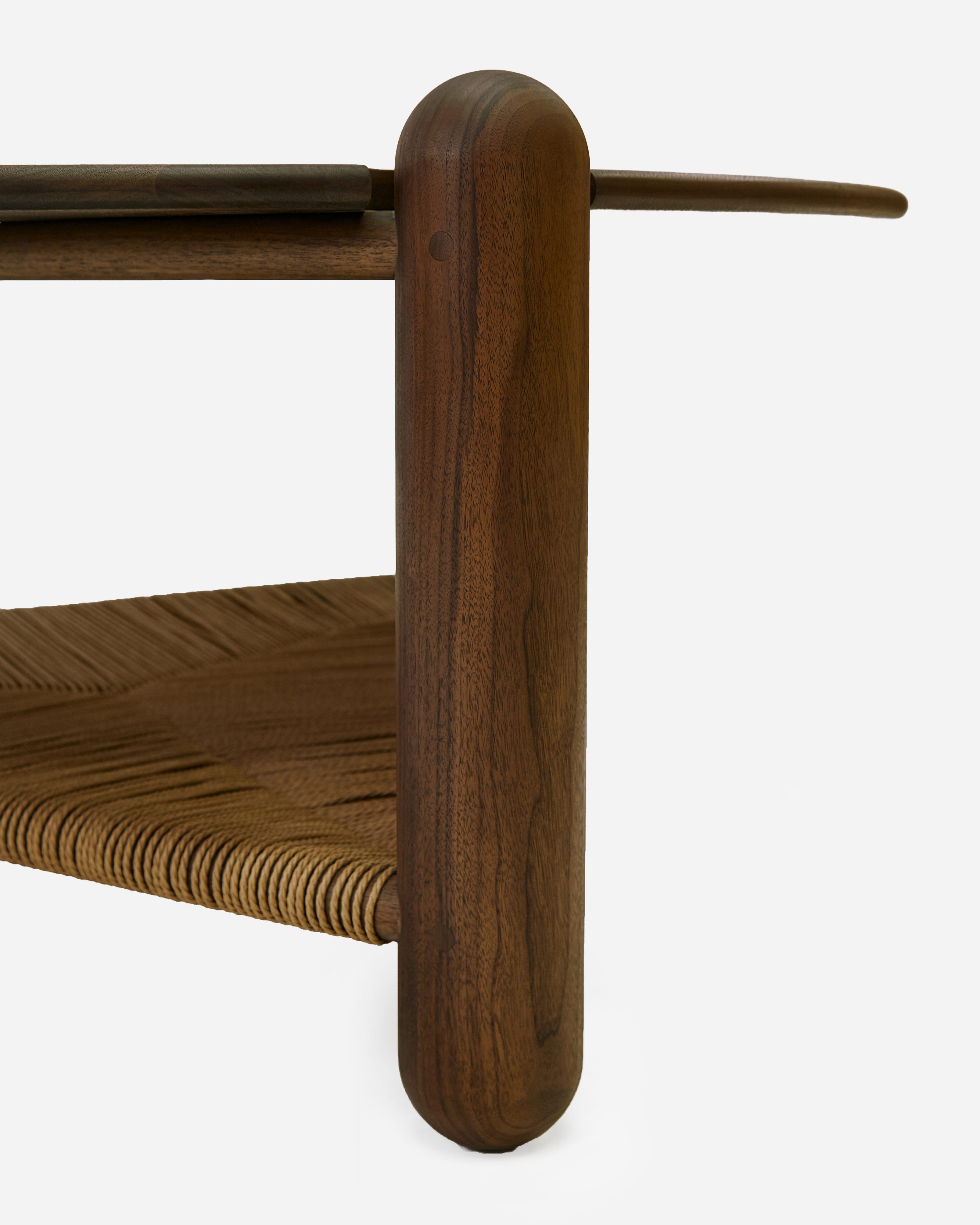
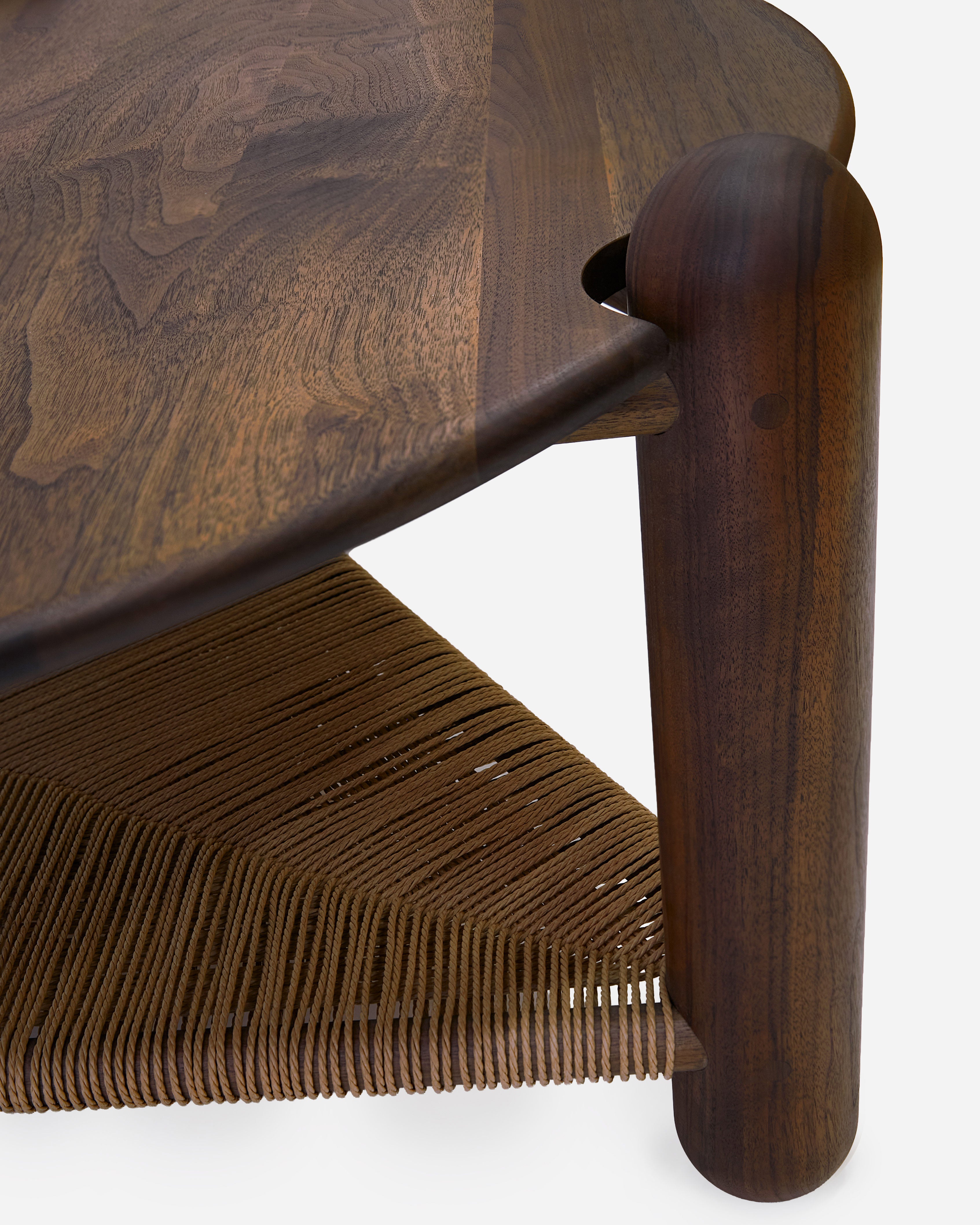

Below, a hand-woven Danish cord shelf creates a lighter counterpoint to the solid-wood construction while providing a practical surface for books and objects. Its triangular weave follows the three-legged frame, making the shelf an integral part of the table’s structure and design.
The table is built using traditional mortise-and-tenon joinery, with the joints pinned for additional strength and left visible as an expression of how the piece is made. Every surface is carefully shaped and finished to emphasize the natural grain and character of the selected wood.
At 42 inches in diameter, the Captain’s Table offers a generous surface while its open frame and woven lower shelf maintain a sense of visual lightness. Designed to be appreciated from every angle, it brings together practical function, enduring construction, and sculptural presence.
Available in solid walnut, maple, Douglas fir, sapele, white oak, red oak, or ash, with a selection of Hamilton Holmes finishes.
Materials
Solid Walnut
Hand-Woven Danish Cord Shelf
Traditional Pinned Mortise-and-Tenon Joinery
Enquire about custom dimensions →