The OXALINO™ Waterfall Coat Rack
OXALINO™ MOVEMENT III — WATER
Hand-shaped white oak. Flowing line. Furniture as sculpture.
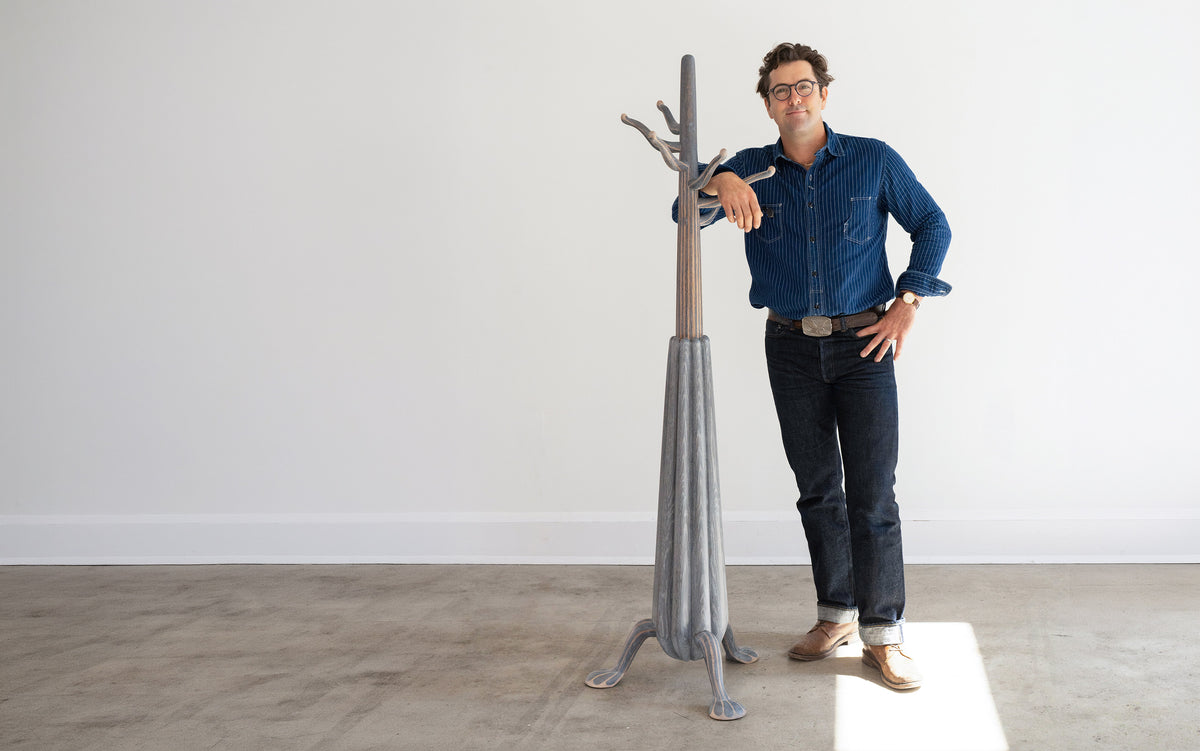
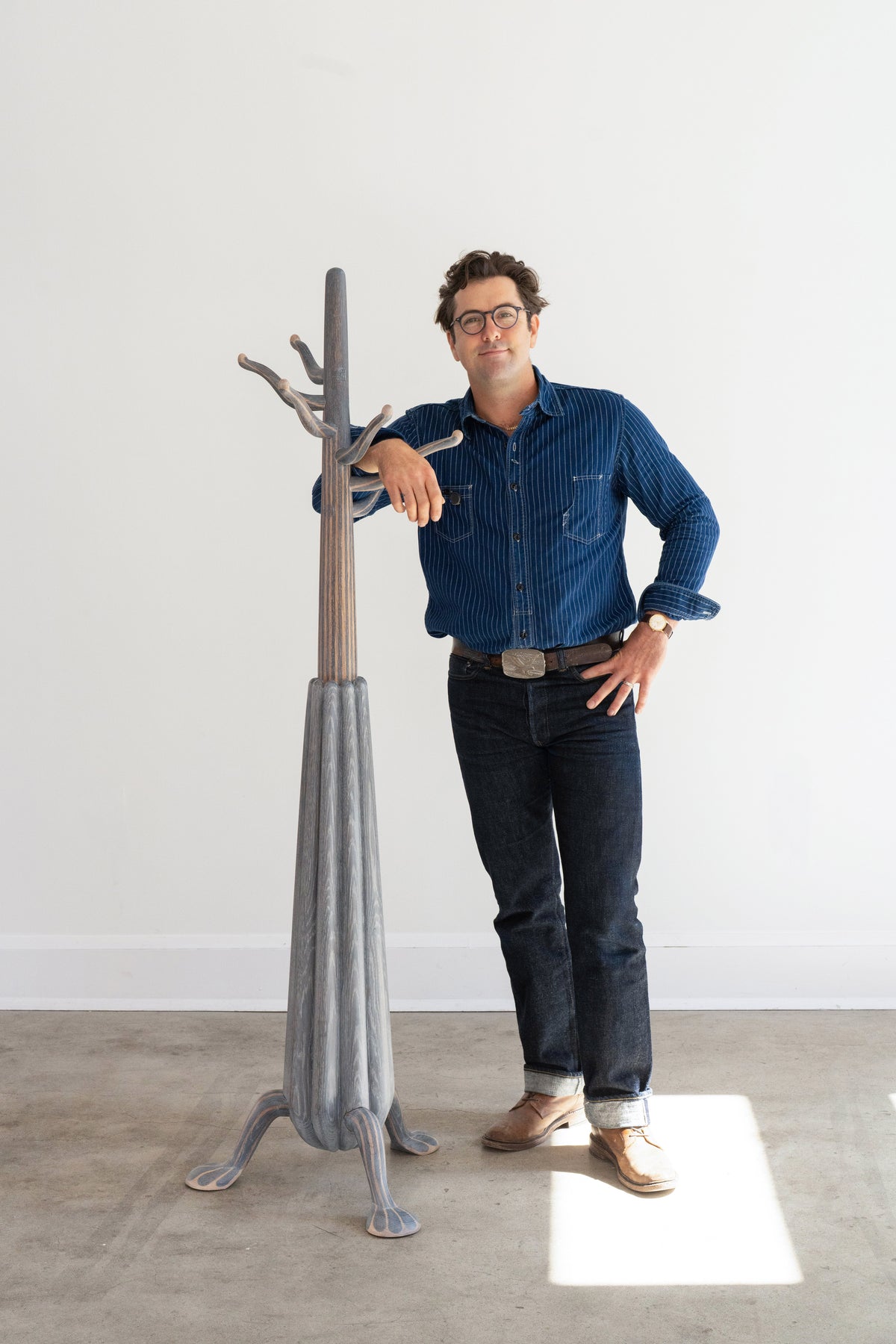
The OXALINO™ Waterfall Coat Rack is part of Water, the third movement of OXALINO™. Designed, hand-shaped and hand-painted by Nicholas Holmes, it brings the movement of water into solid white oak through curved forms and a painted pattern that flows from its arms to its feet.
An everyday object becomes a study in movement: something to use, walk around and discover through the changing relationship between wood, sculpture and line.
Design and Making: Nicholas Holmes / Hamilton Holmes
Material: Solid white oak
Finish: Hand-applied OXALINO™ and white oil
Movement: III — Water
Made in: Hamilton, Ontario
A form in flowing motion
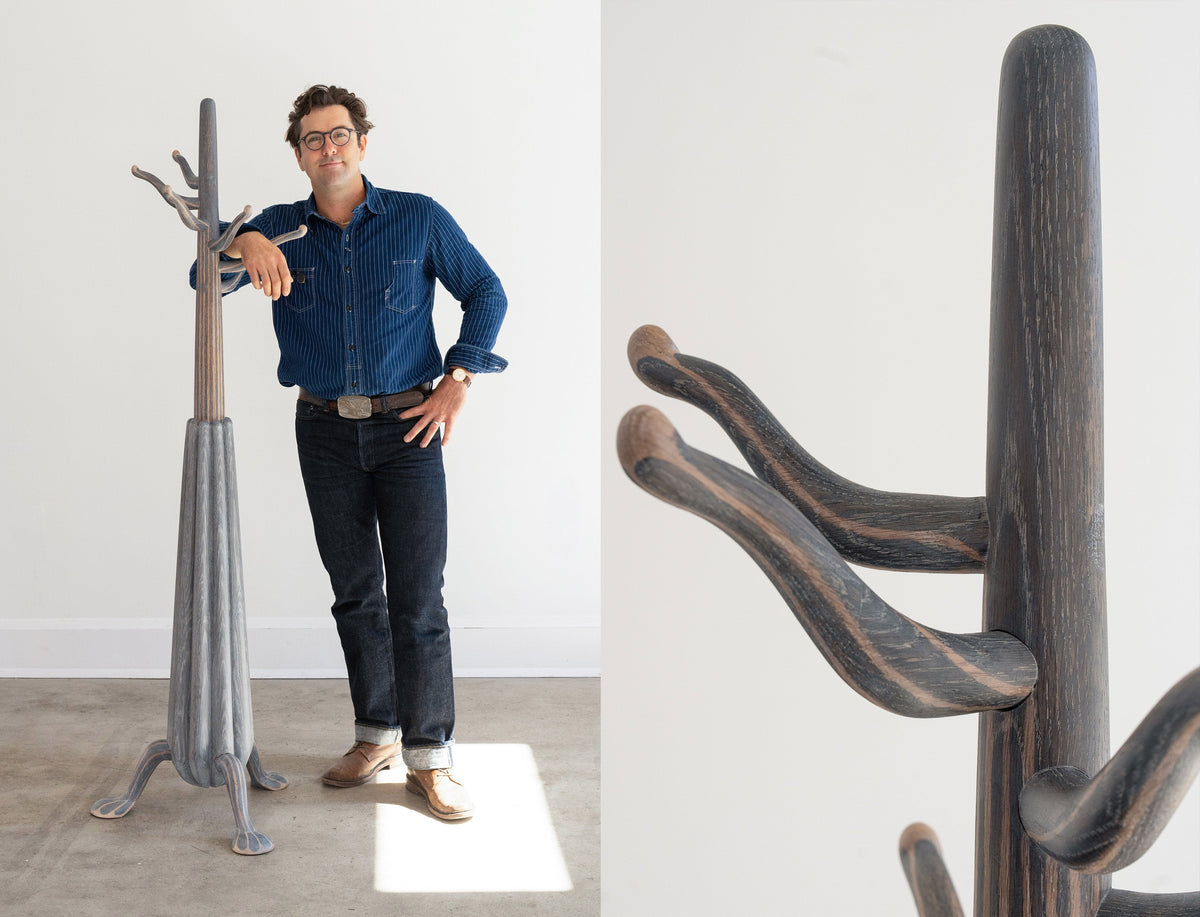
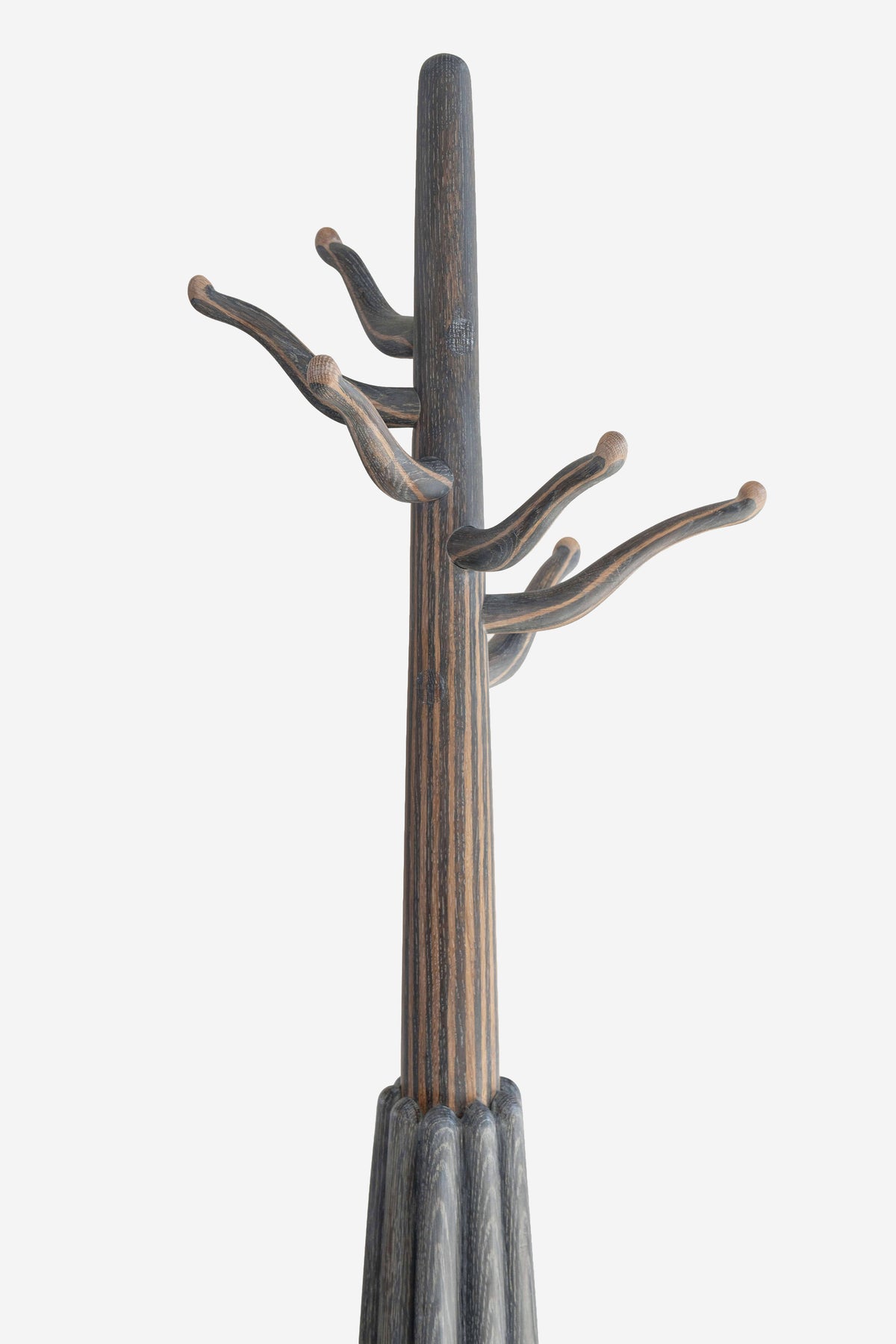
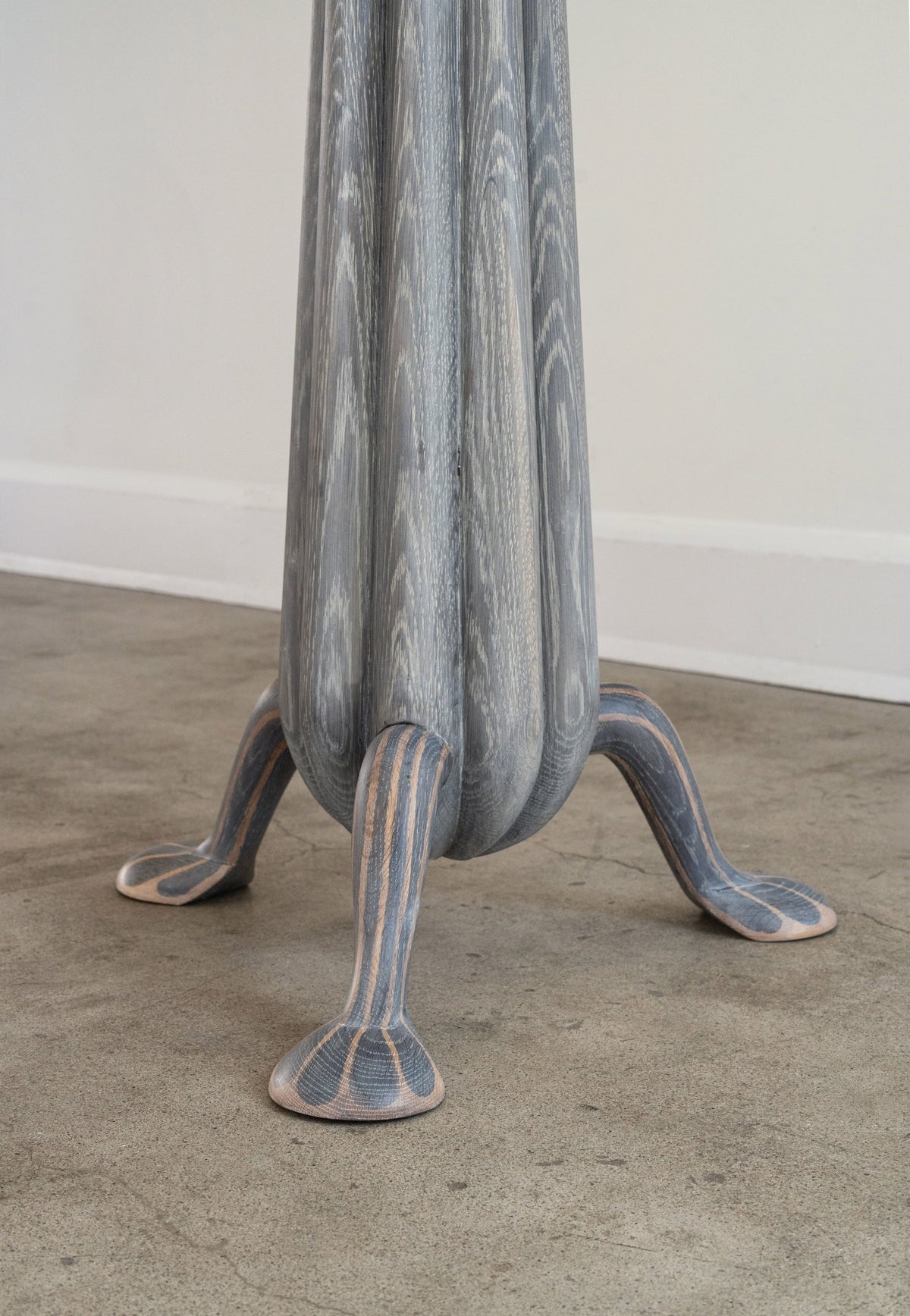
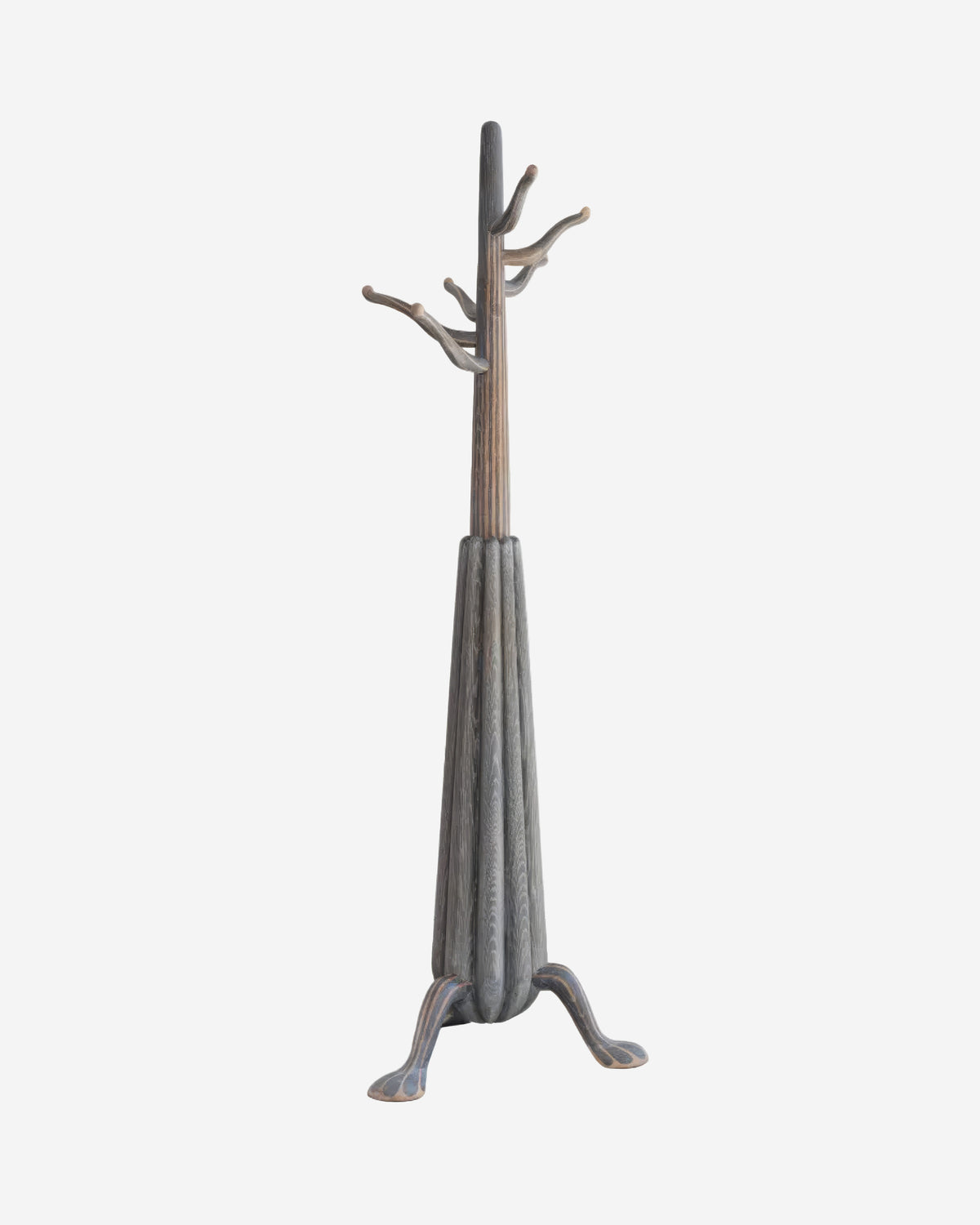
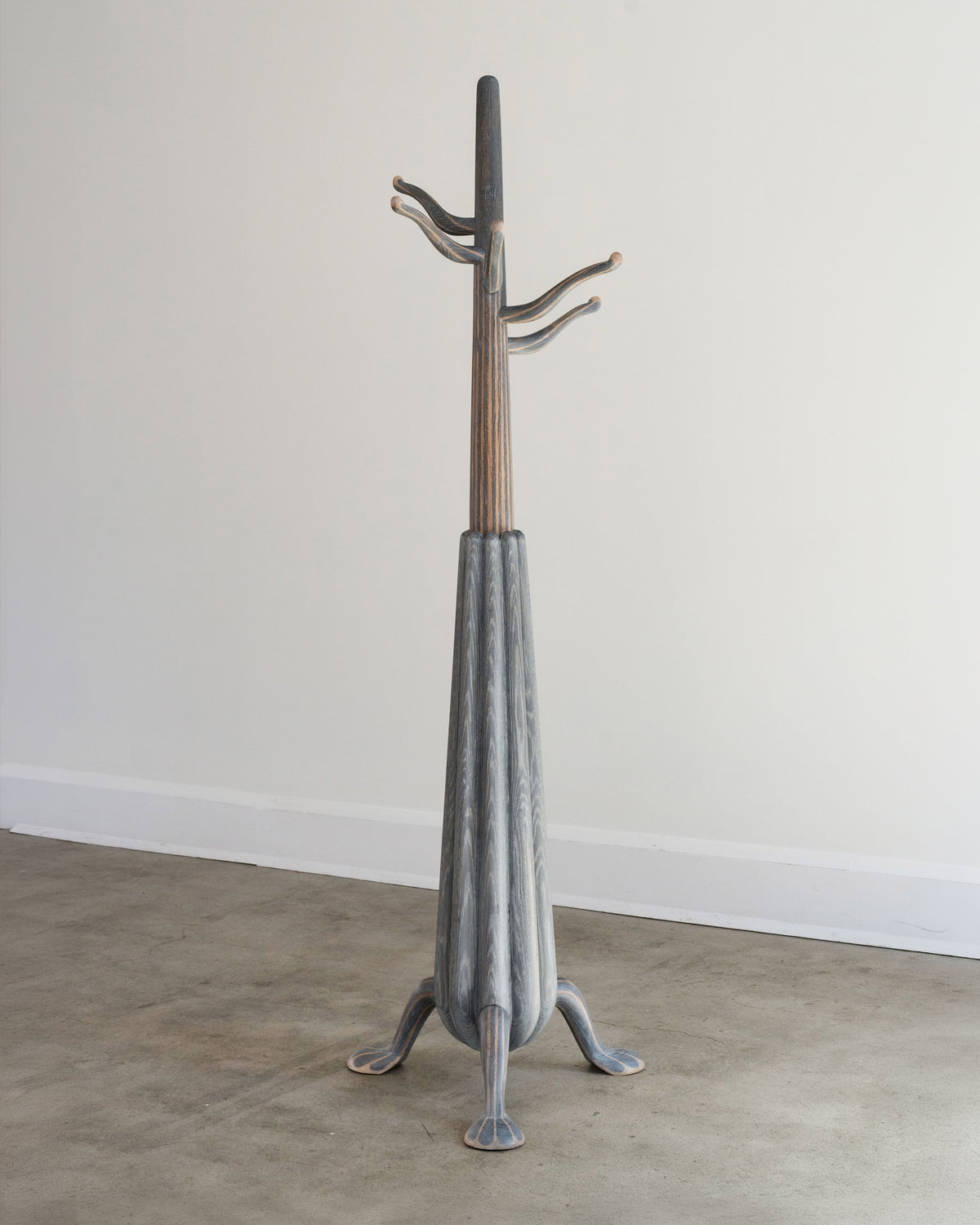
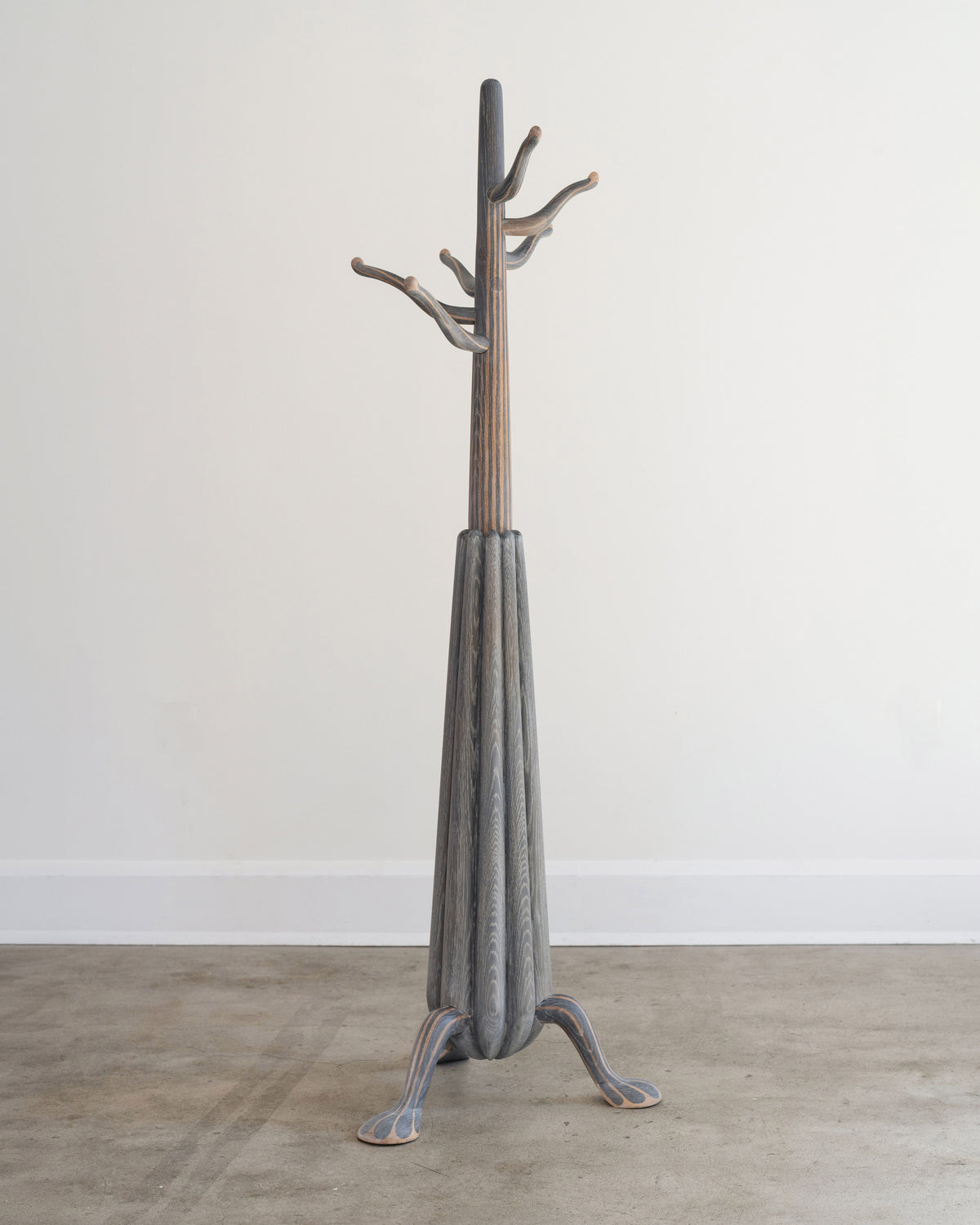
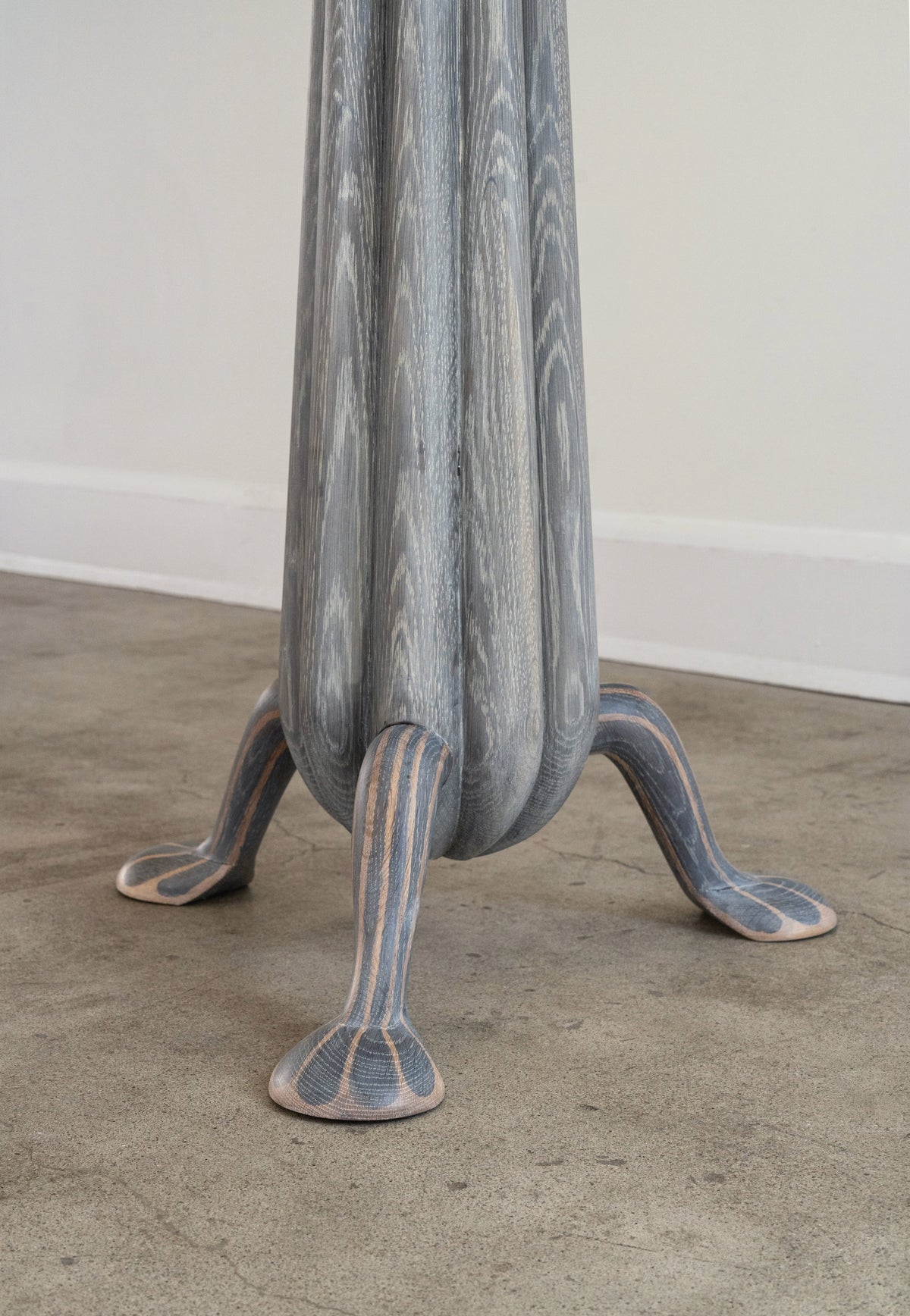
Curved arms taper toward a slender central stem, gathering the upper form into a continuous sculptural gesture. Below, a fluted body adds visual weight before three spreading feet carry the movement outward again.
The lower body keeps weight low and centred, making a practical requirement part of the design. The feet recall the sweep of a traditional cabriole leg, reinterpreted through softer, more fluid transitions.
“The goal on the piece was to make something that was functional but also incredibly organic.”
Nicholas Holmes
Founder, Owner, Principal Designer Hamilton Holmes
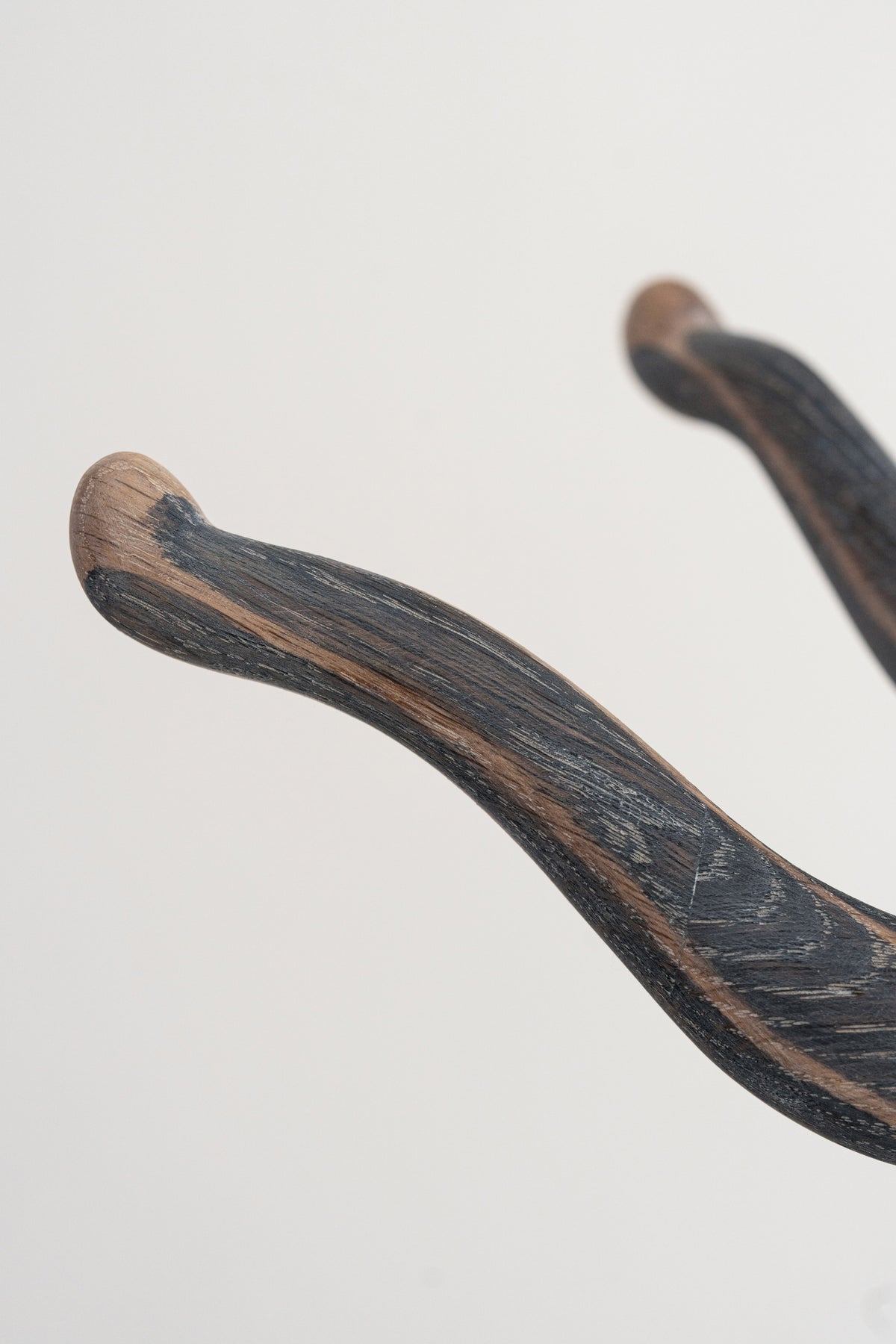
Painted lines gather along the arms, descend through the centre and reappear across the feet.
Painting the waterfall
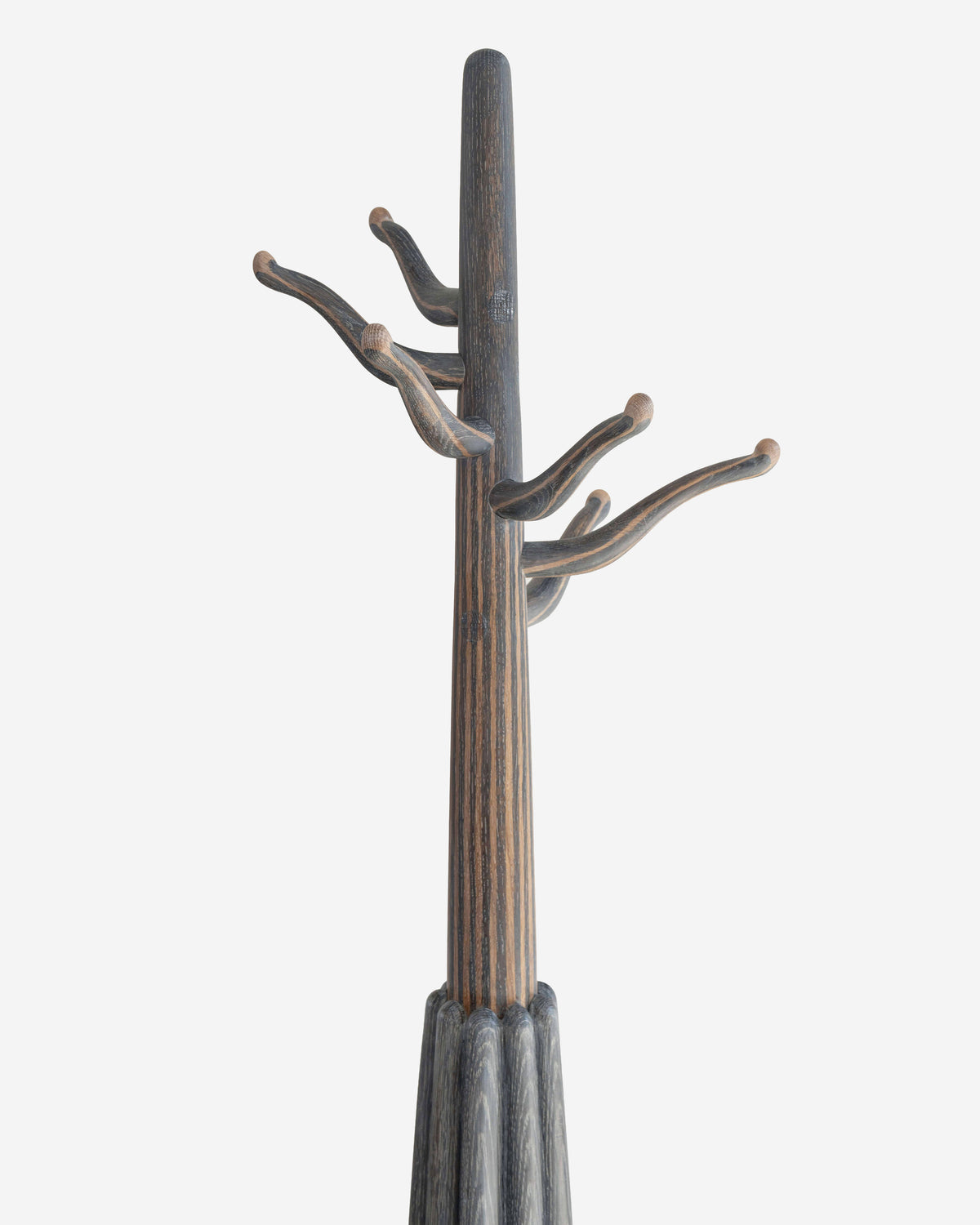
The painted pattern traces the movement of the wood beneath it. Unoxidized tips give way to lines that follow the arms, gather at the stem and descend into the lower body. They emerge again across the feet, suggesting water spilling outward onto the floor.
Nicholas applies an oxidizing solution by hand, creating a dark stain through a reaction with the wood’s naturally occurring tannins. A white oil finish gives the surface its characteristic blue tone while leaving the grain visible.
As you move around the piece, the lines wrap into view and disappear again. Sculpture and surface describe the same movement, each changing how the other is seen.
"With my furniture it's always a goal to have as much movement as possible so that the piece is dynamic and as you move around it it's constantly changing."
- Nicholas Holmes
Where the waterfall begins
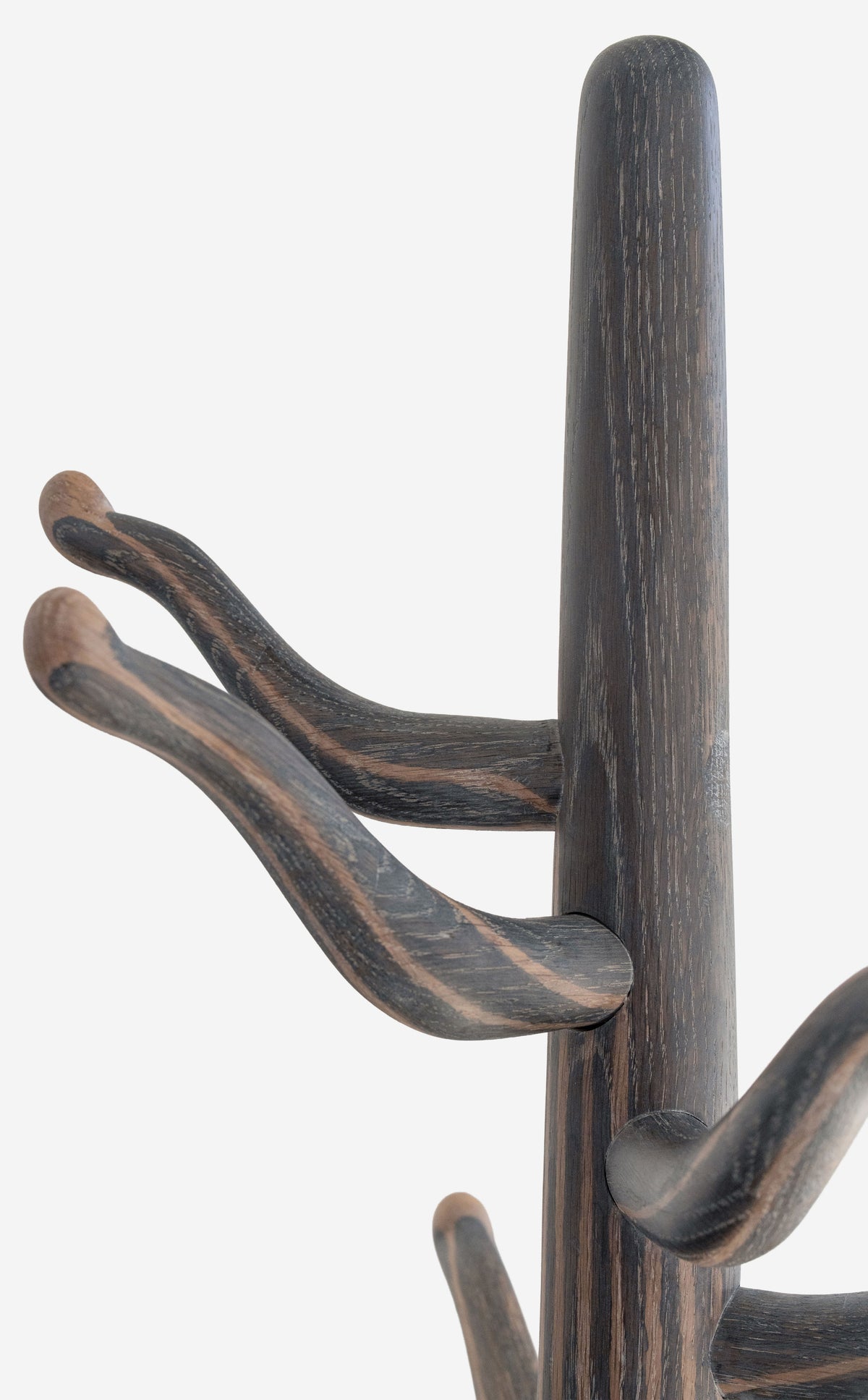
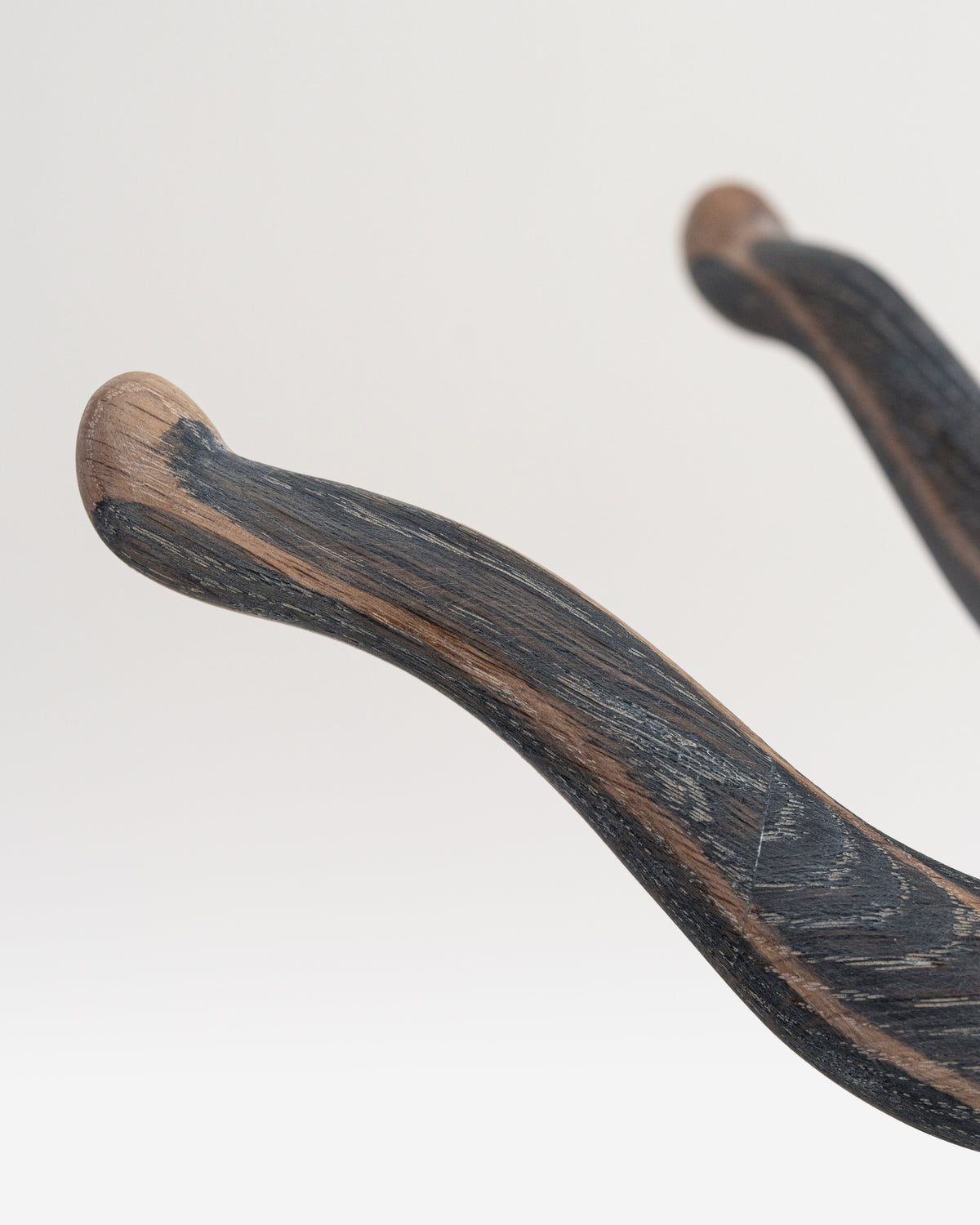
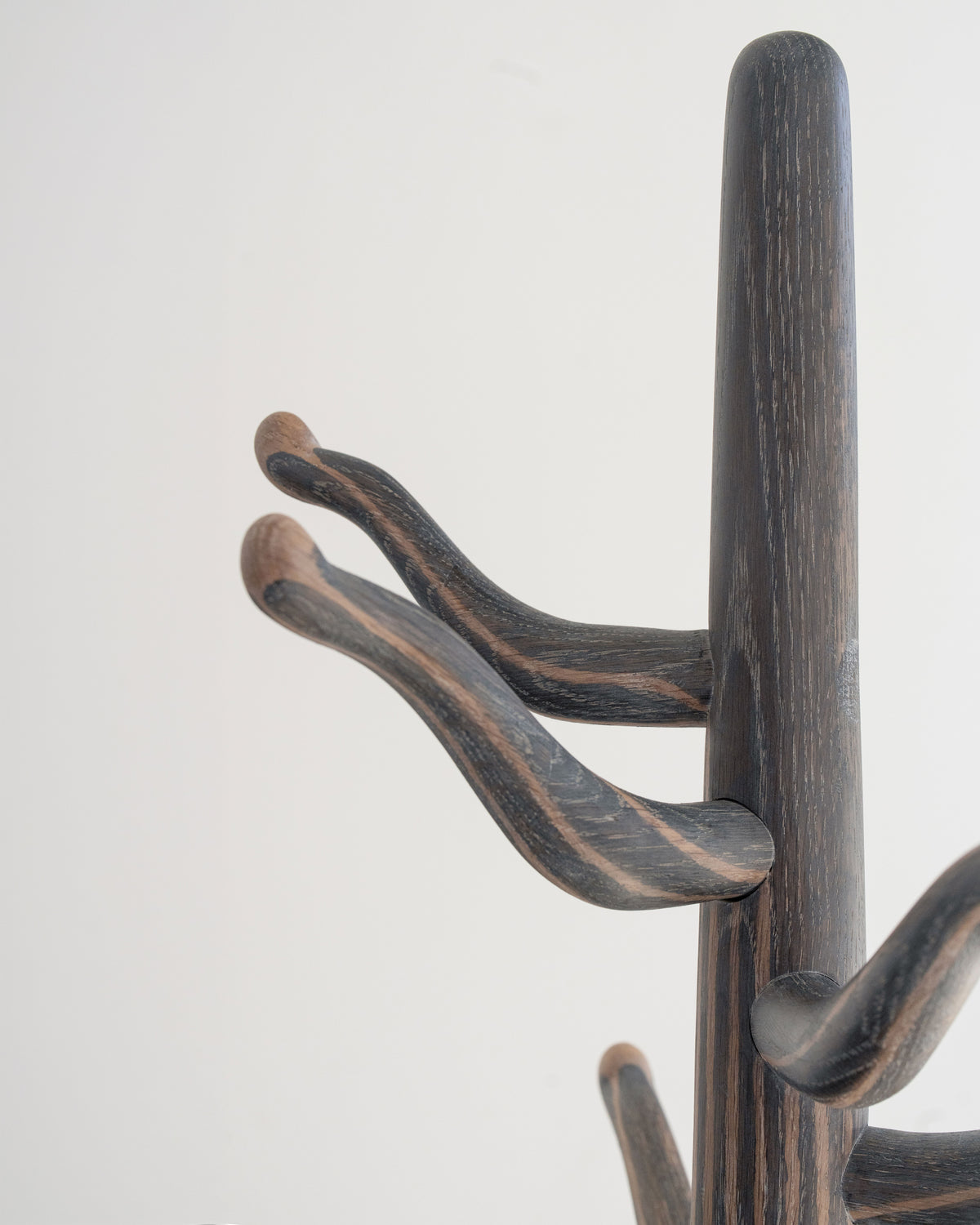
The movement begins at the tips of the arms. Nicholas leaves these rounded ends unoxidized, allowing the pale white oak to remain visible before the painted lines begin. From there, four lines follow each arm’s curved surface, travelling inward toward the central stem.
The shape and the painting work together. Each arm tapers as it approaches the centre, carrying the lines around its curves and directing them downward. The eye follows that path almost instinctively: from the quiet, unpainted tip toward a gathering current.
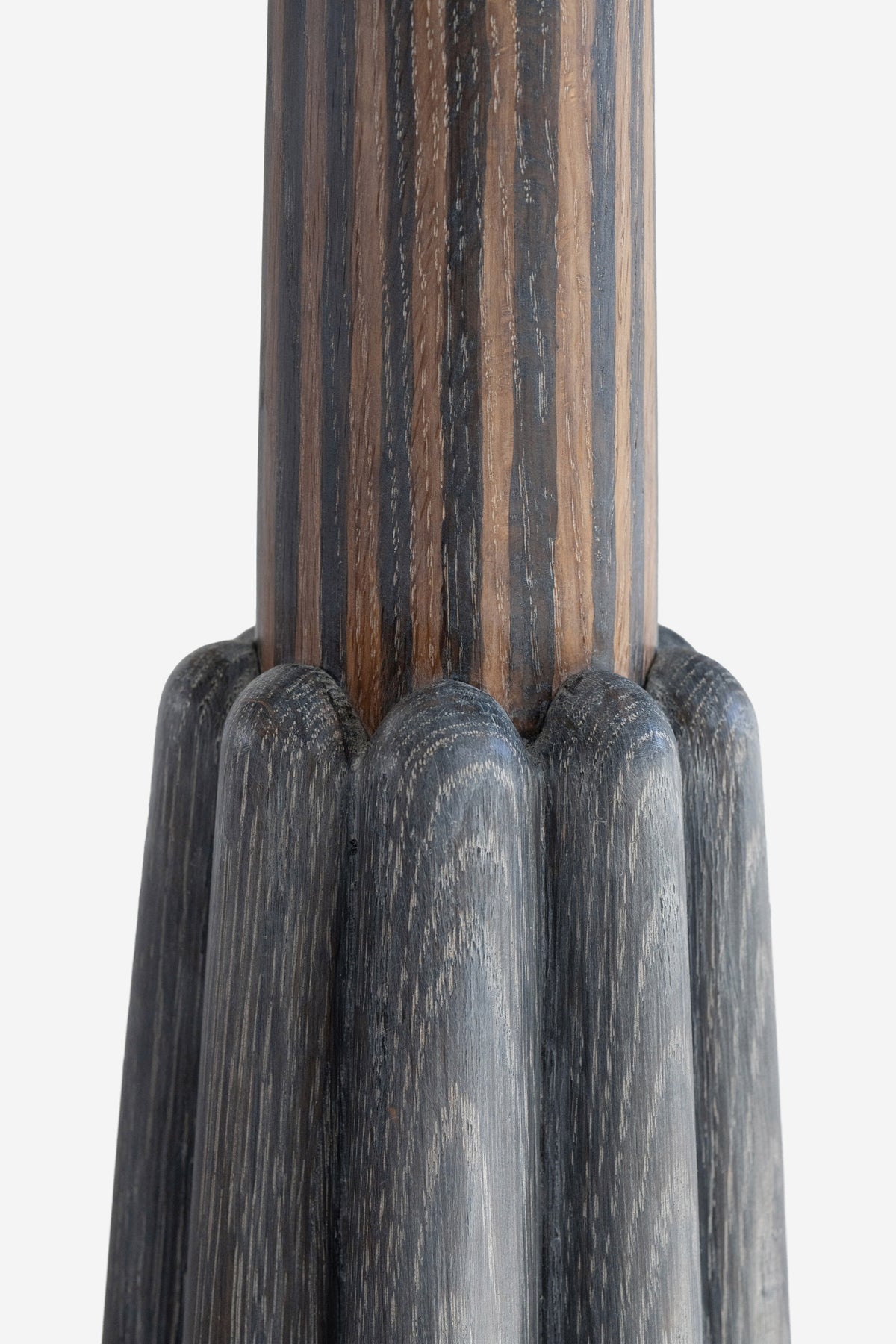
The waterfall develops gradually. At the uppermost part of the stem, the painted flow has yet to gather. As each arm meets the centre, it contributes another set of lines. What begins as separate movements becomes a larger composition, building as it descends through the piece.
“This piece, the painting was meant to express the movement of a liquid or of a form from the tips of all of the hangers all the way down and out the feet.”
– Nicholas Holmes
A current through the sculpture
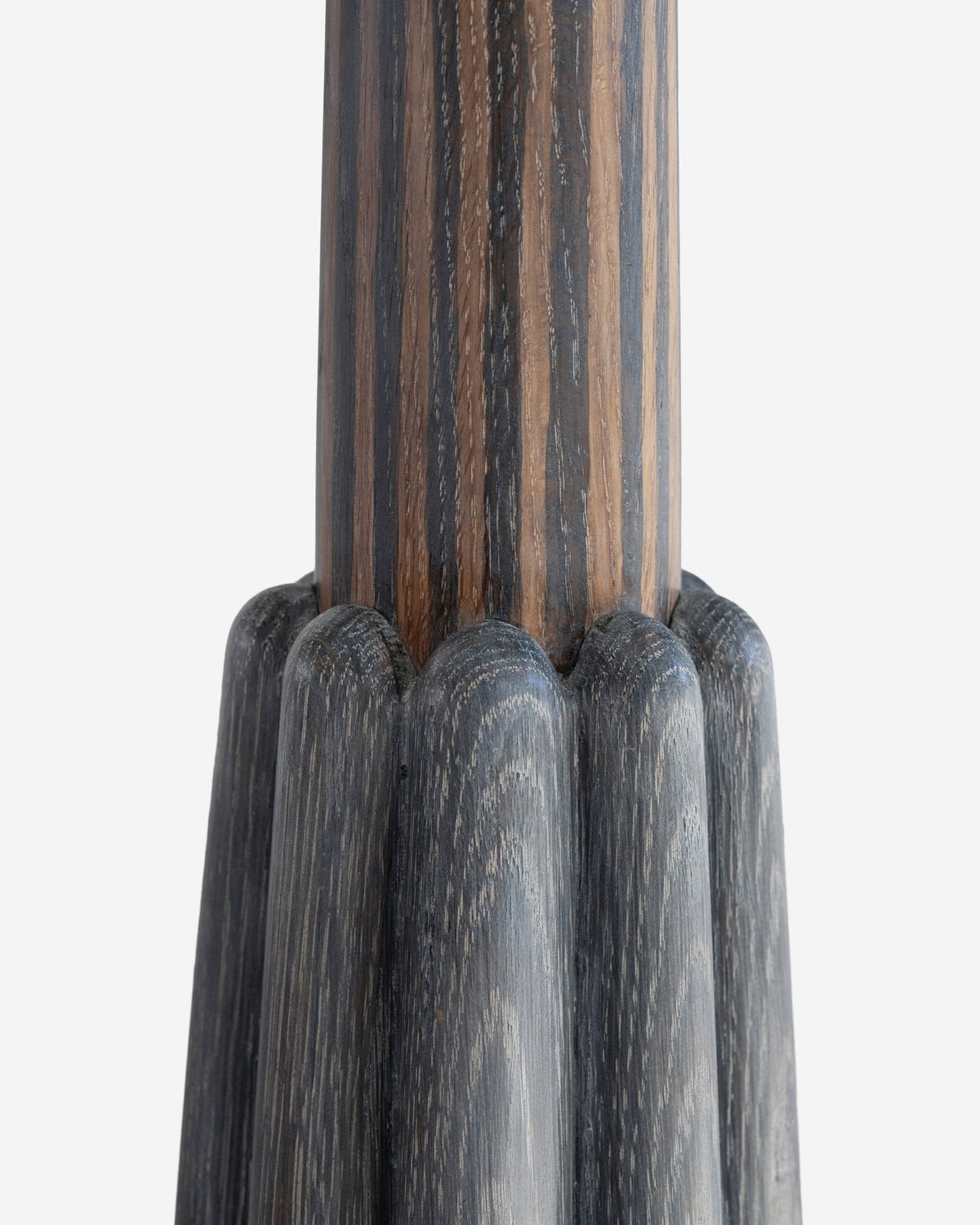
As the lines gather at the stem, the slender upper structure gives way to a heavier, ribbed form below. Here, the painted movement disappears into the sculpted body before emerging again across the three spreading feet.
That interruption is part of the story. The eye traces a path downward, loses it within the lower form, then discovers its continuation near the floor. Nicholas describes the painting as spilling out through the feet, extending the sense of movement to the place where the object meets the room.
The wood carries this movement even before the pattern is applied. Smooth arms converge into the stem; the tapered lower body introduces a different rhythm of rounded ridges; the feet sweep outward in broad, softened curves. The painting follows and connects these changes in shape.
The lower body also has a practical role. Its mass keeps weight low and centred, helping anchor the coat rack. Nicholas turns that requirement into a sculptural feature: the part that grounds the object becomes a pause in its downward flow.
Painted lines gather along the arms, descend through the centre and reappear across the feet.
Structure beneath the sculpture
The Waterfall Coat Rack incorporates traditional bridle and mortise-and-tenon joinery. The arms pass through the central section with wedged mortise-and-tenon connections, while the feet are joined directly into the base.
This construction supports Nicholas’s intention that the piece remain useful and beautiful over time: collected, lived with and eventually passed to another owner through a sale or gift.
Movement as you move
The Waterfall Coat Rack unfolds through a succession of views. From one position, the painted lines can be followed along an arm and down the stem. A few steps around the piece reveal another beginning, another curve and another connection.
Nicholas describes movement as a recurring intention in his furniture. He wants a still object to feel dynamic, with forms and patterns that continue to change as someone moves around the room. OXALINO gives him another way to develop that relationship: a line can wrap around a surface, disappear behind it and return from a different angle.
On the Waterfall Coat Rack, the branching structure makes that experience particularly pronounced. The arms overlap and separate as the viewpoint changes. Some painted passages become clear while others recede. Pale wood at the tips gives way to a denser gathering of lines through the centre.
This is part of the pleasure Nicholas imagines in living with the piece. Its familiar function brings it into daily use, while its shifting relationships offer details to notice over time.
The character of the painted line
The flowing pattern is painted by hand with an oxidizing solution that reacts with the wood’s naturally occurring tannins. The reaction creates dark marks within the surface, and a white oil finish gives them OXALINO’s characteristic blue tone while leaving the grain visible.
Nicholas works toward precision in the painting, but the material retains its own character. The intensity of the reaction varies, and the hand-drawn lines carry subtle differences as they pass over the sculpted surfaces. These variations give the pattern an organic quality that belongs to the process.
For Nicholas, that visible human presence matters. The careful shaping and painting preserve a sense of the person making the object: the time spent refining a curve, following a surface and deciding where a line should travel.
Within Water, the third movement of OXALINO™, those decisions come together around a shared idea. The sculpture establishes the flow; the painted lines carry it through the piece, gathering, disappearing and emerging again.
Exhibits
From Hamilton to Philadelphia and New York
The OXALINO™ Waterfall Coat Rack was exhibited at BARPHA, organized by Dudd Haus during the 2026 DesignPhiladelphia Festival. The exhibition took place October 2–4 at the Village of Industry & Art’s Carriage House in Philadelphia.
Upcoming / COLLECTIBLE New York
The OXALINO™ Waterfall Coat Rack will next be exhibited at COLLECTIBLE New York, a fair dedicated to contemporary collectible design, from November 6–8, 2026, with a VIP preview on November 5.
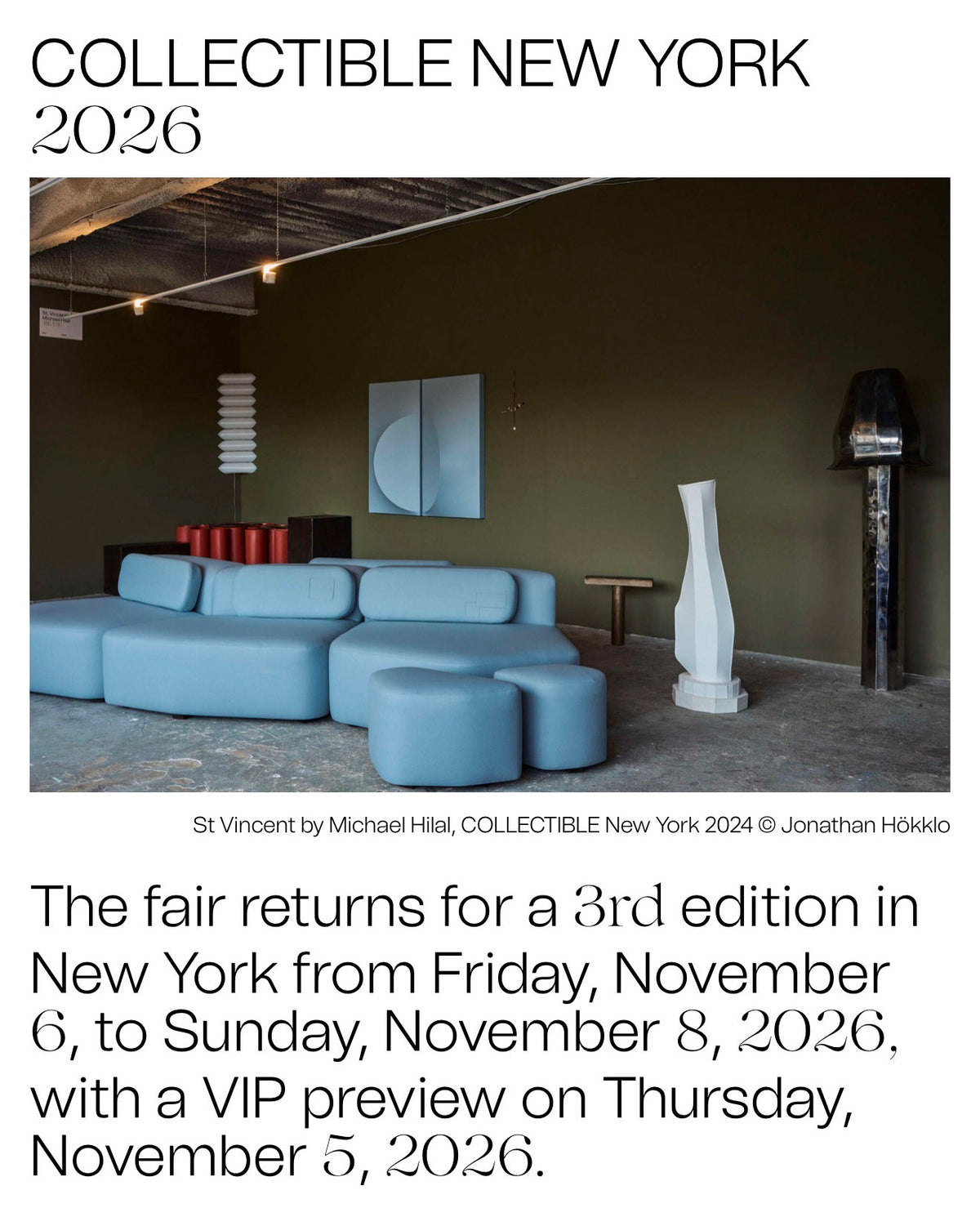
UPCOMING
COLLECTIBLE New York
November 6–8, 2026, with a VIP preview on November 5
Explore COLLECTIBLE New York →

Making the Waterfall Coat Rack
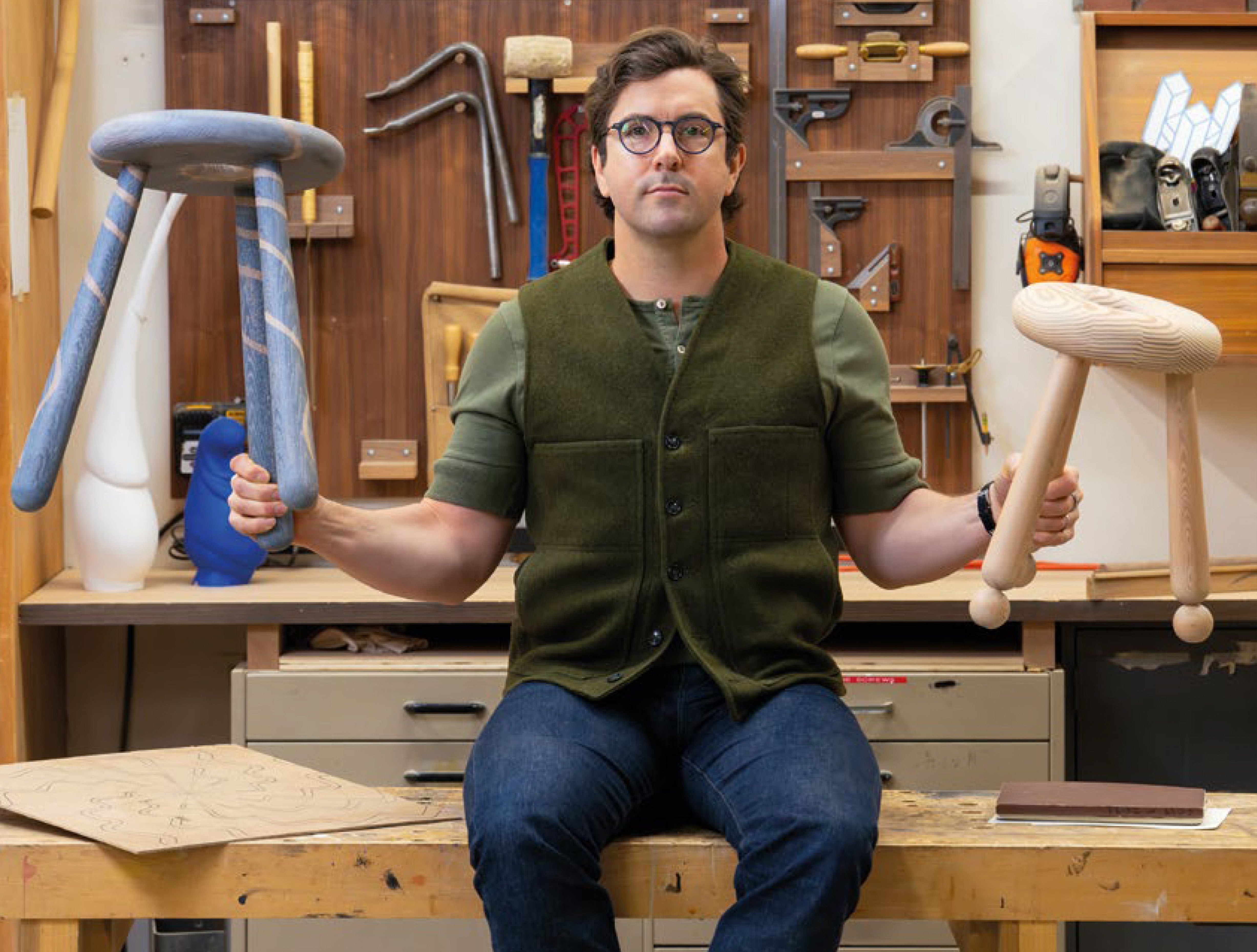
Nicholas shaped the arms, feet and fluted lower body with files and rasps, working from drawings and templates. Removing material gradually allowed him to refine the curves as he worked, responding to the wood and developing the form through the process of making.
These studio videos offer a closer look at the handwork behind the finished piece.
“I draw, I scale and then I start to sculpt”
— Nicholas Holmes
From drawing to form
Drawings and templates establish the starting proportions. The final curves develop through hand shaping, as Nicholas refines the relationships between the arms, stem, lower body and feet.
Seen alongside the finished piece, these studies offer a closer look at how the design moves from line on paper to sculpture in solid wood.

Materials
Solid White Oak
Hand-painted OXALINO™ finish
About
The OXALINO™ Waterfall Coat Rack is a sculptural coat stand developed as part of the third movement of OXALINO™, where larger gestures, negative space and more elemental forms define the pattern language.
A tall central column rises from a fluted base and opens into a series of hand-shaped branching hooks. The OXALINO™ pattern follows the structure of the piece, moving vertically through the stem and continuing across the curved hooks and feet.
Each line is painted by hand using an oxidizing solution that reacts with the natural tannins in the white oak. The pattern develops within the wood rather than sitting on top of it, allowing the grain and natural variation of the material to remain visible throughout.
Functional as a coat rack but conceived as a freestanding sculptural object, Waterfall continues Nicholas Holmes’ exploration of movement, hand-shaped form and the relationship between decoration and structure.
Designed and made by Hamilton Holmes in Hamilton, Ontario.
In Stock — Ready to Ship from:
Dudd Haus
307 Arch St, Philadelphia, PA 19106, United States